
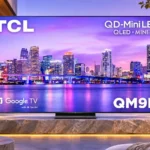
TCL QM9K Feature Scores
Explore all 128 feature scores for TCL QM9K, organized into pros and cons.
Scores by Feature
Summary
128 reviewed features-
Very positive 4.5-5.056 (44%)
-
Positive 3.5-4.436 (28%)
-
Neutral 2.5-3.428 (22%)
-
Negative 1.5-2.46 (5%)
-
Very negative below 1.52 (2%)
Pros
Sort
-
Extreme light output is the QM9K's defining strength, with unusually intense highlights and plenty of brightness for bright rooms. Some scenes do not exploit all that measured headroom.
-
Small HDR highlights and larger bright scenes have formidable impact, making HDR one of the strongest reasons to buy. Unusual mastering or tone-mapping behavior can reduce that advantage.
-
Powerful contrast makes bright objects pop against dark backgrounds. The refinement is not uniform across all HDR scenes, and OLED still offers stronger pixel-level control.
-
Daytime viewing is superb thanks to extraordinary SDR brightness and contrast. Positioning matters because direct reflections can still show through.
-
Deep blacks are a major Mini-LED achievement here, creating convincing dark scenes without OLED pixels. The darkest details can still be crushed, and isolated highlights may produce halos.
-
Thin, nearly invisible bezels create an immersive edge-to-edge picture that looks more premium than a typical LCD TV.
-
Google TV is capable, convenient and content-rich, with the newer Gemini experience. Ads and occasional bugs make the interface less universally appealing.
-
Rich, highly saturated colors remain vibrant even in bright scenes. Some side-by-side comparisons find the palette a little less full or faithful than competing OLED sets.
-
Pictures are punchy, detailed and often spectacular, particularly with HDR. Image accuracy and moving objects are less consistently polished than the raw brightness suggests.
-
The dense Mini-LED backlight contains blooming effectively and preserves strong contrast. Rapid zone changes can still introduce visible flicker or occasional halos.
-
Fast PC modes and console-friendly refresh rates are big strengths, though a reported PC handshake problem and slower pixel transitions keep performance from being flawless.
-
The premium screen-forward appearance and metal accents earn broad praise. A few find the stand and finishing details less luxurious than the flagship price suggests.
-
A wide HDR color range makes animation and brightly lit landscapes especially vivid, though the most extreme hues do not always match reference targets.
-
Standard-range content is exceptionally luminous even in daylight, with enough headroom to overpower ordinary room light without sacrificing obvious contrast.
-
Powerful HDR, low input lag and modern gaming modes make it a strong gaming TV. Motion smearing, occasional tearing or firmware quirks temper its appeal for the most demanding players.
-
The QM9K is widely admired for flagship-level light output and strong all-around features, though the value case and a handful of processing flaws split opinions.
-
The backlit metallic-looking remote is a welcome upgrade, particularly in dark rooms, though buttons and battery choices are not ideal for everyone.
-
SDR color, contrast and clarity are frequently excellent, especially in Filmmaker Mode, with some warmer factory defaults.
-
The compact adjustable pedestal fits narrower furniture and accommodates different screen heights; the larger 98-inch model uses feet instead.
-
The raised pedestal setting gives most soundbars enough space without blocking the screen.
-
Colors can be extremely accurate in the best settings, especially SDR, but HDR mapping, factory temperature and white balance vary enough to make accuracy a caveat.
-
Game mode is usually fast and responsive, although measurements differ and leaving the mode off can cause extreme lag. Some OLED competitors remain faster.
-
FlexConnect offers an appealing route to room-calibrated wireless surround with compatible speakers, without requiring conventional fixed speaker placement.
-
Halos are restrained compared with many LCDs but remain visible around subtitles, stars and other isolated lights, especially off-axis.
-
Gemini makes searching and follow-up questions feel more conversational, but complicated commands can produce misleading or incomplete answers. Its convenience does not outweigh privacy concerns for everyone.
-
Gemini is helpful for conversational recommendations and follow-up questions, but it sometimes misunderstands device-specific requests and complex tasks.
-
Presence detection can wake an ambient display and shut it down when the room empties, but sensitivity and accidental activations can require adjustment.
-
Atmos effects can extend above and beside the screen surprisingly well for built-in speakers. Full external surround remains more immersive.
-
Menus and apps usually feel quick, though isolated freezes and setup delays keep the software from feeling completely seamless.
-
A wide range of popular streaming and game-streaming services is available without needing an extra box.
-
HDR images can be dazzling, with exceptional highlights and bold contrast. Uneven tone tracking and occasional black crush are the main compromises.
-
Controls are fairly uncluttered with handy app shortcuts, but the unused space could accommodate additional services.
-
Large bright areas retain remarkable impact for an LCD, although peak output can decline over longer intervals and depends on the material.
-
Deep blacks and effective dimming create cinematic dark-room images, but accuracy-focused viewers may notice blooming, shadow crush and motion imperfections.
-
Artwork, photos and information can take over the screen when not watching TV, making the large display more useful between sessions.
-
The WHVA panel fares well against conventional VA LCDs, yet opinions differ on how much color and contrast shift off-center. Front-and-center seats remain best.
-
Built-in audio earns both enthusiastic praise for presence and Atmos effects and criticism for thin bass or muddled dialogue in busy scenes. A soundbar remains an upgrade.
-
VRR works well on most modern gaming devices, but there are reports of tearing with particular PC settings and high-motion gameplay.
-
Filmmaker Mode and calibration controls can yield excellent SDR accuracy, but HDR correction is more limited and some errors persist.
-
Content discovery is flexible, with platform-based recommendations and smart searches. Context can change depending on whether an app or the TV home screen is active.
-
Dolby Vision material can look deep and striking, revealing textures and atmosphere. Its accuracy depends on mode and processing choices.
-
PC text benefits from the regular RGB subpixel layout and high-bandwidth chroma support, producing unusually clean lettering for a television.
-
Near-black and full-black uniformity can be excellent, though comparisons sometimes favor the QM8K's cleaner dark panels.
-
Construction feels sturdy and carefully assembled despite substantial use of plastic, with little flex or looseness noted.
-
Cable channels and clips in the stand help tidy connections and keep the installation organized.
-
A physical microphone switch and optional AI features provide meaningful control, although always-listening hardware may still make privacy-conscious buyers uncomfortable.
-
Broad audio-format passthrough helps connect receivers and soundbars without significant compatibility anxiety.
-
Fine textures in animation and films remain clearly rendered, helping detailed 4K material look almost three-dimensional.
-
Filmmaker and custom picture presets offer meaningful improvements, though correct HDR balance can take tinkering.
-
Motion interpolation can tame judder and stutter without necessarily adding much lag, but settings require adjustment and results can be inconsistent.
-
A reduced-resolution high-refresh mode caters to twitchier PC games, trading 4K sharpness for exceptionally fast frame updates.
-
Four total HDMI connections provide practical room for a pair of consoles and other devices, though their bandwidth capabilities differ.
-
The clear glossy finish preserves image crispness and saturation, although it sacrifices some direct-glare control.
-
Voices are often crisp and clear, but deep dialogue can become indistinct and complex mixes may mask speech.
-
Most navigation is responsive, and picture settings are easy to reach, but occasional freezes and long initial configuration can frustrate.
-
Google TV's straightforward content organization helps day-to-day use, even if initial account setup can take longer than desired.
-
Physical installation is manageable with assistance, while Google TV and Gemini setup can require more prompts and updates than expected.
-
4K at 120Hz console play looks sharp and responsive, making full-resolution high-frame-rate games satisfying.
-
4K games can look detailed and vividly colored with responsive control, especially on current-generation consoles.
-
The Beosonic audio control allows tonal adjustments, helping tame bright sound without complicated equalizer work.
-
Automatic game switching is convenient because the TV selects its responsive gaming settings when a console starts.
-
Ambient-light adaptation keeps the picture comfortable across changing daylight and dimmer evenings, although manual control is still useful.
-
The LCD panel avoids permanent burn-in, a reassuring trait for users worried about static images and long sessions.
-
The speakers remain clear during loud music and busy effects without obvious distortion in the favorable listening assessment.
-
eARC supports high-quality audio to an external sound system and sits separately from the two full-bandwidth gaming inputs.
-
Low-lag interpolation is especially useful for smoothing game motion without paying the usual large responsiveness penalty.
-
High-bandwidth HDMI enables excellent console and PC modes. The practical limitation is how many full-speed inputs are available.
-
At 85 or 98 inches, the high-contrast image is particularly immersive without needing an oversized OLED budget.
-
Customizable quick settings let enthusiasts reach preferred picture adjustments rapidly without scrolling through deep menus.
-
The TV turns on quickly and is ready to navigate with little noticeable delay.
-
The high native refresh rate supports smooth sports and fast PC play, although display response and mode compatibility matter as much as the headline number.
-
Game mode preserves impressive image brightness while cutting lag, but normal modes can be much slower and do not suit gaming.
-
Generated artwork can create a personal ambient canvas, though it is more of a novelty than a core picture-quality advantage.
-
Casting support makes sharing from compatible phones and tablets convenient, including Apple's AirPlay and Google's Cast ecosystem.
-
The on-screen Game Bar provides quick gaming adjustments without interrupting play to navigate deeper menus.
-
Large 85- and 98-inch sizes can be compelling compared with giant OLEDs, especially when the QM9K is sold at a steep clearance price.
-
The internal speakers can fill a room at useful volume without immediately needing external amplification.
-
Protective packaging allows large models to accept the stand while still supported in foam, reducing the difficulty of a two-person unpacking.
-
The TV can work with connected smart-home devices, giving its Google TV interface a useful role beyond streaming.
-
The integrated over-the-air tuner operated properly in a real-world trial, making antenna reception a useful option.
-
Upscaled sources generally remain clear without excessive artificial sharpening, but fine details and lower-quality streams can still be less convincing than premium processing rivals.
-
Fine HDR highlight textures can survive extreme brightness well, although some tone settings overblow intense areas.
-
The central stand feels stable in ordinary use, although one assessment cautions that a pedestal design is easier to tip with children nearby.
-
Height effects and directionality are unusually convincing from the TV itself, but very busy scenes can merge different sounds.
-
Backlight strobing supports both 60Hz and 120Hz, providing a useful motion-clarity option at two common refresh rates.
-
Google TV includes several cloud-gaming apps, adding options beyond connected consoles, though app availability is not universal.
-
Treble can sound clear and natural for TV speakers, even when the bass lacks deeper punch.
-
Hands-free voice search can answer questions and control connected devices, though not every command works as expected.
-
Low-frame-rate compensation helps preserve tear-free play when frame rates drop, making VRR useful across a broad range.
-
Gradients are usually smooth, but subtle gray bands remain visible and some rivals clean them up more completely.
-
Compressed video is smoothed competently, at the cost of a little fine texture. Poorly encoded sources remain more noticeable on very large screens.
-
Conversational voice requests often work naturally, but complicated instructions can yield incorrect answers or fail altogether.
Cons
Sort
-
HDR tracking can raise highlights too much, crush shadows and deviate from intended brightness. This is one of the biggest concerns for film purists.
-
Advertising is built into the smart interface and cannot be disabled, a notable drawback for anyone wanting a cleaner home screen.
-
One large sample exhibited an intrusive constant buzz, audible during quiet viewing regardless of picture settings; other assessments did not report this problem.
-
Colors can fade and shift when viewed far off-axis, particularly versus some competitors, even though the WHVA panel improves upon standard VA designs.
-
The glossy finish struggles with bright light sources directly opposite the panel, even though it performs well in diffuse daylight.
-
The processor produces excellent-looking high-quality video, but enhancement settings sometimes introduce artifacts or handle brightness inconsistently.
-
Shadow detail is a significant point of disagreement: some dark scenes retain excellent texture, while others show crushed near-blacks that calibration cannot fully resolve.
-
Some panels look uniform in dark scenes, but one detailed evaluation found conspicuous edge vignetting and uneven light distribution.
-
Response times vary by transition, with slow movement between very dark and bright shades. Gaming remains responsive overall, but the panel is not an OLED-speed performer.
-
Extra AI clarity enhancements can create strobe-like artifacts on lower-quality films; leaving those settings off produces a cleaner result.
-
Side-facing sockets are neatly concealed but sit too far inward to access easily once the television is mounted close to a wall.
-
Software responsiveness is good much of the time, but at least one extended test found frustrating issues that remained unresolved after waiting for updates.
-
The larger panels are substantial enough to need two people for safe unpacking or wall mounting, even when their construction feels manageable for the size.
-
The set can push highlights well beyond intended levels and darken shadow regions, even while looking exciting. Some picture modes improve the balance without fully fixing it.
-
G-SYNC-style VRR has a specific problem at a locked 60Hz desktop setting on certain older NVIDIA cards; higher-refresh connections perform normally.
-
Rapid pans, fast athletes and gaming action can show edge blur, flicker or judder that distract from an otherwise powerful picture.
-
Fast motion is acceptable for a bright LCD, though dark-to-bright pixel transitions and quick action trails are less crisp than on OLED.
-
Dirty screen effect is restrained in some testing but prominent in another large sample, where streaks remain visible on pale images.
-
High-frequency backlight flicker should be unobtrusive for most people, although one low-quality video test exposed amplified content flickering.
-
Reflections are a real tradeoff. Massive brightness compensates for general daylight, while direct lamps and windows can remain distracting on the glossy screen.
-
The LCD design avoids permanent OLED burn-in, but unresolved software glitches and one reported electrical buzz raise quality-control questions.
-
At a substantial discount the QM9K is a tempting flagship, but the much cheaper QM8K frequently looks similar in everyday content. The price gap determines the recommendation.
-
Bass output is a divisive area: some large-set listening finds genuine punch, while other tests report little low-frequency weight.
-
Only two high-bandwidth HDMI connections are confirmed in detailed testing, which limits elaborate console-and-PC setups despite four physical inputs.
-
Low-quality signal cleanup is useful but not foolproof; aggressive AI clarity options can amplify flicker or create strange artifacts.
-
High-bandwidth inputs enable 4K at 144Hz gaming, but at least one PC tester could not make the mode work reliably with their graphics hardware.
-
Visible banding is mostly restrained, although certain gray gradients reveal uneven steps that smoothing options do not fully eliminate.
-
Local-dimming transitions generally follow moving highlights quickly, but visible zone flicker can still occur in certain scenes.
-
Natural-looking colors are achievable in restrained presets, but the brighter default look and HDR tone errors can move away from creator intent.
-
The image can look attractive before calibration, but imperfect temperature and brightness tracking hold it short of consistently faithful reproduction.
-
The four offered sizes cover large living rooms well, but the absence of smaller options limits installation flexibility.
-
The pedestal can be assembled without unusual difficulty, although its interlocking pieces take some care.
-
Slow movie pans can visibly stutter even though most film motion looks good. Interpolation offers an effective workaround for those who prefer smoother motion.
-
Properly configured 24p movies look judder-free; some 25p signals and challenging pans still show periodic jitter.
-
White balance is generally adjustable but can run cool or warm depending on format and luminance. Carefully chosen modes help, yet some HDR deviations remain.
-
Sports and ordinary TV can look fluid, but rapid pans and challenging gaming motion can reveal blur, judder or tearing.
Use Cases
Best for
Sort
-
It excels in sunlit rooms thanks to extraordinary brightness and sustained contrast. Avoid placing a bright window directly opposite its glossy face.
-
Movies look spectacular when they exploit the contrast and bright highlights. Cinema purists may prefer OLED or a more accurate HDR tone curve.
-
The latest consoles enjoy strong HDR, sharp high-refresh images and low lag. The platform also leaves room for two modern gaming devices.
-
Bright HDR colors and responsive controls make games particularly vivid, with full-refresh performance better suited to modern consoles and PCs.
-
Big-screen movie nights benefit from OLED-rivaling contrast and spectacular HDR brightness; critical dark-room viewing remains less accurate than the strongest rivals.
-
The TV pairs well with an external soundbar or receiver over eARC, delivering a stronger home-theater soundtrack than the internal speakers.
-
The PS5 can deliver vivid 4K/120Hz HDR with automatic gaming settings and responsive handling.
-
Bright, vivid sports look excellent in daylight, while fast pans can show blur or occasional color irregularities.
-
A capable large PC gaming screen with high refresh rates and sharp text, tempered by some VRR and 144Hz compatibility quirks on particular computers.
-
Ambient light has little effect on black levels or color saturation, so ordinary room lighting rarely diminishes the picture.
-
Wider seating arrangements are more practical than with many VA TVs, but off-axis color shifts mean the best view remains near the center.
-
Sports remain bright and readable with daylight streaming into the room, making the set particularly attractive for daytime games.
-
Premium movies and shows look especially rich with strong 4K HDR feeds, but compressed streams and difficult dark scenes expose more of the processing tradeoffs.
-
The built-in audio may be enough for casual television and even some movies, but deeper bass and busy soundtrack separation favor an external speaker system.
-
Fast racing titles benefit from high refresh rates and responsive play, though panel blur can trail rapid movement.
-
4K Blu-ray material shows striking color and depth, particularly with detailed animated and Dolby Vision imagery.
-
A bright, large picture and wide seating usability suit shared entertainment, though details shift when seated far off-center.
-
External streamers can provide useful frame-rate matching and clean high-quality feeds, making them a viable complement to Google TV.
Conditional or not ideal for
Sort
-
Budget-conscious buyersDeep discounts make it viable for value shoppers, but those stretching their budget will often be happier saving on a QM8K or QM7K.
-
Nighttime quiet viewingAn audible buzz in quiet scenes on one tested unit undermines the otherwise strong home-theater picture for late-night viewing.
-
Low-distraction useA persistent electrical buzz reported on one large set makes quiet, distraction-free use a concern for noise-sensitive owners.
-
Multiple high-bandwidth gaming devicesTwo full-speed HDMI ports are enough for two premium devices but awkward for a third console or PC without extra switching gear.
-
Motion-sensitive viewingChallenging motion can produce visible artifacts or tearing, so viewers especially sensitive to blur or jitter may need to experiment with smoothing.
-
FPS gamingFast shooters can take advantage of low-lag game modes and exceptional high-refresh support, although fast pixel transitions are less tidy than OLED competitors.
-
Long-term ownershipLow burn-in risk favors extended LCD ownership, but a newer lineup and isolated ongoing software faults cloud the longer-term value proposition.
-
Big-screen installationLarge sizes offer huge immersion, but unpacking, lifting and wall-mounting often require help and space planning.
-
High-quality cable and SD broadcast viewingLower-quality HD, cable and broadcast sources are not always forgiving; smoothing helps, but large screens can show grain and artifacts.