Best for audio passthrough
Hisense U7SG
5.0 attribute score
Highest scored product for this attribute based on supporting review evidence.

Highest scored product for this attribute based on supporting review evidence.
Balances the attribute score, supporting reviews, and overall product strength.
Has the broadest review evidence for this attribute.
Strongest overall product among items with scored evidence for this attribute.

Overall: 4.1/5
eARC and wide audio-format compatibility make a receiver or soundbar a straightforward upgrade path.
Pros: overall satisfaction, value for money
Cons: Smart TV platform, advertising intrusiveness
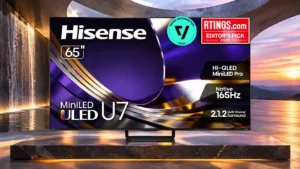
Overall: 4.2/5
Compatible receivers and soundbars can receive high-quality audio using eARC and support for major surround formats.
Pros: overall satisfaction, glare resistance
Cons: motion handling, viewing angles

Overall: 4.3/5
eARC can pass major high-quality audio formats to a compatible receiver or soundbar without notable format restrictions.
Pros: picture quality, black levels
Cons: bass performance, HDR brightness
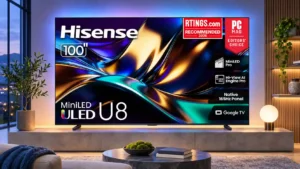
Overall: 4.1/5
HDMI audio passthrough makes upgrading to an external soundbar or receiver straightforward without format headaches.
Pros: peak brightness, HDR brightness
Cons: sound quality, viewing angles
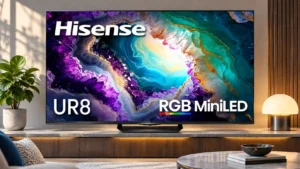
Overall: 4.0/5
The eARC connection handles high-quality audio formats for receivers and soundbars without major compatibility concerns.
Pros: gaming performance, color volume
Cons: blooming control, dark-room performance
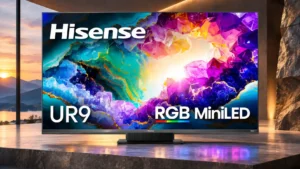
Overall: 4.1/5
eARC passes major audio formats to compatible home theater equipment without troublesome format restrictions.
Pros: peak brightness, picture quality
Cons: value for money, color accuracy
Overall: 3.6/5
Passing major audio formats to external systems is a strong point and helps compensate for the TV's modest built-in speakers.
Pros: picture quality, overall satisfaction
Cons: sound quality, reliability
Overall: 4.1/5
High-quality uncompressed audio and major formats can pass to a receiver or soundbar, making an external sound system straightforward to use.
Pros: picture quality, black levels
Cons: viewing angles, motion clarity

Overall: 3.8/5
Major surround formats can pass to a compatible receiver or soundbar, making the TV easy to fit into a more serious audio setup.
Pros: picture quality, overall satisfaction
Cons: color crosstalk, value for money

Overall: 3.9/5
Broad audio-format passthrough helps connect receivers and soundbars without significant compatibility anxiety.
Pros: peak brightness, overall satisfaction
Cons: value for money, shadow detail
Overall: 3.9/5
eARC can pass uncompressed, high-quality audio to an external receiver for more capable home-theater setups.
Pros: overall satisfaction, picture quality
Cons: Weight and handling, black levels

Overall: 3.8/5
eARC passes high-quality audio to compatible external equipment and supports the major formats needed for home theater setups.
Pros: picture quality, color accuracy
Cons: HDR performance, sound quality
Overall: 3.8/5
eARC and wide format compatibility allow high-quality audio to pass to a soundbar or receiver. This is a useful asset for surround-sound systems.
Pros: HDMI 2.1 port count, Video input versatility
Cons: value for money, overall satisfaction

Overall: 3.6/5
eARC passes the major high-quality audio formats to a compatible receiver or soundbar, offering flexibility beyond the TV's speakers.
Pros: black levels, picture quality
Cons: HDR performance, blooming control

Overall: 2.9/5
eARC can forward high-quality uncompressed formats to a home theater system, an important plus given the modest TV speakers.
Pros: value for money, picture quality
Cons: account requirements, gaming performance

Overall: 3.4/5
Major audio formats pass through from connected external sources, although the same behavior is not guaranteed for every built-in app.
Pros: picture quality, value for money
Cons: viewing angles, HDR performance

Overall: 3.4/5
eARC can deliver high-quality, uncompressed audio to a soundbar or home-theater receiver.
Pros: picture quality, color accuracy
Cons: remote control quality, black levels

Overall: 3.0/5
Dolby Digital—including 7.1-channel Dolby Digital Plus passthrough—works well, though DTS is missing.
Pros: picture quality, smart TV platform
Cons: value for money, refresh rate

Overall: 3.9/5
DTS playback and passthrough are useful for legacy disc collections and make it easier to hand audio off to an external system.
Pros: gaming performance, peak brightness
Cons: HDMI 2.1 support, HDMI 2.1 port count
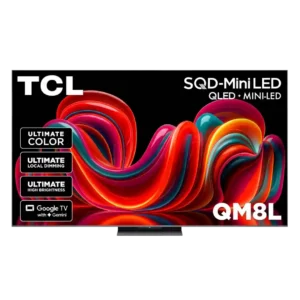
Overall: 4.4/5
The TV can pass audio to a receiver or soundbar while letting the television remote manage power and volume, simplifying daily use.
Pros: picture quality, value for money
Cons: stand quality, judder handling

Overall: 4.0/5
eARC enables advanced surround formats with compatible sound equipment, though sources handling some DTS formats may need direct receiver connections.
Pros: color accuracy, picture quality
Cons: HDR brightness, peak brightness

Overall: 4.0/5
Audio passthrough earns praise for broad format support, although one later firmware complaint involved trouble outputting Dolby Digital.
Pros: overall satisfaction, picture quality
Cons: reliability, build quality

Overall: 4.2/5
External audio routing offers useful options, but testing found intermittent Dolby Atmos sound dropouts on one unit.
Pros: value for money, color accuracy
Cons: HDR brightness, reflection handling
Overall: 3.7/5
Dolby Digital audio passes through via eARC, but the lack of DTS passthrough restricts some physical-media setups.
Pros: picture quality, maximum volume
Cons: sound quality, bass performance

Overall: 2.6/5
eARC can carry high-quality sound, but some uncompressed multichannel formats are limited to 5.1 in normal operation.
Pros: sound quality, picture quality
Cons: value for money, local dimming performance

Overall: 3.8/5
Most Dolby formats work, but DTS and unrestricted multichannel LPCM compatibility are shortcomings for complex source setups.
Pros: overall satisfaction, picture quality
Cons: value for money, local dimming performance

Overall: 3.8/5
Dolby-based formats are well covered, but DTS and universal LPCM 7.1 passthrough are missing or restricted.
Pros: glare resistance, overall satisfaction
Cons: input lag, value for money

Overall: 3.5/5
Dolby Digital formats are supported, but the missing DTS compatibility is a drawback for some Blu-ray soundtracks.
Pros: art display mode, design and appearance
Cons: overall satisfaction, HDMI port accessibility

Overall: 3.3/5
Dolby Digital Plus passthrough can work well, but DTS and some multichannel LPCM configurations remain restricted.
Pros: color accuracy, upscaling quality
Cons: picture quality, sound quality

Overall: 4.0/5
eARC can carry major high-quality formats to external equipment, although a reported Android 14 LPCM sync issue warrants caution with certain setups.
Pros: picture quality, black levels
Cons: HDR brightness, value for money
Overall: 3.3/5
Basic external-audio formats work, but lack of DTS and some surround-channel restrictions disappoint more demanding home-theater setups.
Pros: overall satisfaction, picture quality
Cons: reliability, remote control quality

Overall: 3.1/5
eARC is useful, but limits around multichannel LPCM and the lack of DTS constrain some home-theater setups.
Pros: gaming performance, color accuracy
Cons: value for money, overall satisfaction

Overall: 3.0/5
Most Dolby formats pass through, but missing DTS and Dolby Digital Plus 7.1 support reduce flexibility for some Blu-ray setups.
Pros: color gamut, smart TV platform
Cons: value for money, overall satisfaction

Overall: 4.0/5
Some Blu-ray audio formats cannot be passed through.
Pros: black levels, picture quality
Cons: glare resistance, reflection handling

Overall: 2.7/5
Dolby audio is mostly accommodated, but the inability to pass certain multichannel formats on ordinary sources limits advanced audio setups.
Pros: white balance accuracy, design and appearance
Cons: overall satisfaction, value for money

Overall: 4.0/5
Audio connectivity supports common formats, but restricted channel configurations and absent DTS passthrough frustrate advanced setups.
Pros: reflection handling, overall satisfaction
Cons: Dolby Vision support, bass performance

Overall: 4.1/5
HDMI audio output is useful, but missing DTS support can complicate playback of certain Blu-ray soundtracks.
Pros: gaming performance, HDR brightness
Cons: reflection handling, glare resistance

Overall: 3.3/5
Dolby-format passthrough helps with compatible audio gear, but absent DTS passthrough is a meaningful limitation for some disc collections.
Pros: picture quality, motion handling
Cons: HDR performance, HDR brightness

Overall: 4.2/5
Some multi-channel passthrough formats are limited to fewer channels than enthusiasts may expect, especially with non-PC sources.
Pros: high-refresh-rate gaming, gaming performance
Cons: value for money, bass performance

Overall: 4.2/5
Audio passthrough has meaningful surround-format restrictions; movie enthusiasts should confirm their soundtrack and receiver needs.
Pros: picture quality, glare resistance
Cons: value for money, bass performance
Overall: 3.9/5
Dolby passthrough is useful but some multichannel formats are restricted, including reported 5.1 limits for Dolby Digital+.
Pros: value for money, overall satisfaction
Cons: Dolby Vision support, sound quality
Overall: 4.2/5
Some multichannel audio sources face channel-count restrictions, and DTS formats cannot pass through the TV.
Pros: picture quality, overall satisfaction
Cons: design and appearance, Dolby Vision support

Overall: 3.8/5
Audio routing covers many Dolby formats but is less accommodating for 7.1 LPCM and unsupported DTS tracks.
Pros: Wireless One Connect compatibility, art display mode
Cons: value for money, input lag

Overall: 3.8/5
LPCM surround passthrough takes extra setup for seven channels, with a five-channel limit otherwise; DTS soundtracks are another obstacle.
Pros: cable management, design and appearance
Cons: value for money, Dolby Vision support

Overall: 3.9/5
Some surround formats are limited: Dolby Digital Plus 7.1 falls back to 5.1 and DTS is unsupported.
Pros: color volume, black levels
Cons: Inconsistent panel and coating by size, sound quality

Overall: 4.4/5
DTS passthrough over eARC is missing, forcing disc users to route compatible players directly through an external audio system.
Pros: picture quality, peak brightness
Cons: value for money, sound quality

Overall: 3.4/5
eARC support is restricted by limited formats and two-channel LPCM, so multichannel sources may need to connect directly to the audio system.
Pros: art display mode, picture quality
Cons: contrast ratio, high-refresh-rate gaming
Overall: 4.3/5
Audio passthrough is marred by a reported eARC bug that can prevent sound from reaching compatible external gear correctly.
Pros: overall satisfaction, overall image accuracy
Cons: value for money, bass performance