Best for black levels
Roku Pro Series (2026)
5.0 attribute score
Highest scored product for this attribute based on supporting review evidence.

Highest scored product for this attribute based on supporting review evidence.
Balances the attribute score, supporting reviews, and overall product strength.
Has the broadest review evidence for this attribute.
Strongest overall product among items with scored evidence for this attribute.
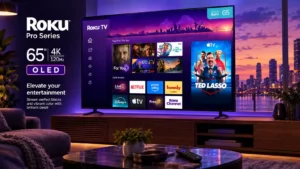
Deep, inky blacks are the defining strength, giving nighttime scenes a richness that bright LCD alternatives struggle to match.
Pros: contrast ratio, value for money
Cons: peak brightness, HDR brightness
Black levels are outstanding, staying deep even in lit rooms while preserving visible detail within dark areas.
Pros: picture quality, value for money
Cons: stand quality, daytime viewing performance

Blacks are consistently deep, rich, and precise, even with room lights on. A few tests found mild black crush in the darkest HDR scenes.
Pros: picture quality, peak brightness
Cons: value for money, sound quality

Black levels are excellent in dark rooms and create the depth expected from OLED. Strong ambient light can lift blacks slightly because of the matte anti-glare treatment.
Pros: glare resistance, black levels
Cons: Dolby Vision support, color gamut

Black levels are one of the Mini-LED system’s strengths, often described as deep or nearly OLED-like. Isolated hardware faults can still create dark patches.
Pros: overall satisfaction, picture quality
Cons: reliability, portability and versatility

Black levels are unusually deep for an LCD TV, often approaching OLED-like darkness in normal scenes. Dark backgrounds stay convincing while preserving bright highlights.
Pros: picture quality, value for money
Cons: stand quality, judder handling
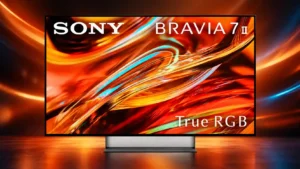
Head-on black levels are often described as deep, inky and unusually OLED-like for an LCD. OLED still retains the edge in the hardest dark scenes, and a few tests noted...
Pros: overall satisfaction, picture quality
Cons: HDMI 2.1 port count, reflection handling
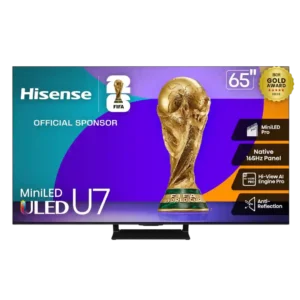
Black levels are a major strength for an LCD, with deep blacks and convincing dark scenes when local dimming is engaged.
Pros: overall satisfaction, picture quality
Cons: reliability, build quality
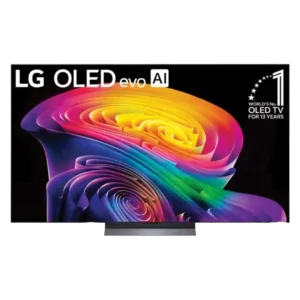
OLED blacks are generally deep and inky, but a few samples showed raised blacks or crushed near-black detail before adjustment. Small setting changes usually restore the expected depth.
Pros: picture quality, gaming performance
Cons: value for money, sound quality
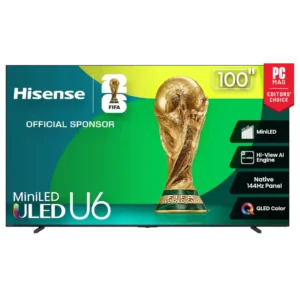
Black levels are generally strong for an LCD mini-LED TV, with several accounts describing deep or nearly black dark areas. A few sources still see grayish blacks or weaker depth...
Pros: overall satisfaction, value for money
Cons: smart TV platform, blooming control
Black levels are unusually deep for an LCD and can look impressively OLED-like head-on. OLED still has the edge in the darkest rooms, and some modes or angles expose the...
Pros: overall satisfaction, overall image accuracy
Cons: value for money, bass performance
OLED blacks are usually deep and convincing, especially in controlled light, but ambient light can lift them toward grey on the QD-OLED surface.
Pros: gaming performance, peak brightness
Cons: HDMI 2.1 support, HDMI 2.1 port count
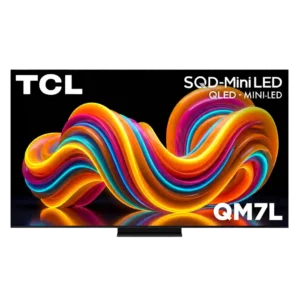
Most experiences describe deep blacks and dark letterbox bars with OLED-like impact for an LED TV. Others saw weaker micro-contrast or severe leakage in difficult scenes.
Pros: peak brightness, picture quality
Cons: color accuracy, viewing angles
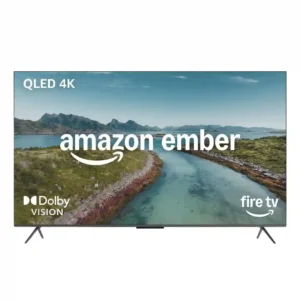
Black levels vary by test and setup. Some reviewers and owners praise deep-looking blacks, while others see raised gray blacks or crushed dark detail, especially in demanding movie scenes.
Pros: picture quality, overall satisfaction
Cons: value for money, reliability
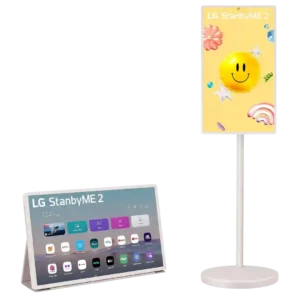
Black levels are a consistent weakness in expert testing, tending toward dark gray or charcoal rather than inky black. That limits the screen’s cinematic impact in darker material.
Pros: overall satisfaction, portability and versatility
Cons: value for money, menu responsiveness