
If you want better glare resistance
Choose Hisense U7SG. It scores 4.8 vs 2.6 for glare resistance, with a 4.2 overall score.

The QM9K dazzles in bright rooms with immense HDR impact, deep blacks and responsive gaming. Its premium is harder to justify over the QM8K, while HDR tone mapping, reflections and motion are not always as polished as the brightness.
Best for bright living rooms, daylight sports and large-screen HDR gaming where its exceptional light output and fast gaming controls matter most. Deep discounts make the premium easier to justify.
Less appealing for budget-focused shoppers who could buy the similarly capable QM8K, cinema enthusiasts prioritizing perfectly faithful dark HDR scenes, or buyers placing a glossy TV opposite an uncovered window.
The TCL QM9K is an extraordinarily bright Mini-LED TV, with vibrant HDR highlights, deep blacks and powerful local dimming that make daytime viewing and large-screen games exciting. Its fast gaming modes, high-refresh PC support, versatile Google TV interface and Gemini voice assistant add genuine convenience, while a premium-looking design and capable built-in speakers round out the package. The central tradeoff is refinement and price. HDR tone mapping can crush shadow detail or overbrighten highlights, fast motion can blur, and the glossy screen still catches direct window reflections. Sound quality, off-axis consistency and out-of-box color accuracy also divide opinions. A few users encountered software bugs, and one reported persistent buzzing. Most importantly, the less expensive QM8K delivers a surprisingly similar picture in typical material. The QM9K is most persuasive for bright rooms, high-refresh gaming and buyers who find it deeply discounted rather than paying full flagship pricing.
Compared with other TVs, this product is above average in Power-on readiness, distortion control, SDR brightness, near average in blooming control, gaming performance, below average in software updates, G-SYNC compatibility, AI scene optimization.
| Attribute | This product | Category average | Difference |
|---|---|---|---|
| Power-on readiness | 5.0 | 2.5 | +2.5 |
| distortion control | 5.0 | 2.8 | +2.2 |
| SDR brightness | 4.8 | 2.9 | +1.9 |
| AI artwork generation | 4.5 | 2.7 | +1.8 |
| Backlight strobing | 4.0 | 2.2 | +1.8 |
| HDR brightness | 4.8 | 3.5 | +1.3 |
| tuner support | 4.5 | 2.8 | +1.7 |
| Game Mode interpolation | 5.0 | 3.3 | +1.7 |
Choose Hisense U7SG. It scores 4.8 vs 2.6 for glare resistance, with a 4.2 overall score.
Choose Hisense UR8SG. It scores 4.4 vs 2.9 for reflection handling, with a 4.0 overall score.
Choose Hisense U8QG. It scores 4.7 vs 3.0 for value for money, with a 4.1 overall score.
Choose Sony BRAVIA 3 II. It scores 4.4 vs 3.3 for motion handling, with a 3.8 overall score.
Products reviewers directly compared with this model, grouped into quick takeaways.
Yes. Exceptionally high brightness helps it hold contrast and color in daylight, although lamps or windows directly opposite the glossy screen can still produce distracting reflections.
The QM9K gets somewhat brighter, adds presence-triggered ambient features and offers updated Gemini integration. Several comparisons found little real-world picture improvement for the extra cost, so the QM8K frequently wins on value.
Yes. The set supports 4K at up to 144Hz with suitable PC sources, console 4K/120Hz modes, VRR and low-lag Game Mode. Some PC setups encounter VRR or 144Hz quirks, and fast motion is not as blur-free as OLED.
It can deliver spectacular highlights and deep blacks, but several detailed assessments found crushed shadow detail, inaccurate EOTF tracking or overly bright highlights. Calibration can help certain modes without always fixing all HDR errors.
Not necessarily for casual viewing: some assessments praise its dialogue, height effects and unusually full TV sound. Others hear weak low bass, blurred dialogue or difficulty separating busy effects, so a soundbar remains worthwhile for more demanding use.
It has four HDMI inputs. The most detailed connectivity evaluations report two full-bandwidth HDMI 2.1 gaming inputs, with eARC on a separate lower-bandwidth input; one other write-up describes all four as HDMI 2.1, so check requirements for multiple high-refresh sources.
It enables conversational voice searches, follow-up questions and some smart-home and ambient-art functions. Responses can be inconsistent for complex requests, and privacy-conscious owners can disable microphone or AI functions.
These are a few of the reviews included in our analysis.



The best mini-LED TVs from Sony, Samsung, TCL, and Hisense deliver excellent brightness, deep blacks, and responsive gaming performance.
A brightness-first Mini-LED with excellent current value and strong HDR impact.
The TCL QM9K is a brilliant, gaming-ready Mini-LED TV. Learn when its brightness and big-screen value beat OLED, QM8K and newer 2026 TCL models.
I been using rocking with TCL for awhile as my go-to TV with models such as the Q7 and then after the QM7. These TVs provided a pleasant...
The TCL QM9K pulls out all the stops with a 144Hz native refresh rate, a peak brightness that’s over 6,000 nits and too many dimming zones to...
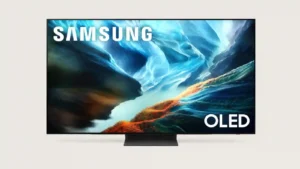
Choose the S90H for bright-room OLED viewing, deep blacks and top-tier gaming without flagship pricing. Skip it if you want Dolby Vision, a glossy screen or the simplest smart-TV software.
Pros: glare resistance, black levels
Cons: Dolby Vision support, color gamut
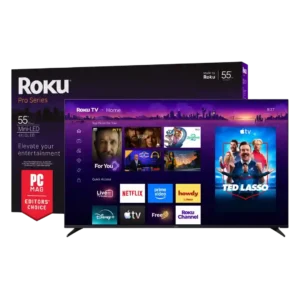
Best for bright Mini-LED picture, excellent built-in audio, easy Roku navigation, and responsive 4K/120 gaming. Skip it if you want ad-free menus, premium motion consistency, or stronger confidence in long-term...
Pros: overall satisfaction, picture quality
Cons: reliability, portability and versatility
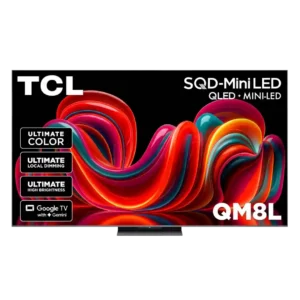
Choose the QM8L for a big, brilliantly bright TV with vivid HDR, deep mini-LED blacks, low input lag, and four HDMI 2.1 ports. Skip it if you need OLED-clean motion,...
Pros: picture quality, value for money
Cons: stand quality, judder handling
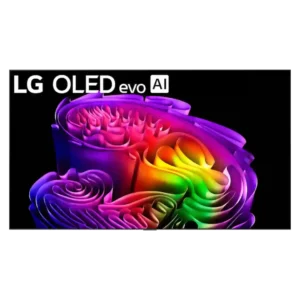
Choose the G6 for class-leading bright-room OLED picture, rich color, deep blacks and elite gaming. Skip it if you want strong built-in audio, polished launch firmware, no account sign-in, or...
Pros: picture quality, peak brightness
Cons: value for money, sound quality