Best for viewing angles
Samsung S90H
5.0 attribute score
Highest scored product for this attribute based on supporting review evidence.

Highest scored product for this attribute based on supporting review evidence.
Balances the attribute score, supporting reviews, and overall product strength.
Has the broadest review evidence for this attribute.
Strongest overall product among items with scored evidence for this attribute.

Off-axis viewing is excellent, with color and contrast holding up well across wide seating positions.
Pros: glare resistance, black levels
Cons: Dolby Vision support, color gamut
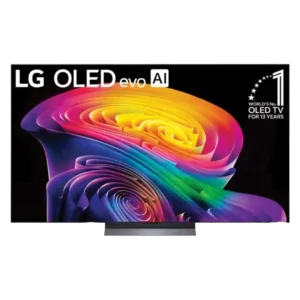
Color and contrast remain consistent from wide seating positions, making the C6 a strong choice for group viewing.
Pros: picture quality, gaming performance
Cons: value for money, sound quality
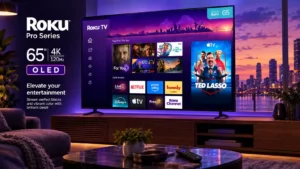
Wide viewing angles preserve rich colors and contrast for people sitting off-center. A more critical test notices some tint shifts, while still preferring it to mini-LED viewing angles.
Pros: contrast ratio, value for money
Cons: peak brightness, HDR brightness

Off-axis viewing is generally excellent, though extreme seats can reveal a green or pink shift on white objects.
Pros: picture quality, peak brightness
Cons: value for money, sound quality

Off-axis viewing is better than many VA-style LCD TVs for several reviewers, with colors often staying true. Others still see noticeable degradation from the side, so seating position matters.
Pros: overall satisfaction, picture quality
Cons: reliability, portability and versatility
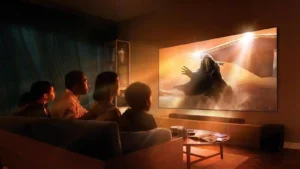
Off-axis image quality is excellent, with strong color and luminance retention across wide seating positions, though one source found the glossy screen less forgiving.
Pros: gaming performance, peak brightness
Cons: HDMI 2.1 support, HDMI 2.1 port count
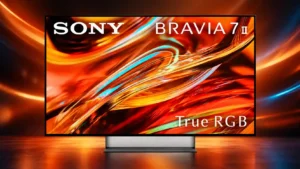
Off-axis performance is much better than conventional VA-based Mini-LED in many tests, preserving color surprisingly well. Other tests still see contrast loss, washout or extra blooming from the side.
Pros: overall satisfaction, picture quality
Cons: HDMI 2.1 port count, reflection handling
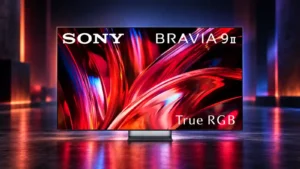
Viewing angles are better than most LCD TVs, often retaining color and contrast well from the side. Blooming and some color shift still become more visible at wider angles.
Pros: overall satisfaction, overall image accuracy
Cons: value for money, bass performance

Off-axis performance is better than many VA-panel TVs and remains solid across a typical sofa. Color and contrast still fade at sharper angles, so centered seating remains best.
Pros: picture quality, value for money
Cons: stand quality, judder handling
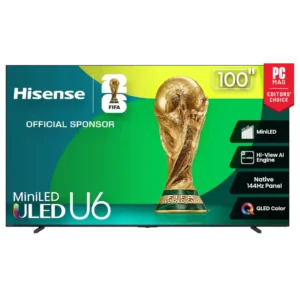
Viewing angles are one of the biggest points of disagreement. PCMag and one sponsored review find them quite good, but most other hands-on sources warn that contrast, blacks, or color...
Pros: overall satisfaction, value for money
Cons: smart TV platform, blooming control
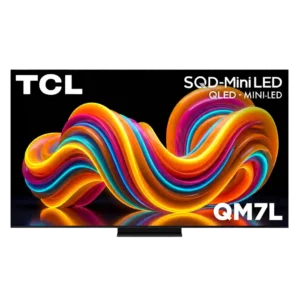
Off-axis performance is inconsistent and usually only average for a VA-based Mini-LED. Color and brightness commonly fade at wider angles, though some seating positions hold up well.
Pros: peak brightness, picture quality
Cons: color accuracy, viewing angles
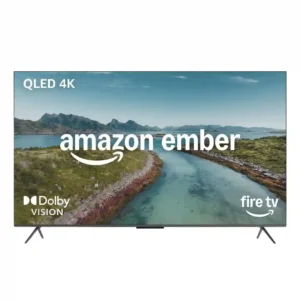
Off-angle viewing is only average and can lose color and contrast as viewers move away from center. One reviewer calls the set strongly angle-dependent.
Pros: picture quality, overall satisfaction
Cons: value for money, reliability
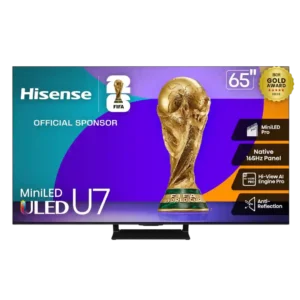
Viewing angles are a consistent weakness on VA-panel sizes, with color and contrast dropping fairly quickly away from center.
Pros: overall satisfaction, picture quality
Cons: reliability, build quality
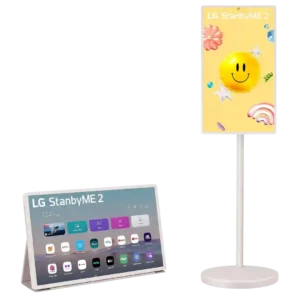
The viewing angles were criticized by multiple expert reviewers as weak or below expectations. Off-axis use can therefore be less satisfying than the portable concept might suggest.
Pros: overall satisfaction, portability and versatility
Cons: value for money, menu responsiveness