Best for 4K at 144 Hz support
Samsung QN70F
5.0 attribute score
Highest scored product for this attribute based on supporting review evidence.

Highest scored product for this attribute based on supporting review evidence.
Balances the attribute score, supporting reviews, and overall product strength.
Has the broadest review evidence for this attribute.
Strongest overall product among items with scored evidence for this attribute.

Overall: 3.8/5
Compatible gaming PCs can feed 4K at 144Hz, giving the QN70F more input flexibility than ordinary 60Hz televisions.
Pros: picture quality, 4K at 144 Hz support
Cons: sound quality, value for money
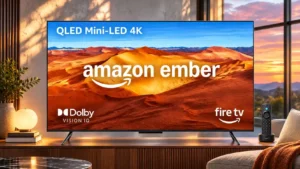
Overall: 3.7/5
A compatible gaming PC can use 4K at 144Hz on supported inputs, a substantial leap over older Amazon sets. The higher rate does not eliminate pixel-response blur.
Pros: value for money, HDR brightness
Cons: color accuracy, shadow detail

Overall: 3.1/5
Compatible gaming PCs can feed the TV native-resolution 4K at up to 144Hz through any of its three HDMI ports.
Pros: gaming performance, color accuracy
Cons: value for money, overall satisfaction

Overall: 3.8/5
The larger versions can accept 4K at up to 144Hz, making their HDMI connections unusually flexible for gaming. The 50-inch version has a notably more limited refresh-rate panel.
Pros: picture quality, contrast ratio
Cons: blooming control, glare resistance

Overall: 3.8/5
Every HDMI port handles 4K at 144Hz, giving high-refresh PCs and consoles flexible connection options without needing a special input.
Pros: picture quality, overall satisfaction
Cons: color crosstalk, value for money
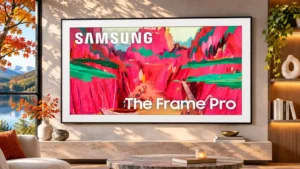
Overall: 3.8/5
The 144Hz ceiling is attractive for high-frame-rate sources, although slow pixel response and wireless lag can undermine the benefit.
Pros: Wireless One Connect compatibility, art display mode
Cons: value for money, input lag
Overall: 3.9/5
The QM7L supports 4K/144Hz for PC gaming, and the feature is repeatedly praised as a strong value at this tier.
Pros: peak brightness, picture quality
Cons: color accuracy, viewing angles
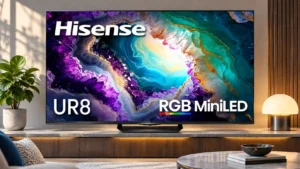
Overall: 4.0/5
The four high-bandwidth inputs provide headroom well beyond 144Hz at 4K, especially for capable gaming PCs.
Pros: gaming performance, color volume
Cons: blooming control, dark-room performance
Overall: 4.0/5
At 144Hz, motion stays exceptionally sharp, making the higher ceiling especially worthwhile for PC gaming.
Pros: overall satisfaction, picture quality
Cons: size options, value for money
Overall: 3.3/5
Large U.S. variants accept 4K/144Hz from capable PCs, giving them modern connectivity despite blurry pixel response.
Pros: overall satisfaction, picture quality
Cons: reliability, remote control quality
Overall: 3.8/5
The TV accepts 4K at 144Hz for suitably equipped PCs; high refresh-rate support is a genuine strength even if pixel response limits clarity.
Pros: overall satisfaction, color gamut
Cons: value for money, local dimming performance
Overall: 4.1/5
A high-refresh 4K input is part of the strong PC gaming package, with the HDMI connection offering the fullest set of gaming options.
Pros: peak brightness, HDR brightness
Cons: sound quality, viewing angles

Overall: 4.4/5
HDR gaming can run at 4K/144Hz on compatible hardware, giving high-end PC players plenty of headroom.
Pros: picture quality, peak brightness
Cons: value for money, sound quality

Overall: 3.5/5
A compatible gaming PC can drive 4K at 144Hz, giving the Frame an unusually capable gaming signal range for an art-focused television.
Pros: art display mode, design and appearance
Cons: overall satisfaction, HDMI port accessibility

Overall: 3.8/5
The screen accepts 4K at up to 144 Hz for compatible PCs. Its pixel response remains slow even at the highest supported refresh rate.
Pros: cable management, design and appearance
Cons: value for money, Dolby Vision support
Overall: 3.4/5
Two high-bandwidth ports on the tested 75-inch set enable 4K/144Hz, making high-frame-rate PC play a major attraction.
Pros: picture quality, value for money
Cons: viewing angles, HDR performance
Overall: 4.3/5
PC gaming up to 4K/144Hz is fast and crisp, though LG and Samsung flagships can reach 165Hz.
Pros: picture quality, color accuracy
Cons: bass performance, HDMI 2.1 port count
Overall: 3.8/5
Several comparisons praise 144Hz with VRR as a bonus for PC gaming, while console play remains centered on 120Hz.
Pros: value for money, peak brightness
Cons: color accuracy, stand quality
Overall: 4.1/5
A native 144Hz panel offers extra headroom for connected PCs and full 4K/120Hz support for modern consoles. The high refresh ceiling does not eliminate pixel-response blur.
Pros: overall satisfaction, value for money
Cons: Smart TV platform, advertising intrusiveness
Overall: 3.9/5
High-end PCs can use up to 4K at 144Hz, providing headroom beyond the 120Hz modes used by consoles.
Pros: gaming performance, overall satisfaction
Cons: sound quality, value for money
Overall: 3.8/5
A genuine attraction for a compatible gaming PC, this high-refresh mode is available through HDMI 2.1 and goes beyond what current consoles normally output.
Pros: overall satisfaction, picture quality
Cons: value for money, local dimming performance
Overall: 4.0/5
4K/144Hz PC gaming looks sharp and responsive in favorable tests, and separate eARC helps preserve both fast inputs.
Pros: color accuracy, picture quality
Cons: HDR brightness, peak brightness
Overall: 3.9/5
The 75-, 85-, and 100-inch models bring unusually fast native refresh rates to this budget series, enhancing their appeal for compatible gaming devices.
Pros: picture quality, contrast ratio
Cons: HDR performance, motion handling
Overall: 3.9/5
PC players get a genuine 4K/144Hz option, an unusual capability at this size and price.
Pros: overall satisfaction, picture quality
Cons: Weight and handling, black levels
Overall: 4.3/5
A 144Hz 4K mode gives PC players more headroom than typical inexpensive TVs; the refresh rate outpaces the panel's pixel response.
Pros: picture quality, black levels
Cons: bass performance, HDR brightness
Overall: 4.1/5
All four HDMI connections support 4K at 144Hz, a useful advantage for compatible gaming PCs. The ability to accept those signals is much stronger than the clarity of fast-moving images.
Pros: picture quality, black levels
Cons: viewing angles, motion clarity

Overall: 4.0/5
PC-focused testing praises the ability to push 4K up to 144Hz, adding useful headroom beyond console frame rates.
Pros: overall satisfaction, picture quality
Cons: reliability, build quality
Overall: 4.4/5
All four premium inputs can handle 4K/144Hz, making the TV unusually flexible for multiple consoles and PCs. One source wished the ceiling reached 165Hz.
Pros: picture quality, value for money
Cons: stand quality, judder handling
Overall: 4.2/5
144Hz support is widely praised as exceptional at this price, particularly for PC gaming. One conflicting source describes a 60Hz limit, making the coverage unusually inconsistent across the supplied material.
Pros: overall satisfaction, value for money
Cons: smart TV platform, blooming control
Overall: 3.9/5
Two HDMI 2.1 inputs allow smooth 4K/144 gaming from capable PCs, with some limitations if several high-bandwidth devices are connected.
Pros: peak brightness, value for money
Cons: reflection handling, glare resistance
Overall: 4.0/5
PC players can enjoy very smooth 4K play at up to 144 Hz, an advantage over many 120 Hz alternatives.
Pros: value for money, overall satisfaction
Cons: Remote control usability, sound quality
Overall: 3.9/5
4K/144 Hz capability offers extra headroom for demanding PC gamers over standard 120 Hz displays.
Pros: value for money, overall satisfaction
Cons: Dolby Vision support, sound quality

Overall: 4.0/5
The 4K/144Hz capability is useful for PC gaming, with the practical benefit limited by response-time blur.
Pros: peak brightness, blooming control
Cons: value for money, motion clarity
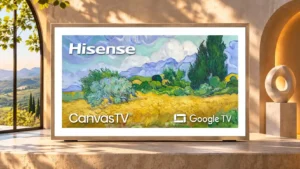
Overall: 3.8/5
4K 144Hz input is available on two HDMI connections, but very slow pixel response prevents fully crisp high-speed motion.
Pros: picture quality, color accuracy
Cons: HDR performance, sound quality
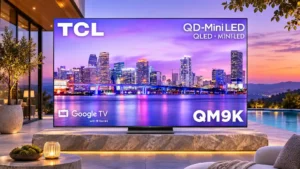
Overall: 3.9/5
High-bandwidth inputs enable 4K at 144Hz gaming, but at least one PC tester could not make the mode work reliably with their graphics hardware.
Pros: peak brightness, overall satisfaction
Cons: value for money, shadow detail
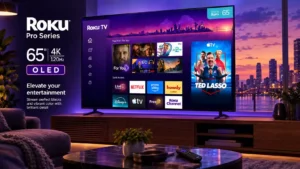
Overall: 4.1/5
Gamers who require 144Hz are directed toward the step-up LX rather than this 120Hz model.
Pros: contrast ratio, value for money
Cons: peak brightness, HDR brightness
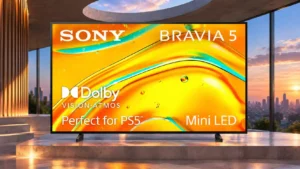
Overall: 4.0/5
The panel tops out at 120Hz, so it is less attractive than 144Hz or faster rivals for high-refresh PC gaming.
Pros: picture quality, black levels
Cons: HDR brightness, value for money
Overall: 4.2/5
The B5 is limited to 120Hz rather than the 144Hz available on select step-up OLED televisions.
Pros: value for money, color accuracy
Cons: HDR brightness, reflection handling
Overall: 3.8/5
The TV tops out at 120Hz even at 4K, while some similarly priced OLED rivals can accept higher 4K refresh rates. High-frame-rate PC enthusiasts have faster alternatives.
Pros: HDMI 2.1 port count, Video input versatility
Cons: value for money, overall satisfaction
Overall: 4.2/5
The TV tops out at 120Hz at 4K, leaving PC gamers without the 144Hz-and-higher options available on several rivals.
Pros: overall satisfaction, picture quality
Cons: HDMI 2.1 port count, reflection handling
Overall: 4.3/5
The 120Hz ceiling is a limitation for high-end PC gaming, with rivals already offering 144Hz or 165Hz at 4K.
Pros: overall satisfaction, overall image accuracy
Cons: value for money, bass performance

Overall: 3.9/5
The S85F is generally a 4K/120Hz display, not a 144Hz gaming TV; one overview claims otherwise, but multiple technical assessments describe a 120Hz ceiling.
Pros: color volume, black levels
Cons: Inconsistent panel and coating by size, sound quality

Overall: 3.9/5
There is no 144Hz or 165Hz mode, a clear limitation for PC players comparing the Sony with faster premium rivals.
Pros: gaming performance, peak brightness
Cons: HDMI 2.1 support, HDMI 2.1 port count
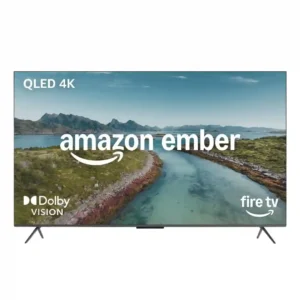
Overall: 3.3/5
The TV cannot match Amazon’s Mini-LED model or gaming-focused rivals at 144Hz. Its 60Hz ceiling makes 144Hz support effectively absent.
Pros: picture quality, overall satisfaction
Cons: value for money, reliability