
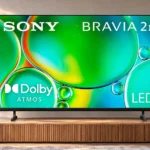
Sony BRAVIA 2 II Feature Scores
Explore all 134 feature scores for Sony BRAVIA 2 II, organized into pros and cons.
Scores by Feature
Summary
134 reviewed features-
Very positive 4.5-5.041 (31%)
-
Positive 3.5-4.433 (25%)
-
Neutral 2.5-3.416 (12%)
-
Negative 1.5-2.419 (14%)
-
Very negative below 1.525 (19%)
Pros
Sort
-
Natural skin tones and convincing out-of-box SDR color are consistent strengths. Some HDR colors and highly saturated animated content can look less accurate.
-
Sony's excellent processing sharpens HD and lower-resolution material with few jagged edges or artificial-looking details.
-
Sharp, natural-looking images delight many everyday viewers, yet experts repeatedly find washed-out dark scenes and limited HDR impact.
-
Skin tones are often lifelike and colors avoid an overly artificial look, particularly in SDR movies and everyday programming.
-
Fine textures and faces look crisp, with especially strong results for HD material scaled up to 4K.
-
Sony's natural-looking image tuning, compression cleanup and detail recovery are the strongest reasons to consider this entry-level set.
-
Old broadcasts, DVDs and compressed streams clean up surprisingly well while retaining faces and fine textures.
-
Delivery and optional setup can be smooth and helpful, though one customer experienced a substantial shipping delay.
-
Games register controller inputs quickly at 60 Hz, with hands-on figures around 9–10 ms and strong praise for responsiveness.
-
Most HDR gradients look clean and nuanced, with only isolated banding in particular colors and brightness ranges.
-
Off-center seats retain a reasonably consistent image on most assessed sizes, although the 50-inch version is more restrictive.
-
Some shoppers are satisfied by discounts and familiar Sony quality, but many experts feel competitors offer better panel technology and gaming features for the price.
-
Spoken voices remain understandable at ordinary volumes and often sound impressively crisp, even where bass and soundstage have shortcomings.
-
Google TV offers a broad choice of major streaming services and downloadable apps, but individual customers miss services such as BritBox.
-
Straightforward controls and Bluetooth operation make everyday navigation easy, but small buttons can be awkward for larger hands.
-
Automatic switching into a low-lag gaming mode simplifies console play and removes an otherwise fiddly part of gaming setup.
-
Compressed videos gain cleaner edges and fewer visible artifacts without excessive sharpening, helping lower-bitrate streaming sources.
-
The television coordinates HDR settings with compatible PS5 consoles, making gaming setup more convenient and less manual.
-
The compact Sony remote is generally admired for its simplicity, though a few owners find the feel cheap or the buttons unreliable.
-
Relatively light construction makes moving and wall-mounting the set manageable for people replacing older, heavier TVs.
-
Many buyers report quick, simple assembly and setup, but required accounts and occasional bugs make the process difficult for others.
-
Film-based 1080i and select 24p sources are handled well; native streaming apps and 60 Hz sources can still show unwanted judder.
-
Several users find Google TV responsive after it loads, though slower launches and crashes make software speed less consistent than premium models.
-
Slim bezels and clean lines give it an understated, attractive appearance, though the predominantly plastic body is clearly entry-level.
-
The 43-to-75-inch range gives households flexibility, with several buyers especially pleased by how their chosen size fits a bedroom or office.
-
Google TV supplies familiar apps, recommendations and casting in one place, but crashes, menus and forced account steps frustrate some owners.
-
Many buyers are delighted by Sony's familiar picture and ease of viewing, but reliability issues and weak contrast create a pronounced divide.
-
Slim framing makes the screen look expansive and helps the television blend into a room without bulky borders.
-
The eARC HDMI connection is useful for sending higher-quality audio to a soundbar or receiver without relying on the TV's internal speakers.
-
Side-facing connectors make it easier to attach devices after wall-mounting, a small but useful improvement over the older layout.
-
Some owners and demonstrations report quick menus and a responsive operating system, a welcome strength for daily navigation.
-
The light body and slim frame make wall mounting practical for bedroom buyers, with standard mounting hardware patterns covered.
-
Cinema and other presets offer natural starting points, but some owners find the default power-saving image disappointingly flat until adjusted.
-
Subtle dark gradations can remain visible even though deep black levels are weak; some picture settings help preserve nuance.
-
High frequencies are generally clear and well defined, even if some voices and musical textures can sound a little bright or closed-in.
-
Sports and action receive mixed marks: processing can smooth pans, but slow pixel response still creates visible blur.
-
At the supported 4K/60 setting, console games can feel smooth and responsive; the panel cannot deliver the higher frame rates of premium gaming TVs.
-
Game Mode delivers responsive 60 fps play with automatic low-latency switching, even though the advanced options remain basic.
-
The included movie access and Sony's IMAX-oriented catalog add a useful extra, especially for people who explore the bundled films.
-
The two plastic feet support the screen securely, even if their materials do not feel premium.
-
Low lag and smooth 4K/60 console play win praise; the slower pixel response, lack of VRR and absence of 120 Hz limit its gaming ceiling.
-
The speakers are adequate in ordinary rooms according to some assessments, but others find maximum output limited and less balanced.
-
The plastic construction is simple but mostly functional and sturdy; a few customers have experienced serious damage or poor initial condition.
-
Lower electricity use and cool operation receive praise, though energy-saving picture defaults may need adjustment for a satisfying image.
-
The built-in game menu offers helpful tools, but it is considerably more basic than the controls available on higher-end gaming TVs.
-
Motionflow can smooth lower-frame-rate video effectively, but people sensitive to an artificial soap-opera look may prefer to disable it.
-
Passing major audio formats to external systems is a strong point and helps compensate for the TV's modest built-in speakers.
-
Ambient-light adjustment adapts the picture to changing room brightness, a handy convenience appreciated during setup.
-
Pairing headphones and controllers is straightforward, adding flexibility for private listening and gaming accessories.
-
The direct-lit LCD panel is unlikely to suffer permanent burn-in, a practical advantage for static content and repeated everyday use.
-
Very high backlight-flicker frequencies make the picture effectively flicker-free under most normal settings.
-
Four HDMI inputs offer welcome flexibility for a console, set-top box and audio equipment without constant cable swapping.
-
The screen stays relatively cool during operation, which one owner especially appreciated versus an older LCD television.
-
Out-of-box SDR tuning is impressively faithful, with only small deviations in color and gamma.
-
Protective cardboard, foam and corner pieces give the unpacking process a reassuring sense of care.
-
The RGB layout and proper chroma handling keep on-screen computer text clean, making occasional desktop use feasible.
-
A removable power cord makes handling and replacement more convenient than on sets with a captive cable.
-
A straightforward button arrangement and uncomplicated remote design make the main controls easier to find than on many alternatives.
-
Voice search can find programs across compatible apps, avoiding repeated navigation through individual service menus.
-
The raised feet leave useful space for a soundbar beneath the TV, despite the stand's wide footprint.
-
Attaching the feet or placing the TV on a stand is straightforward for owners who handle setup themselves.
-
A direct USB test handled common downloaded video formats smoothly, making local movie files straightforward to play.
-
Two USB ports give owners convenient connections for media and accessories alongside the four HDMI inputs.
-
Sony's highlight roll-off helps preserve detail even when the panel is dim, while HDR color and tracking can require adjustment.
-
The newer Wi-Fi implementation is seen as a welcome connectivity upgrade over the previous generation.
-
Apple device casting is generally convenient, with particularly smooth mirroring in positive tests. At least one owner reports repeated AirPlay disconnects.
-
Built-in Google Cast and AirPlay make phone-to-TV sharing easy for most users, although a few specific app and connection problems interrupt the experience.
-
SDR colors start very close to accurate, leaving limited benefit from extra calibration. HDR calibration can improve accuracy more noticeably.
-
Google TV places suggested shows and films from multiple services in one location, reducing time spent navigating separate apps.
-
Atmos passthrough to compatible audio systems is a welcome feature, particularly for owners pairing the TV with a soundbar.
-
Natural color and sensible Cinema settings give standard-range TV shows and older movies a satisfying look.
-
Stereo separation can feel wider than expected for a basic 20-watt television, giving dialogue and effects a little room to breathe.
-
Slow camera pans produce only minor stutter, with motion interpolation offering a further improvement when desired.
-
Remote-based voice commands work well for quick searches, but Google TV's app-only mode can remove voice controls.
Cons
Sort
-
Experiences diverge sharply, from trouble-free sets to repeated freezes, unexpected shutdowns, audio faults and early failures.
-
Highlights rarely have the intensity HDR material deserves, and the weak peak brightness makes bright scenes look flat rather than spectacular.
-
Dark scenes expose the biggest weakness: blacks often look gray or slightly glowing rather than rich and deep. Some smaller-model assessments and positive impressions are more forgiving.
-
App crashes, Hulu failures and freezes are among the most frustrating customer complaints, even though other users experience fast, responsive streaming.
-
Wireless performance is divisive: some owners report stable streaming, but repeated disconnections and failed router pairing are common complaints.
-
This is a point of disagreement: some viewers enjoy colorful HDR10 movies, while measurements find weak highlights, low contrast and little advantage over SDR.
-
Customer service leaves several dissatisfied owners without solutions after screen or audio faults, sometimes after hours of troubleshooting.
-
A native 60 Hz panel without VRR cannot meet the expectations of 120 fps competitive or high-refresh console and PC gaming.
-
Some owners face slow or faulty startups, including black screens and delayed recognition of connected inputs.
-
Unexpected shutdowns and unstable settings are serious annoyances in several ownership reports, sometimes making the set difficult to use at all.
-
Weak native contrast is especially obvious with dark movie scenes and letterbox bars, although the 50-inch assessment is less severe.
-
Missing VRR is a clear drawback for gamers seeking smooth response to fluctuating frame rates, even if basic 60 fps titles play fine.
-
The native 60 Hz ceiling is fine for ordinary shows and casual games but is a major drawback for anyone expecting 120 Hz motion.
-
Substantial daylight makes the relatively dim image and visible reflections difficult to ignore, reducing daytime usability.
-
Some deliveries arrive promptly and in excellent condition, while multiple reports of broken screens and delayed shipments raise caution about handling.
-
Basic setup guides do not solve every issue: settings instructions and cable-provider compatibility information have left customers confused.
-
HDMI 2.0-class bandwidth leaves the set short of the advanced features expected by buyers of newer gaming consoles.
-
Without independent dimming zones, the entire backlight affects blacks and highlights, leaving dark scenes washed out.
-
Lamps and windows can reflect prominently on the screen, particularly in darker scenes or well-lit rooms.
-
Slow pixel transitions create ghosting, dark-state smearing and noticeable blur in fast-moving content.
-
Ordinary broadcast viewing is hindered by relatively low screen brightness, especially when sunlight competes with the picture.
-
Grayish blacks, backlight glow and shallow contrast make dedicated lights-off movie sessions a poor fit, despite respectable image processing.
-
Equalizer and surround adjustments offer useful control, but complaints about lost volume and output selections reveal inconsistent behavior for some owners.
-
The remote responds promptly for satisfied users, while others describe intermittent control failures or unresponsive buttons.
-
The fixed, widely spaced feet demand a generously sized cabinet; several owners had to reconsider their furniture or placement.
-
Bass is a recurring weak point: dialogue may stay clear, but music, effects and movie explosions lack the depth of an external sound system.
-
Google TV account setup frustrates some owners, particularly those seeking a simple television without extra logins or service registration.
-
Limited peak luminance prevents eye-catching HDR impact and leaves the screen struggling against strong ambient light.
-
Broad gray fields show dark corners and uneven patches; one customer also reports severe vertical black stripes on a defective panel.
-
High-frame-rate 4K play is a serious limitation: the 60 Hz television cannot provide the 4K/120 experience sought by demanding console gamers.
-
The Google TV home interface contains advertising that cannot be disabled, undermining an otherwise rich selection of content and apps.
-
Large areas of black can look bluish or cloudy, distracting from dark movies even when near-black banding is minimal.
-
The limited range of colors holds back HDR vibrancy, so advanced color presentations cannot rival richer QLED and Mini-LED sets.
-
An owner reports serious problems with the TV switching between speaker outputs, occasionally producing both audio paths or none at all.
-
The absence of AMD FreeSync is one more gaming compromise alongside the 60 Hz refresh limit and lack of variable-refresh support.
-
A connected cable box can take several minutes to register after startup, making input switching less dependable than it should be.
-
The basic package covers ordinary installation, but one buyer reports receiving no remote and having difficulty resolving it.
-
Fast action can produce visible intermediate-color artifacts, taking clarity away from sharp moving edges.
-
HDR10 and HLG are available, but the missing Dolby Vision option is disappointing for viewers who specifically value that format.
-
Shadow and bright-area detail are sometimes retained quite well, but the brightest highlight textures can still disappear or look subdued.
-
Supported HDMI, apps and mobile controls provide useful connections, but some cable-service and router combinations have proved unexpectedly troublesome.
-
The optional blur-reduction mode produces duplicated images with 60 fps video, limiting how useful this feature is in practice.
-
Gray uniformity is imperfect, with darker corners and a patchy central area that can be noticeable on broad, even backgrounds.
-
Bluetooth listening remains an option, but a hands-on owner misses the physical headphone jack found on some televisions.
-
The overlapping BRAVIA generations and closely related numerical names make Sony's range harder to distinguish at a glance.
-
Recording service channels can require another box or service-specific hardware, frustrating buyers expecting one-device simplicity.
-
Missing Dolby Vision disappoints some home-theater viewers, though other assessments consider it a minor omission beside the panel's limited HDR capabilities.
-
Fast-moving objects can smear or ghost, even though some owners find motion sufficiently clear for everyday games and shows.
-
Direct reflections remain distracting in bright environments, even though some hands-on viewing finds the screen acceptable under indoor lights.
-
The available app space is adequate for typical installations, though the modest free capacity can feel restrictive compared with larger platforms.
-
A configurable last-input setting is useful, but the default tendency to start at the Google TV interface annoys viewers who just want live channels.
-
Most gradients are reasonably smooth, though dark grays and bright greens can show visible bands.
-
A 75-inch picture offers appealing size for normal TV watching, but the larger canvas also exposes the weak blacks, reflections and motion blur.
-
An aggressive HDR roll-off retains some bright detail, but the dim screen cannot reproduce many highlights at intended intensity.
-
SDR whites are well tuned, while HDR white balance has a slight cool or blue bias that calibration can reduce.
-
The simple remote and familiar apps please many households, but account setup, menu navigation and occasional faults can overwhelm less technical users.
-
Numerous presets and quick adjustments are helpful, although changing unwanted processing can be cumbersome for some owners.
-
Vivid everyday color impresses many buyers, but technical measurements find that the panel struggles with very bright or dark saturated shades.
-
Popular services are easy to access, but a few customers encounter missing apps or failures with specific services.
-
Built-in audio is fine or even impressive for many everyday viewers, but weak bass, muddy sound and sporadic audio failures prompt frequent criticism.
Use Cases
Best for
Sort
-
Automatic tone mapping and low-lag 4K/60 performance make PS5 play enjoyable, but there is no VRR or genuine 4K/120 output.
-
eARC and audio-format passthrough make pairing a soundbar attractive, improving bass and immersion beyond the modest internal stereo speakers.
-
Interlaced broadcasts are handled exceptionally well, with clean deinterlacing and smooth film-based frame conversion. It is a particularly useful strength for conventional TV feeds.
-
The size choices, attractive picture and compact-room suitability make this a comfortable bedroom television for basic viewing. A few bedroom owners are especially pleased with the fit.
-
At 60 fps, the low input lag and automatic gaming mode are enough for casual console play. Faster competitive titles expose the limitations of the screen.
-
Smaller sizes fit home offices comfortably, and a business buyer likes the simple navigation and everyday image quality.
-
Parents buying this for a child or teenager's room report a satisfying size, easy operation and strong overall enjoyment.
-
Mainstream streaming is a good everyday fit thanks to strong upscaling, natural color and an extensive app library.
-
A relatively wide horizontal viewing angle benefits people sitting off-center, particularly in group seating arrangements. The 50-inch version draws less praise.
-
Full HD channels and videos remain sharp and detailed after scaling to the 4K screen, making ordinary streaming and broadcasts pleasant to watch.
-
Cable, broadcast television and ordinary HD sources benefit greatly from Sony's cleanup and upscaling, often looking sharper than expected.
-
Older DVD movies benefit from noise reduction and upscaling, producing a cleaner, sharper image than the original signal might suggest.
-
The internal speakers are sufficient for basic news and shows in many rooms, but weak bass and occasional sound faults may push movie fans toward external audio.
-
Some find live football and other action impressively smooth, while slow pixel response and weak bright-room performance remain concerns for serious sports fans.
-
AirPlay adds convenient screen and media sharing from iPhones, iPads and Macs, making this a useful companion to Apple devices.
-
A customer reports enjoyable use on an outdoor patio, but direct-sunlight performance and weather resistance are not established by that experience.
-
One buyer prone to screen-related migraines and motion sickness found this display much more comfortable than other recent TV technologies.
-
Clear dialogue at low volume makes late-night news and streaming convenient without needing a soundbar.
-
Wireless Bluetooth headphones allow quiet listening without bothering others in the room.
Conditional or not ideal for
Sort
-
Long-term ownershipLCD burn-in risk is low, but early hardware and connection failures reported by some owners undermine confidence in years of trouble-free service.
-
Home theater viewingThe image processor is capable, but shallow blacks and underpowered HDR are poor foundations for an ambitious home-cinema setup.
-
Bright-room viewingLow SDR brightness and distracting reflections make rooms with substantial daylight or glare a poor match, despite a few favorable anti-reflection impressions.
-
PC gamingBasic 4K/60 games work acceptably, but the absence of VRR and 120 Hz makes this a poor choice for serious PC multiplayer gaming.
-
HDR gamingThe PS5-specific picture setup is convenient, but subdued highlights and limited contrast keep HDR games from looking as impressive as they could.
-
Daytime sports viewingThe combination of insufficient brightness and blurry fast movement makes sunny afternoon sports particularly challenging.
-
Budget-conscious buyersSony processing is attractive at a discount, but the television often costs more than competitors offering stronger contrast, brightness and gaming hardware.
-
Everyday living-room viewingRegular broadcasts, streaming and everyday shows are this television's sweet spot, provided the room is not excessively bright and expectations stay modest.
-
Movie watchingAccurate colors, good upscaling and effective 24p playback benefit ordinary movies; dark scenes and cinematic HDR suffer from poor contrast.
-
Console gamingPlayStation and Xbox games feel responsive at 4K/60, but the 60 Hz ceiling, missing VRR and modest HDR make this a conditional gaming choice.