Best for soundstage
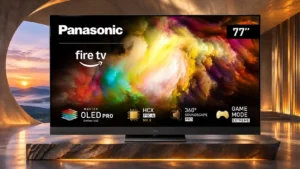
Panasonic Z95B OLED
5.0 attribute score
Highest scored product for this attribute based on supporting review evidence.

Highest scored product for this attribute based on supporting review evidence.
Balances the attribute score, supporting reviews, and overall product strength.
Has the broadest review evidence for this attribute.
Strongest overall product among items with scored evidence for this attribute.
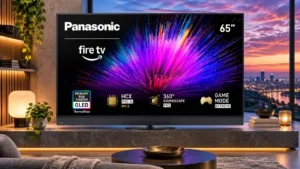
Overall: 4.3/5
A broad, directional soundfield creates convincing placement, with occasional limitations in bass and voice anchoring.
Pros: picture quality, color accuracy
Cons: bass performance, HDMI 2.1 port count
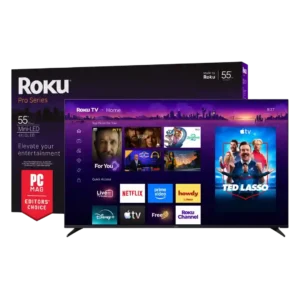
Overall: 4.4/5
Stereo imaging and virtual surround are unusually convincing for built-in speakers, creating a wider and more immersive soundstage than typical TVs.
Pros: overall satisfaction, picture quality
Cons: reliability, portability and versatility
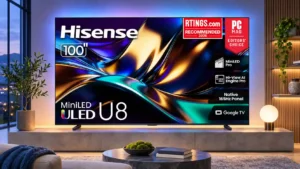
Overall: 4.1/5
The side and height speakers provide a wider acoustic image than the ordinary front-firing TV speaker setup.
Pros: peak brightness, HDR brightness
Cons: sound quality, viewing angles
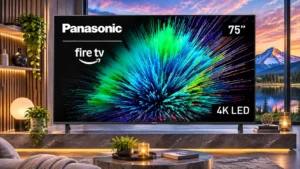
Overall: 3.3/5
At least one extended listening test found the soundstage unexpectedly wide for a low-cost TV.
Pros: picture quality, motion handling
Cons: HDR performance, HDR brightness
Overall: 4.0/5
Up-firing Atmos playback creates a more expansive presentation than typical built-in TV speakers.
Pros: overall satisfaction, picture quality
Cons: size options, value for money

Overall: 4.5/5
Amplify mode opens the presentation noticeably, creating a wider and more involving soundstage than the default setting.
Pros: glare resistance, black levels
Cons: Dolby Vision support, color gamut

Overall: 3.8/5
Dolby Atmos output can spread effects around the room for an immersive experience with appropriate speakers.
Pros: cable management, design and appearance
Cons: value for money, Dolby Vision support
Overall: 4.2/5
Effects have useful separation and width for TV speakers, though the presentation remains relatively screen-bound.
Pros: picture quality, overall satisfaction
Cons: design and appearance, Dolby Vision support

Overall: 4.2/5
An expansive soundstage can extend beyond the TV's edges and even add a sense of height. It does not always project as far into the room as a dedicated system.
Pros: high-refresh-rate gaming, gaming performance
Cons: value for money, bass performance

Overall: 4.0/5
The 2.1.2 speaker layout creates a surprisingly broad, immersive stage for a TV, including usable height effects in some rooms.
Pros: overall satisfaction, picture quality
Cons: reliability, build quality
Overall: 4.3/5
Virtual processing can lend movies and sports a pleasantly wide presentation despite the slim speakers.
Pros: picture quality, black levels
Cons: bass performance, HDR brightness

Overall: 4.2/5
The built-in speakers create a fuller and more spacious soundstage than expected for a budget flat-panel TV.
Pros: overall satisfaction, value for money
Cons: smart TV platform, blooming control
Overall: 3.8/5
Dolby Atmos positioning gives some effects a convincing directional location on screen.
Pros: overall satisfaction, color gamut
Cons: value for money, local dimming performance
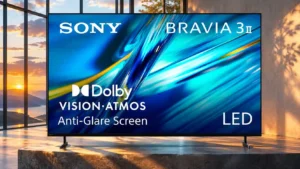
Overall: 3.8/5
The speakers can project a surprisingly broad and lively sound for their size, though the presentation remains limited by a two-channel TV layout.
Pros: HDMI 2.1 port count, overall satisfaction
Cons: HDR performance, bass performance
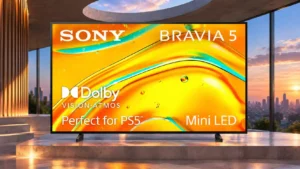
Overall: 4.0/5
The speakers create a spacious, reasonably precise stereo image, positioning dialogue and effects convincingly.
Pros: picture quality, black levels
Cons: HDR brightness, value for money

Overall: 3.9/5
Acoustic Surface Audio creates a wide, well-localized presentation that extends beyond the screen, though a full surround system still adds more immersion.
Pros: gaming performance, peak brightness
Cons: HDMI 2.1 support, HDMI 2.1 port count
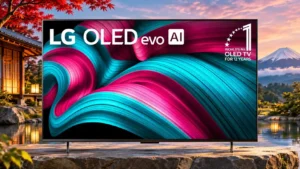
Overall: 4.0/5
Virtual processing can widen the stage, but sound from the TV alone rarely matches the picture’s sense of scale.
Pros: value for money, overall satisfaction
Cons: Remote control usability, sound quality
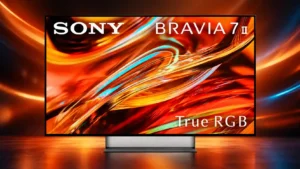
Overall: 4.2/5
The TV can create a surprisingly wide, spacious stage, but some setups still make the sound feel tied to or behind the screen.
Pros: overall satisfaction, picture quality
Cons: HDMI 2.1 port count, reflection handling
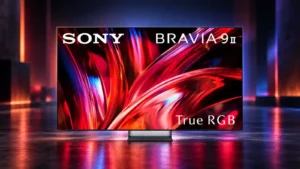
Overall: 4.3/5
The soundstage is broad, tall and spatially convincing, with effects extending beyond the screen and good positional precision.
Pros: overall satisfaction, overall image accuracy
Cons: value for money, bass performance

Overall: 4.2/5
Height channels add spaciousness, but the integrated system cannot match the width of separate speakers.
Pros: overall satisfaction, glare resistance
Cons: motion handling, viewing angles

Overall: 4.0/5
There is some useful separation and direction between sounds, though weak dynamics and bass limit the overall sense of space.
Pros: black levels, picture quality
Cons: glare resistance, reflection handling

Overall: 4.0/5
Front-facing channels create a wide, engaging presentation, though they do not fully replace a separate surround system.
Pros: peak brightness, blooming control
Cons: value for money, motion clarity
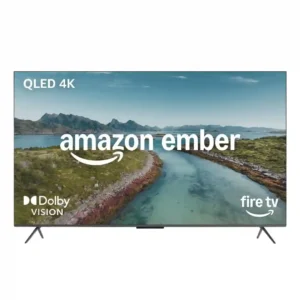
Overall: 3.3/5
Sound has a pleasant breadth and wider profile than basic TV speakers, even without convincing height effects. It is competent rather than truly cinematic.
Pros: picture quality, overall satisfaction
Cons: value for money, reliability
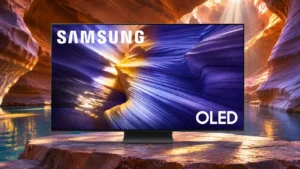
Overall: 3.9/5
Sound spreads wider than the cabinet suggests, especially for everyday programs, but it cannot match a dedicated sound system.
Pros: value for money, overall satisfaction
Cons: Dolby Vision support, sound quality
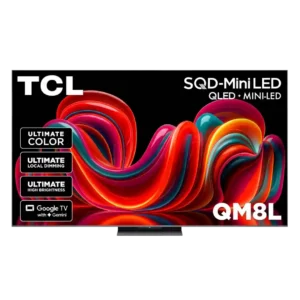
Overall: 4.4/5
Virtual spatial processing adds a noticeable sense of height and width. It is effective for casual immersion but does not replace a real surround setup.
Pros: picture quality, value for money
Cons: stand quality, judder handling

Overall: 4.1/5
The built-in speakers give some left-to-right movement, but the sense of width does not extend far beyond the cabinet.
Pros: overall satisfaction, value for money
Cons: Smart TV platform, advertising intrusiveness

Overall: 3.8/5
The speakers can create a broad presentation for voices and music, but deeper cinematic impact still calls for external speakers.
Pros: picture quality, 4K at 144 Hz support
Cons: sound quality, value for money
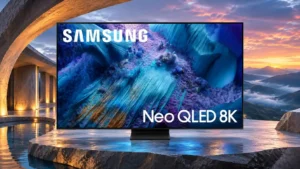
Overall: 3.8/5
Audio processing spreads sound surprisingly widely for such a thin panel.
Pros: glare resistance, overall satisfaction
Cons: input lag, value for money
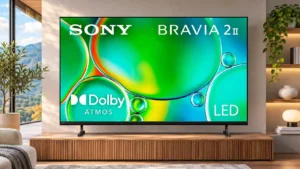
Overall: 3.6/5
Stereo separation can feel wider than expected for a basic 20-watt television, giving dialogue and effects a little room to breathe.
Pros: picture quality, overall satisfaction
Cons: sound quality, reliability

Overall: 3.9/5
Stereo placement is reasonably defined, though the speakers cannot create the width of a separate sound system.
Pros: peak brightness, value for money
Cons: reflection handling, glare resistance

Overall: 3.8/5
Despite side- and rear-mounted speakers, the sound spreads convincingly across the width of the screen.
Pros: picture quality, overall satisfaction
Cons: color crosstalk, value for money

Overall: 4.1/5
The presentation can sound wider and more precisely mapped than older C-series TVs, yet standard models still feel narrow beside a dedicated sound system.
Pros: picture quality, gaming performance
Cons: value for money, sound quality

Overall: 4.4/5
Audio can spread beyond the screen with decent directionality, yet it often remains contained and lacks the scale of stronger built-in systems.
Pros: picture quality, peak brightness
Cons: value for money, sound quality

Overall: 4.1/5
The sound system offers respectable width and a sense of space, though it falls short of dedicated surround speakers.
Pros: peak brightness, picture quality
Cons: value for money, color accuracy

Overall: 3.3/5
The audio has pleasing balance and occasional directional width, but it does not deliver a powerful cinematic soundstage.
Pros: color accuracy, upscaling quality
Cons: picture quality, sound quality

Overall: 3.7/5
Effects can extend beyond the screen and occasionally suggest height, but some listening tests find a narrow or center-heavy sound field.
Pros: value for money, HDR brightness
Cons: color accuracy, shadow detail

Overall: 4.2/5
Amplify can widen and energize the presentation, but surround and overhead effects rarely extend far beyond the screen.
Pros: picture quality, glare resistance
Cons: value for money, bass performance
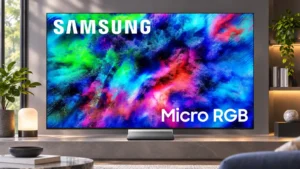
Overall: 3.7/5
Sound effects can spread beyond the display, though the presentation sometimes feels narrow or confined behind the screen. An external system brings more cinematic scale.
Pros: color volume, overall satisfaction
Cons: value for money, color accuracy
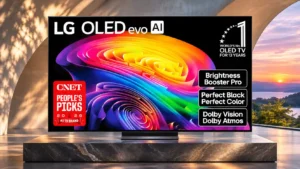
Overall: 4.1/5
Built-in speakers can sound reasonably wide for everyday TV, but lack the spaciousness of an external surround system.
Pros: gaming performance, HDR brightness
Cons: reflection handling, glare resistance

Overall: 4.0/5
Effects can track on-screen action, yet the built-in soundstage is narrower and less enveloping than a proper surround system.
Pros: reflection handling, overall satisfaction
Cons: Dolby Vision support, bass performance

Overall: 4.2/5
Virtual audio processing broadens the presentation somewhat, yet the two-channel speakers still sound constrained compared with a separate system.
Pros: value for money, color accuracy
Cons: HDR brightness, reflection handling

Overall: 3.8/5
Processing expands the apparent width somewhat, but the sound still stays firmly in front of the viewer.
Pros: picture quality, contrast ratio
Cons: blooming control, glare resistance
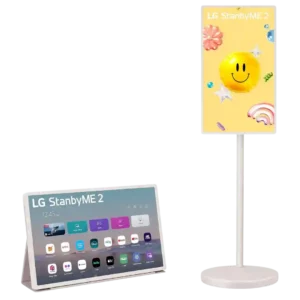
Overall: 3.8/5
AI Sound Pro can make the presentation feel wider, but opinions are mixed because some reviewers found the result hollow or overprocessed. Standard or Cinema modes may sound more balanced.
Pros: overall satisfaction, portability and versatility
Cons: value for money, menu responsiveness
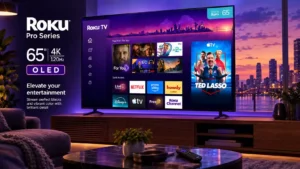
Overall: 4.1/5
Removing the older Soundstage audio port is treated as a setback caused by the slimmer design.
Pros: contrast ratio, value for money
Cons: peak brightness, HDR brightness
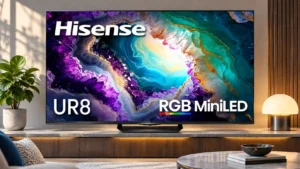
Overall: 4.0/5
Sound effects remain clear but can feel crowded, with a relatively narrow presentation.
Pros: gaming performance, color volume
Cons: blooming control, dark-room performance

Overall: 3.1/5
The small stereo system cannot produce the enveloping impact of a dedicated audio setup.
Pros: gaming performance, color accuracy
Cons: value for money, overall satisfaction

Overall: 4.0/5
Stereo imaging follows sound reasonably, but the built-in stage stays close to screen width.
Pros: color accuracy, picture quality
Cons: HDR brightness, peak brightness
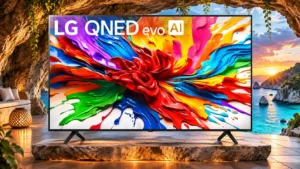
Overall: 3.9/5
Virtual processing can spread audio wider but often leaves it thin, vague, or lacking believable depth.
Pros: gaming performance, overall satisfaction
Cons: sound quality, value for money
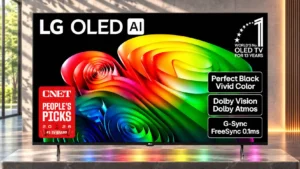
Overall: 3.8/5
Stereo separation remains close to the screen; AI processing can widen it a little but does not provide convincing cinematic space.
Pros: value for money, peak brightness
Cons: color accuracy, stand quality
Overall: 4.0/5
Sound largely stays inside the width of the screen rather than creating an enveloping cinematic field.
Pros: contrast ratio, black levels
Cons: reflection handling, color accuracy