
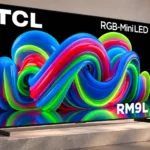
TCL RM9L Feature Scores
Explore all 101 feature scores for TCL RM9L, organized into pros and cons.
Scores by Feature
Summary
101 reviewed features-
Very positive 4.5-5.045 (45%)
-
Positive 3.5-4.428 (28%)
-
Neutral 2.5-3.415 (15%)
-
Negative 1.5-2.412 (12%)
-
Very negative below 1.51 (1%)
Pros
Sort
-
Enormous peak luminance is one of the TV's defining advantages, making bright highlights and daytime scenes exceptionally punchy.
-
Every HDMI port handles 4K at 144Hz, giving high-refresh PCs and consoles flexible connection options without needing a special input.
-
Brilliant colors retain impressive intensity as brightness rises. Some white-adjacent colors and saturated scenes reveal the technology's limits.
-
Extremely bright highlights and vivid daylight scenes give HDR films tremendous impact. Long sustained highlights, however, can dim over time.
-
Four full-featured HDMI 2.1 ports remove a common flagship-TV compromise, making it easy to connect several high-end gaming devices.
-
Modern HDMI features are available across every input, including high-refresh 4K signals and the gaming modes buyers expect.
-
Games look brilliant, expansive, and responsive on this screen. Slight trailing and the occasional picture-mode quirk keep it short of flawless.
-
Deep blacks remain convincing beside small bright objects, often approaching OLED-like depth. Extreme peak-brightness settings can lift black levels.
-
The best scenes look spectacularly bright, colorful, and three-dimensional. Some lower-quality content, color errors, and inconsistent processing stop the performance from being uniformly excellent.
-
The combination of 4K/144Hz inputs and even faster lower-resolution modes makes high-frame-rate gaming flexible and enjoyable.
-
The 85-inch panel makes movie characters, racing environments, and game landscapes feel almost life-size. Its scale can also overwhelm a modest room.
-
High-definition and lower-resolution sources upscale to a clean, detailed image, making even older shows convincing at 85 inches.
-
The strong native panel contrast and precise backlight create excellent separation between deep shadows and bright highlights.
-
The RGB backlight covers an exceptionally broad range of color, producing vivid reds, greens, and fine variations that standard televisions struggle to match.
-
Sunlit rooms are no match for the RM9L's enormous brightness reserve. Some direct reflections remain visible despite the panel's anti-glare treatment.
-
The Game Bar is easy to reach and provides useful signal readouts, frame-rate information, and practical adjustments during play.
-
Sports and gaming generally look smooth and controlled, with better performance than older models. Some sources still show blur or uneven cadence.
-
Automatic game detection and intuitive settings reduce friction, although the most accurate HDR Game Mode can look dimmer than other modes.
-
The RM9L earns enthusiasm for extraordinary color, brightness, and immersive gaming, but its price and inconsistent picture behavior prevent universal endorsement.
-
Compatible consoles automatically trigger the low-lag gaming settings, avoiding manual switching each time a game starts.
-
Controls generally feel responsive, especially at high refresh rates. Sixty-hertz lag is somewhat less competitive but still satisfactory for everyday gaming.
-
Modern 4K games look detailed, colorful, and smooth on the gigantic panel. Full-rate HDMI connectivity makes the large screen particularly capable.
-
The Google TV ecosystem covers a very wide range of services, including major catch-up and subscription streaming apps.
-
Small sparks, bright reflections, and camera flashes pop sharply against darker scenes. Only the most extreme peaks occasionally lose subtle shading.
-
Bright HDR material can be strikingly vivid and immersive, with strong blacks and saturated color. Tracking inaccuracies and mode inconsistencies limit its faithfulness to the source.
-
The slim-bezel, dark-metal presentation looks upscale from the front, but the thicker rear body is less graceful from the side or on a wall.
-
A large number of effective dimming zones preserves intense highlights without washing out adjacent blacks. Very bright settings can still create visible halos.
-
The fine border keeps the emphasis on the picture and makes the large display feel cleaner and more immersive.
-
VRR works smoothly across compatible sources and helps avoid tearing even through sharp frame-rate drops.
-
The backlit metal-look remote feels premium, with convenient programmable and picture-adjustment buttons.
-
The set feels solid and premium overall, with reassuring stand stability. The rear panel is less rigid than the rest of the construction.
-
Google TV brings a familiar layout, user profiles, and plentiful content options. Advertising remains a nuisance unless the set is configured with fewer smart functions.
-
Wireless satellite and subwoofer support provide a practical way to build bigger audio than the built-in speakers can deliver.
-
Gentle smoothing improves camera pans, but stronger settings can make films look artificially processed.
-
High-quality footage reveals remarkable textures, from animal hair to intricate movie effects. Compressed feeds sometimes expose softness or blotchy artifacts instead.
-
Local dimming usually keeps halos modest, particularly head-on, but increasing brightness makes blooming more visible. Fully suppressing halos costs substantial light output.
-
PlayStation 5 and Xbox Series consoles can use their full 4K/120Hz output with responsive motion and VRR support.
-
Major surround formats can pass to a compatible receiver or soundbar, making the TV easy to fit into a more serious audio setup.
-
Simple controls let users shift between brighter, warmer, and more energetic sound profiles without mastering an equalizer.
-
The LCD panel avoids permanent OLED-style burn-in, helping ease concerns about static interfaces and long gaming sessions.
-
Streaming from an iPhone worked smoothly, with reliable playback and no observed control glitches.
-
The eARC connection handles high-quality uncompressed audio to compatible external receivers or soundbars.
-
Four well-equipped HDMI inputs provide ample room for a console, gaming PC, sound system, and additional streaming devices.
-
The range of supported HDR formats is broad enough to avoid choosing a TV around one preferred HDR standard.
-
Navigation is snappy, with Google TV responding quickly to directional inputs.
-
Google TV feels fast and responsive when opening menus and moving through the interface.
-
The wide feet keep the massive display surprisingly steady, with minimal wobble.
-
RGB Mini LED delivers unusually pure, bright color, making its benefits obvious with vivid source material. Color bleeding and a thicker backlight structure remain compromises.
-
Immense light output does much of the work against room glare. Direct reflections and some diffraction effects still show up under challenging lighting.
-
Strong contrast can reveal excellent dark-scene texture, though some factory modes crush shadows and need adjustment.
-
Games and action scenes remain fairly sharp, although darker pixel transitions sometimes leave mild blur trails behind fast objects.
-
Near-black scenes are impressively even, while large gray or bright areas show some darker edges and modest uniformity issues.
-
Backlighting, a programmable shortcut, and direct picture controls are convenient. Some button placements and the brightness rocker direction are less intuitive.
-
Side-viewing performance is contentious, ranging from impressively steady at moderate angles to obvious color and brightness shifts farther off-axis.
-
Near-black pictures look clean with almost no visible banding or backlight bleed. Mild clouding is present when local dimming is disabled.
-
Rear cable guides and a stand notch help route multiple connections without leaving an untidy trail.
-
Dark-room movies benefit from very deep blacks and intense pinpoints of light. Viewers sensitive to blooming may need to lower peak-brightness settings.
-
Backlight zone transitions track moving objects smoothly with little visible flicker or instability.
-
Broad variable-refresh support helps reduce screen tearing and works with low-frame-rate compensation for smoother games.
-
Most color transitions are smooth with only minor, barely noticeable steps outside the problematic Dolby Vision examples.
-
Movies play with very little judder across most sources, though unusual frame-rate combinations can show small timing issues.
-
Full chroma support and an RGB subpixel layout keep desktop text well defined, making occasional PC display use practical.
-
Very slim side borders help the display seem almost frameless. The thicker lower edge and somewhat bulky back are easier to notice from certain angles.
-
Low levels of interpolation reduce the hold-time stutter that can appear in slow panning shots.
-
Low-frame-rate compensation helps maintain tear-free play even when games drop well below their target frame rates.
-
Useful shortcuts speed up picture changes, but the off-center Home key and reversed brightness rocker may take getting used to.
-
The center of the screen stays relatively clean during sports, but darker edges can be distracting on large, uniform fields.
-
Low-bitrate streaming artifacts are handled effectively, with a small sacrifice in fine texture at heavier smoothing levels.
-
Despite side- and rear-mounted speakers, the sound spreads convincingly across the width of the screen.
-
The two blade-style feet look neat and support the large panel effectively, although they offer no narrow mounting position.
-
Careful calibration can transform color accuracy into one of the TV's strengths. The process is awkward because menus and local dimming interfere with measurements.
-
Speech can sound clean and suitably full, although uneven speaker response sometimes makes dialogue less consistent.
-
Motion response is generally respectable, but transitions between dark and bright shades can be slow enough to create light trails.
Cons
Sort
-
The visual quality is impressive, yet flagship pricing makes standard Mini LED and OLED alternatives hard to ignore. Value improves only for buyers who specifically want this RGB technology and scale.
-
Moving or positioning the exceptionally large panel is difficult and may require multiple people and an oversized route into the room.
-
Deep bass is a repeated limitation, and built-in low-frequency weight trails the scale of the screen. An external subwoofer helps.
-
Switching sources or picture modes can produce different colors and light output despite returning to the same calibrated preset. This unpredictability is especially frustrating at flagship pricing.
-
HDR midtones and bright scenes can be pushed far above the intended brightness. Calibration and more restrained picture settings matter for accurate reproduction.
-
The range favors enormous 85-, 98-, and 115-inch installations rather than common 55- to 75-inch living-room sizes.
-
Google TV continues showing ads even when personalization is disabled. Avoiding them requires a basic setup that sacrifices many smart functions.
-
Automatic picture adjustment can leave the TV looking different after a source or mode change. An occasional incorrect transition makes the result difficult to trust.
-
Dolby Vision is available, but some Dolby Vision picture modes have produced troublesome banding. Dark mode can be a safer choice than brighter presets.
-
The internal speakers cannot get especially loud, limiting how well their sound fills a large entertainment room.
-
The factory picture can be too cool, with blue-heavy grayscale and HDR midtones brighter than intended. Accurate reproduction needs a carefully chosen preset or calibration.
-
Peak highlights are spectacular, but brightness falls noticeably if those bright elements remain on screen for a sustained period.
-
HDR midtones and bright scenes are often pushed too high, so the picture looks more intense than the mastered signal intended.
-
Bright saturated objects can tint neighboring white or pale areas, especially in demanding scenes. It is barely noticeable in some viewing, yet a recurring flaw at high brightness.
-
The far-apart feet require a very wide TV unit. They offer stable support but little flexibility for smaller furniture.
-
Artwork can look impressive at this size, with automatic dimming in screensaver mode. The glossy panel and fixed bezels do not replicate a dedicated art television.
-
Panel risk factors appear favorable in theory, yet an actual dead-zone failure and changing image output raise legitimate concerns.
-
Attaching the feet is straightforward, but the huge, heavy panel is awkward to lift, position, or bring through narrow doors.
-
Upscaling and optional detail enhancement can improve ordinary material, but automatic adjustments sometimes produce inconsistent colors between inputs and presets.
-
Picture settings have an unusually large effect on the result: good choices reveal beautiful images, while aggressive defaults can skew color or create artifacts.
-
The factory white balance can lean blue, though other presets and professional calibration improve it substantially.
-
Most gradients look smooth, but one assessment found serious banding in certain Dolby Vision scenes. Changing to Dolby Vision Dark can resolve that specific issue.
-
Personalized ad targeting can be disabled, but ordinary Google TV ads remain unless smart functions are restricted.
-
Wall mounting is possible, but the thicker rear profile looks less sleek than TCL's slimmer SQD flagship.
-
Compressed streams lose much of their blockiness, though aggressive cleanup can soften tiny details and make textures seem waxy.
-
Color is beautifully saturated, but accuracy assessments vary by picture preset. Factory blues can be too cool, while Filmmaker Mode and calibration give much better balance.
-
The screen reduces indirect glare reasonably well but can still show mirror-like reflections and rainbow artifacts from bright light sources.
-
Built-in audio divides opinion: it can sound clear and balanced for everyday television, yet lacks the punch and refinement expected beside such a large picture.
Use Cases
Best for
Sort
-
Extraordinary brightness overpowers substantial daylight, making the RM9L exceptionally easy to see in bright living rooms. Reflections are not completely eliminated.
-
PS5 and Xbox hardware can use 4K/120Hz, VRR, automatic low-latency mode, and a generous set of HDMI ports. The picture adds unusual scale to console adventures.
-
Story-driven and relaxed gaming are standout uses for the massive, vivid screen. Controls feel responsive and routine 60fps play looks smooth.
-
Deep blacks, strong highlights, and expansive color make well-mastered movies spectacular. Some dark scenes need tuning, and less demanding content may not justify the premium.
-
The striking brightness and RGB color output make this an exciting showcase for new television technology. It also exposes the unfinished edges of the category.
-
Older 1080p movies and television shows upscale with impressive clarity even on the enormous 85-inch screen. Added texture looks natural rather than forced.
-
The enormous screen pairs well with a dedicated soundbar or receiver through eARC. External speakers are especially attractive where a fuller soundtrack is desired.
-
Driving games feel dramatically immersive on the huge panel, with strong color and responsive controls. Both console and PC racing benefit, with PC gameplay particularly lively.
-
Football and racing broadcasts generally have clear movement and a huge sense of occasion. Oversaturated presets, occasional green-tinted field markings, and darker screen edges require some caution.
-
Four 144Hz-capable HDMI ports, responsive controls, and an exceptionally big screen make the RM9L well suited to gaming PCs. Motion is strong, though not blur-free.
-
Fast shooters look unusually impressive on 85 inches, with generally responsive inputs and reasonably clear movement. Some dark-to-bright transitions can still smear slightly.
-
The huge, bright image can make everyday TV viewing exciting, and Google TV offers plenty of apps. The size, price, and occasional image quirks make it a specialized living-room choice.
-
Game Mode still has impressive peak brightness, but accurate gaming settings can make real HDR content markedly dimmer than standard viewing modes.
Conditional or not ideal for
Sort
-
Budget-conscious buyersThis is a difficult recommendation for anyone watching their spending. Premium pricing and strong lower-cost Mini LED or OLED rivals limit its value.
-
Shared-screen viewingOff-center image quality divides opinion: moderate viewing angles can look good, but wider seats can suffer washed-out colors and brightness shifts.
-
Long-term ownershipLCD construction minimizes the risk of permanent burn-in, but a reported panel defect and inconsistent processing raise questions about reliability over time.
-
Streaming movies and showsGoogle TV offers extensive streaming access, and the picture processing can smooth lower-grade feeds. Some apps look less crisp on the huge screen, while mode switching can disturb picture consistency.