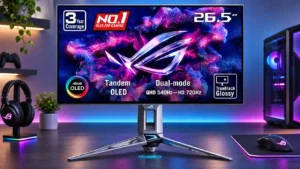
Fast-moving targets and fine details remain remarkably legible, especially at 540Hz. The 720Hz setting raises clarity further for players willing to give up sharpness.
Pros: black levels, motion clarity
Cons: value for money, Dual-mode versatility

Fast-moving targets and fine details remain remarkably legible, especially at 540Hz. The 720Hz setting raises clarity further for players willing to give up sharpness.
Pros: black levels, motion clarity
Cons: value for money, Dual-mode versatility

Rapid motion stays remarkably distinct, with moving objects and fine interface details easier to follow. Clarity remains impressive at lower refresh rates too.
Pros: sharpness, overall satisfaction
Cons: value for money, VRR flicker
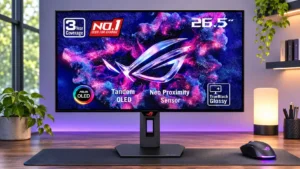
Fast pixel transitions make moving objects look clean and sharp, with 280Hz performing better than an equivalent LCD even if faster OLEDs exist.
Pros: overall satisfaction, response time
Cons: reflection handling, VRR flicker
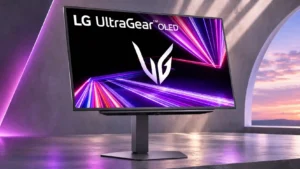
Rapid motion and moving targets look exceptionally sharp, particularly at high refresh rates. A low-frame-rate user anecdote flags stutter sensitivity.
Pros: overall satisfaction, value for money
Cons: reflection handling, screen uniformity
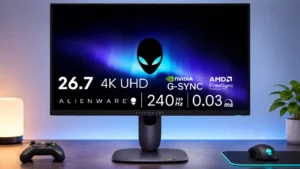
Motion clarity was one of the strongest points, with reviewers repeatedly noting smoothness, minimal blur, and reactive performance.
Pros: value for money, sharpness
Cons: brightness, USB hub functionality
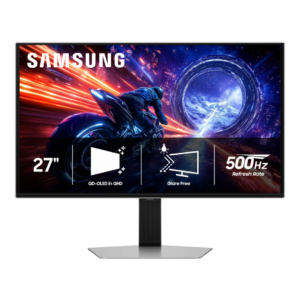
Motion clarity is the standout feature. At very high frame rates, fast objects and text stay exceptionally clear, with multiple testers describing the 500Hz presentation as among the best they...
Pros: overall satisfaction, competitive gaming suitability
Cons: value for money, screen size
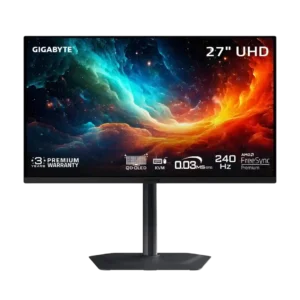
Motion is one of the monitor’s strongest traits, combining 240Hz refresh with near-instant OLED response. Black-frame insertion can sharpen 120Hz play further when available.
Pros: motion clarity, PC gaming compatibility
Cons: color accuracy, software support
Movement remains impressively crisp across 5K and 1440p modes; ELMB 2 is a particular strength, though OLED still responds faster.
Pros: Pixel density, Resolution
Cons: GPU demands, HDR performance
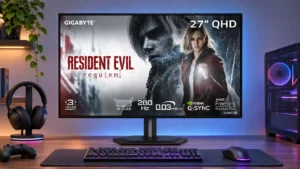
Fast OLED transitions and 280Hz operation deliver excellent motion definition. Higher-refresh premium models still offer incremental gains.
Pros: brightness, contrast
Cons: Text fringing, speaker quality
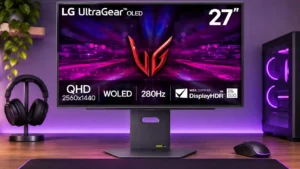
Fast movement stays sharp and readable at high refresh rates, with the near-instantaneous OLED response a consistent gaming highlight.
Pros: reflection handling, HDR performance
Cons: screen uniformity, Screen coating clarity
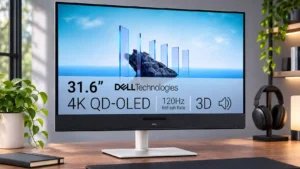
OLED response keeps games and scrolling sharp at 120Hz. Some fast motion still shows blur compared with much faster gaming monitors.
Pros: overall picture quality, overall satisfaction
Cons: port selection, brightness
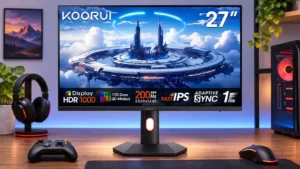
Fast IPS response and effective strobing keep motion relatively clean, making gameplay smoother than slower alternatives. The DIC mode is especially effective at reducing blur.
Pros: overall satisfaction, PC gaming compatibility
Cons: color accuracy, local dimming performance
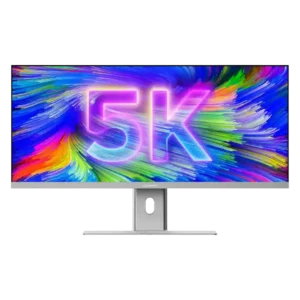
Motion during scrolling and timeline work is consistently described as smooth or fluid, with the 100Hz refresh rate providing an obvious improvement over 60Hz panels.
Pros: productivity versatility, aspect ratio
Cons: built-in speakers, competitive gaming suitability
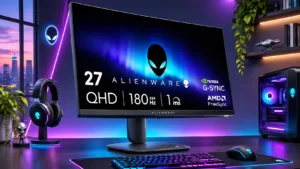
Most hands-on tests praise fluid 180Hz motion and quick transitions, although VRR can make moving objects look blurrier.
Pros: overall satisfaction, refresh rate
Cons: HDR performance, HDMI 2.1 support
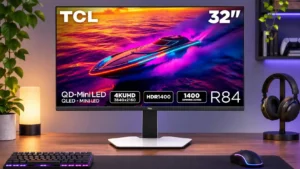
Fast pixel transitions and 165Hz refresh keep gameplay fluid, though the very darkest trails are not as clean as the best OLEDs.
Pros: brightness, HDR performance
Cons: speaker quality, built-in speakers
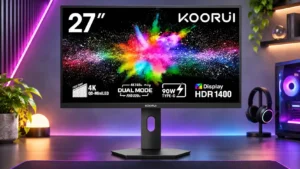
At 160Hz motion is generally crisp; the 320Hz mode can smear and its strobing option adds clarity at the cost of extra setup.
Pros: HDR performance, overall satisfaction
Cons: HDR highlight detail, color accuracy
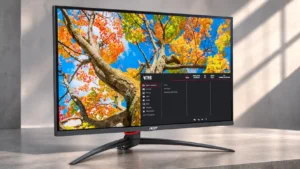
Fast 4K and 320Hz operation feel smooth, though the panel still shows some blur and trails versus OLED competitors.
Pros: HDR performance, overall satisfaction
Cons: local dimming performance, Blooming control
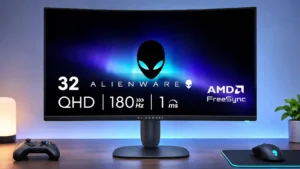
Normal play looks smooth, but the smearing visible in rapid action is a concern for fast shooters and competitive use.
Pros: value for money, overall satisfaction
Cons: HDR performance, Headphone output quality
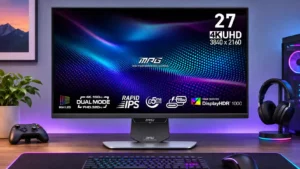
4K160 is clear for most play, while 1080p320 improves motion definition without fully solving pixel response limits.
Pros: Dual-mode versatility, refresh rate
Cons: black levels, contrast
Fast scrolling feels fluid thanks to 144Hz, but more demanding testing identifies blurry motion in moving scenes. Enthusiasm about its rated response speed is not unanimous.
Pros: USB hub functionality, USB-C power delivery
Cons: speaker quality
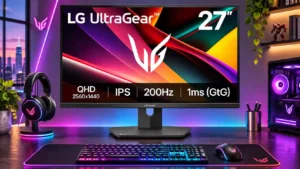
Fast-refresh movement receives praise, but inverse ghosting and residual blur become more noticeable when game frame rates fall.
Pros: refresh rate, value for money
Cons: HDR performance, contrast
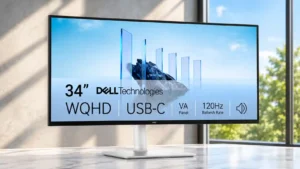
Views diverge: casual play feels fluid to some, while testing highlights blurry motion as a real weakness. Faster gaming-first monitors remain better choices.
Pros: overall satisfaction, screen size
Cons: stand adjustability, Photo editing
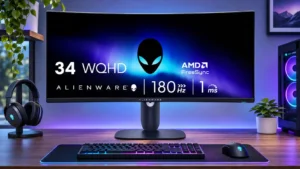
Camera pans look smoother at high refresh, but dark transitions remain considerably blurrier than on good IPS or OLED displays.
Pros: ultrawide gaming experience, black levels
Cons: HDR performance, viewing angles
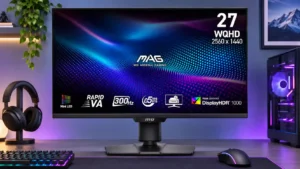
The 300Hz ceiling adds fluidity, but black trails and pixel transitions that cannot fully keep pace prevent uniformly crisp motion.
Pros: HDR performance, black levels
Cons: viewing angles, response time
The motion clarity is a recurring limitation, especially compared with more flexible or higher-end portable monitors.
Pros: brightness, portability and weight
Cons: value for money, port selection
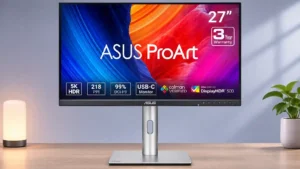
Motion is noticeably less crisp than on modern high-refresh screens. Standard video still looks smooth enough, but rapid gaming exposes blur.
Pros: value for money, Resolution
Cons: HDR performance, refresh rate
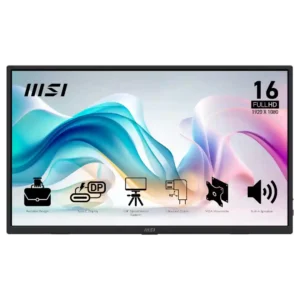
Motion clarity is only average at 60Hz, and one owner reports heavy ghosting. It is fine for static work but not ideal for motion-heavy viewing.
Pros: value for money, portability and weight
Cons: built-in speakers, color gamut
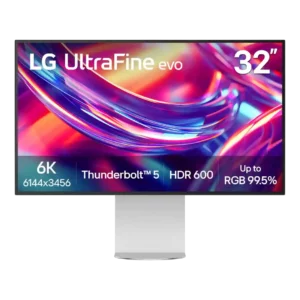
Fast movement is a weak point: one measured review calls motion performance mediocre, with detail becoming harder to follow during quick pans and scrolling.
Pros: port selection, overall satisfaction
Cons: value for money, cable management

120Hz makes desktop movement look smoother, but slow pixel transitions leave pronounced blur in games and faster-moving video.
Pros: port selection, USB hub functionality
Cons: competitive gaming suitability, motion clarity

This is the main gaming weakness. At speed, moving objects can smear or leave visible trails despite the welcome 120Hz refresh rate.
Pros: value for money, Resolution
Cons: port selection, competitive gaming suitability
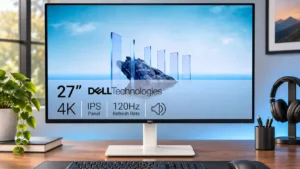
120Hz movement feels smoother than 60Hz, but many fast transitions still carry powdery blur and overshoot that gaming monitors handle better.
Pros: value for money, Resolution
Cons: port selection, HDR performance