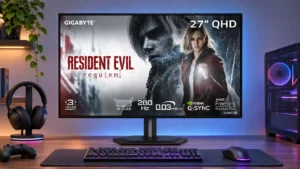
Overall: 4.0/5
Self-emissive pixels provide precise local control rather than coarse backlight zones, avoiding halos in mixed bright and dark scenes.
Pros: brightness, contrast
Cons: Text fringing, speaker quality

Overall: 4.0/5
Self-emissive pixels provide precise local control rather than coarse backlight zones, avoiding halos in mixed bright and dark scenes.
Pros: brightness, contrast
Cons: Text fringing, speaker quality
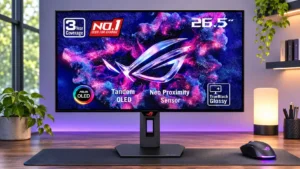
Overall: 4.4/5
Self-emissive pixels turn fully off beside bright details, providing contrast precision that zone-based LCD backlights cannot match.
Pros: overall satisfaction, response time
Cons: reflection handling, VRR flicker
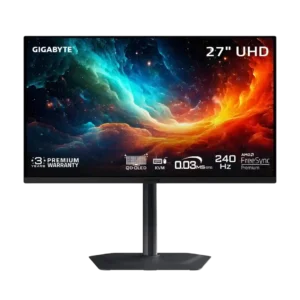
Overall: 4.1/5
Per-pixel lighting eliminates zone transitions and sharply limits blooming around bright objects. High-contrast scenes look cleaner than on zone-lit LCDs.
Pros: motion clarity, PC gaming compatibility
Cons: color accuracy, software support
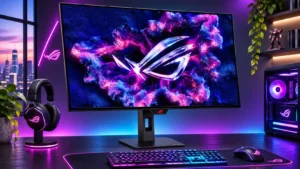
Overall: 4.2/5
OLED’s per-pixel lighting preserves dark areas naturally rather than depending on coarse backlight zones.
Pros: overall satisfaction, black levels
Cons: reflection handling, Color brightness
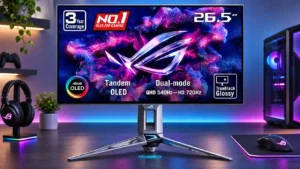
Overall: 4.3/5
Local dimming performance works especially well in supported gaming or desktop scenarios, helping the monitor feel polished and capable.
Pros: black levels, motion clarity
Cons: value for money, Dual-mode versatility
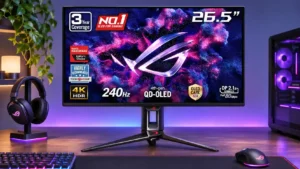
Overall: 4.4/5
Per-pixel dimming allows fine control of bright objects against black backgrounds, avoiding the zone-by-zone compromises of typical LCDs.
Pros: sharpness, overall satisfaction
Cons: value for money, VRR flicker
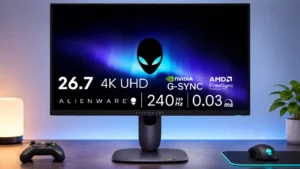
Overall: 4.3/5
Local dimming was treated as a strength because OLED’s per-pixel control minimized blooming in high-contrast scenes.
Pros: value for money, sharpness
Cons: brightness, USB hub functionality
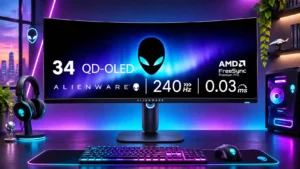
Overall: 4.2/5
Each OLED pixel dims independently, producing clean transitions between light and dark objects.
Pros: refresh rate, HDR performance
Cons: reflection handling, Text fringing
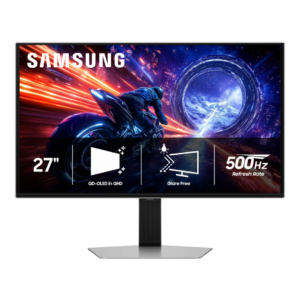
Overall: 4.3/5
Per-pixel OLED dimming gives precise control with minimal blooming and clean separation between bright highlights and dark objects.
Pros: overall satisfaction, competitive gaming suitability
Cons: value for money, screen size
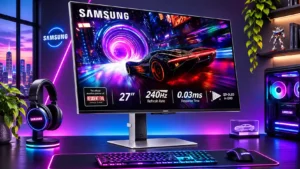
Overall: 4.2/5
Each OLED pixel independently controls light, keeping bright details sharply separated from dark ones. The result is effectively halo-free contrast.
Pros: reflection handling, color gamut
Cons: value for money, brightness
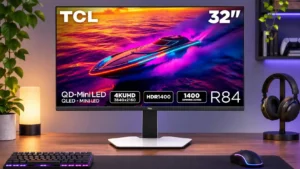
Overall: 4.2/5
The 1,400-zone backlight brings excellent black depth and bright highlights. A moderate setting can avoid unwanted desktop darkening.
Pros: brightness, HDR performance
Cons: speaker quality, built-in speakers
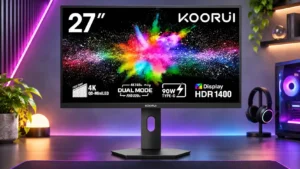
Overall: 4.2/5
High-zone-count backlighting creates strong HDR contrast but can dim small highlights and low-contrast desktop text.
Pros: HDR performance, overall satisfaction
Cons: HDR highlight detail, color accuracy
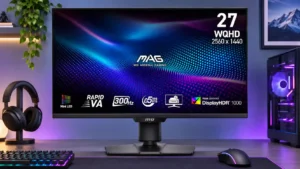
Overall: 3.9/5
The dense backlight substantially improves blacks and HDR contrast, but stronger dimming can alter colors, darken small objects and create uneven brightness transitions.
Pros: HDR performance, black levels
Cons: viewing angles, response time
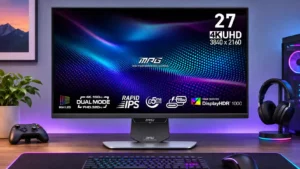
Overall: 4.0/5
The 1,152 zones bring vivid HDR and deeper blacks, but especially in SDR they can alter gamma or wash out the image.
Pros: Dual-mode versatility, refresh rate
Cons: black levels, contrast
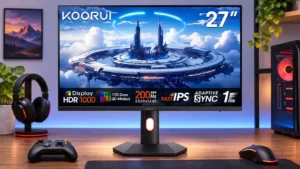
Overall: 3.7/5
The 1,152-zone system strengthens HDR depth at a remarkably low price, yet halos, small-object dimming, and occasional mode-reset behavior leave it short of premium implementations.
Pros: overall satisfaction, PC gaming compatibility
Cons: color accuracy, local dimming performance
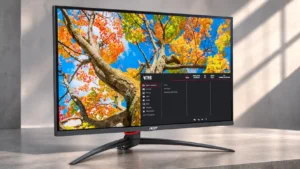
Overall: 3.5/5
HDR dimming strengthens blacks and highlights, but black crush, halos and the inability to use it in SDR limit the benefit.
Pros: HDR performance, overall satisfaction
Cons: local dimming performance, Blooming control
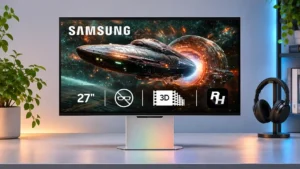
Overall: 3.7/5
The edge-lit approach relies on basic whole-frame dimming rather than precise zones. It can boost overall contrast, but it does not reliably protect highlights and may introduce distracting tonal changes.
Pros: glasses-free 3D quality, AI 2D-to-3D conversion
Cons: 3D compatible game library, value for money
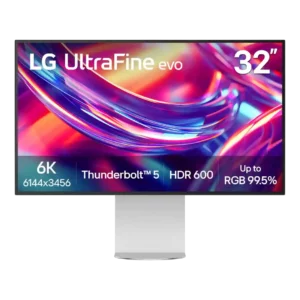
Overall: 3.9/5
Local dimming is a clear weakness because the display relies on limited edge lighting rather than dense full-array zones. Bright HDR elements can lift large portions of the image instead...
Pros: port selection, overall satisfaction
Cons: value for money, cable management
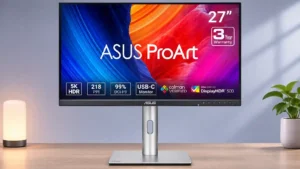
Overall: 4.1/5
Its simple edge-based dimming is widely criticized for weak black control and visible unevenness. One test saw measurable contrast gains, but the overall HDR presentation remains limited.
Pros: value for money, Resolution
Cons: HDR performance, refresh rate
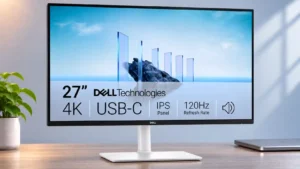
Overall: 4.2/5
No effective local dimming is available to deepen blacks or give HDR highlights enough separation, limiting picture punch.
Pros: value for money, Resolution
Cons: port selection, competitive gaming suitability
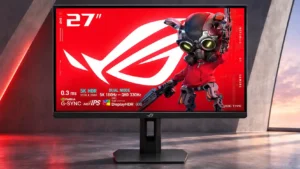
Overall: 4.1/5
Ten edge-lit zones are inadequate for convincing HDR contrast and can create halos or distracting brightness patches.
Pros: Pixel density, Resolution
Cons: GPU demands, HDR performance
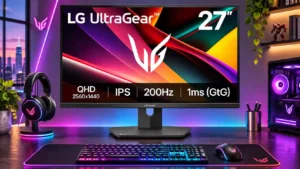
Overall: 3.6/5
There is no local dimming to deepen blacks or give bright HDR highlights much more impact, leaving darker scenes with modest contrast.
Pros: refresh rate, value for money
Cons: HDR performance, contrast
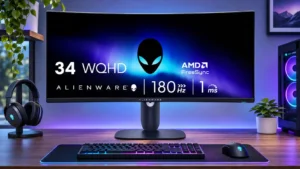
Overall: 3.7/5
Only eight edge-lit zones are used in HDR, producing elevated blacks and blooming with no option to disable the effect in that mode.
Pros: ultrawide gaming experience, black levels
Cons: HDR performance, viewing angles

Overall: 3.6/5
Just eight edge-lit zones are too coarse for convincing HDR. Enabling them often adds halos, delayed transitions or muted highlights instead of genuinely deeper scenes.
Pros: refresh rate, Dual-mode versatility
Cons: motion clarity, black levels
Overall: 4.2/5
Only a few broad edge-lit zones are used, causing blooming and obvious shifts in brightness. This is one of the clearest weaknesses for HDR viewing.
Pros: port selection, USB hub functionality
Cons: competitive gaming suitability, motion clarity
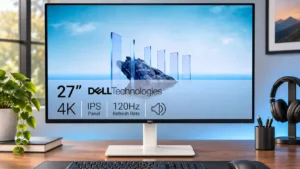
Overall: 3.8/5
Lack of local dimming prevents HDR from separating small highlights from dark surroundings and leaves blacks looking gray.
Pros: value for money, Resolution
Cons: port selection, HDR performance
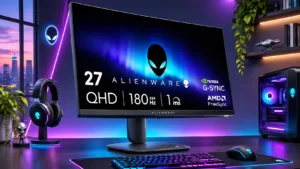
Overall: 4.0/5
The local-dimming implementation produces distracting halos and cannot be switched off in HDR, making it one of the clearest drawbacks.
Pros: overall satisfaction, refresh rate
Cons: HDR performance, HDMI 2.1 support
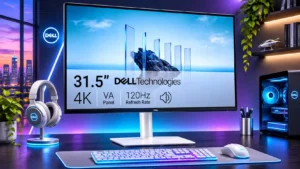
Overall: 3.7/5
Without sophisticated local dimming, HDR highlights and dark-scene precision cannot match premium displays.
Pros: value for money, Resolution
Cons: stand adjustability, viewing angles
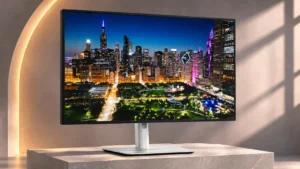
Overall: 4.2/5
Edge-lit HDR dimming is a major weakness: bright elements affect large screen areas and the HDR dimming behavior cannot be disabled.
Pros: port selection, overall satisfaction
Cons: value for money, competitive gaming suitability
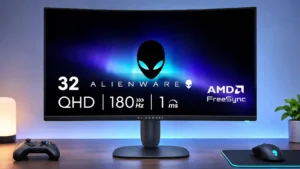
Overall: 4.1/5
HDR local dimming is a serious weak point: a technical assessment finds the system ineffective and impossible to turn off while using HDR.
Pros: value for money, overall satisfaction
Cons: HDR performance, Headphone output quality