
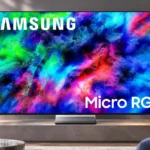
Samsung R95H Feature Scores
Explore all 117 feature scores for Samsung R95H, organized into pros and cons.
Scores by Feature
Summary
117 reviewed features-
Very positive 4.5-5.012 (10%)
-
Positive 3.5-4.463 (54%)
-
Neutral 2.5-3.431 (26%)
-
Negative 1.5-2.411 (9%)
Pros
Sort
-
Samsung's Glare Free finish is one of the R95H's biggest benefits, cutting distracting window and lamp reflections. It makes daytime viewing markedly easier.
-
Direct reflections turn into soft, subdued patches instead of distracting mirror images. Very bright ambient light can still make blacks look a little grayer.
-
The RGB backlight produces exceptionally rich, vivid colors and fine hue differences. White objects can dilute nearby colors, and some movie scenes look overdone or subdued depending on settings.
-
Local dimming keeps most bright details isolated from dark surroundings and preserves excellent black levels. The tougher motion transitions and off-axis views expose some limitations.
-
HDR excels with luminous highlights, rich color and deep black areas. Some material exposes less accurate tone mapping, occasional blooming or picture presets that push too hard.
-
The panel supports up to 4K/165Hz and 1080p/240Hz, making it especially appealing to gaming PC users. Motion can still be softer than on OLED.
-
Four high-bandwidth HDMI ports, responsive controls and vibrant HDR make this a highly capable gaming TV. Some games need picture tweaks, and motion is not always OLED-sharp.
-
The R95H reaches an unusually wide color gamut, with especially impressive reds, greens and other saturated hues. That measurement advantage is more obvious in certain scenes than in everyday mixed-color footage.
-
The R95H is a capable, feature-rich flagship with unusually vibrant Micro RGB color and superb bright-room visibility. Its premium price makes the overall recommendation more divided than its headline capabilities suggest.
-
All four built-in HDMI ports are high-bandwidth inputs, a practical advantage for households with several consoles and PCs.
-
Controller response feels prompt and measured latency is low for a premium TV. Some OLED and Sony rivals are slightly faster, while the optional wireless connection adds lag.
-
Lower-resolution films, shows and video streams become impressively clear on the 4K panel. Cleanup can sacrifice a little fine texture in difficult sources.
-
The optional wireless box can add inputs and hide cable clutter, though buying it separately adds cost and can increase gaming latency.
-
Artwork gains rich color and a convincing painting-like look on the matte display, making Art Mode an attractive secondary use rather than just a screensaver.
-
Halos around subtitles and lights are often minimal, particularly head-on. A few challenging dark scenes and off-center seats make blooming more visible.
-
The center stand clicks into place with little effort and setup is generally quick. App accounts and device configuration can add steps afterward.
-
Its best scenes combine intense color, deep LCD blacks and striking highlights. Others can look flat, overprocessed or less convincing than similarly priced OLED screens.
-
Bright objects stand out cleanly against dark backdrops, often retaining fine detail. The most aggressive presets can clip or overstate highlights.
-
HD, SD and older streams generally remain watchable and surprisingly detailed. Compression cleanup is effective, although extremely poor sources cannot become genuinely native 4K.
-
The redesigned Tizen interface is faster and easier to navigate, with broad app access. Advertising, occasional app problems and a less intuitive layout than some rivals remain frustrations.
-
Deep, largely uniform blacks and careful backlight control impress for an LCD TV, though the R95H cannot match OLED pixel-level darkness or precision.
-
The R95H can produce extremely bright highlights and powerful daytime images. Some rival RGB TVs and flagship OLEDs reach higher peak readings, especially in accuracy-focused presets.
-
Game Mode is bright, fast and feature-rich, although color balance and shadow rendering may need adjustment. Firmware improvements have helped its motion performance.
-
The controls can correct an obvious cool or overly vivid image, particularly in SDR. Reaching a neutral result may require more work than buyers expect at this price.
-
The Micro RGB backlight offers unusually rich colors, a genuine strength for an LCD, but its practical advantage depends on the content and is not a full substitute for OLED contrast.
-
SDR can be crisp and bright with satisfying color, and Standard mode adds extra punch. Filmmaker settings rein in that exuberance for a calmer, more faithful image.
-
Fine textures and small details are sharply reproduced in good-quality sources. The clarity carries through to upscaled HD and many games.
-
The high refresh-rate ceiling provides excellent headroom for smooth games and sports. Very high rates require compatible source resolutions.
-
AI sound tools can make dialogue easier to hear or rebalance crowd noise and effects. Extreme settings may distort the mix or sacrifice bass.
-
The Gaming Hub offers several popular cloud-game providers, allowing play without a dedicated console.
-
The Gaming Hub and on-screen game menu bring connected inputs, cloud services and picture tools together. They make advanced settings convenient to access during play.
-
A very thin profile, tiny bezels and reflective central stand give the R95H a clean, premium look.
-
Deep blacks combined with intense highlights create strong contrast and depth in many scenes. Premium OLEDs can still look punchier and more three-dimensional.
-
Rear channels help tuck cables away, while optional wireless input hardware can reduce clutter dramatically.
-
HDR highlights are forceful and colorful, with ample impact for most home viewing. The R95H is not consistently the brightest flagship in direct comparisons.
-
The chassis and stand feel sturdy and carefully finished, consistent with flagship positioning.
-
Most gradients appear smooth and clean, including several challenging game and movie scenes. A little green banding or instability can still appear.
-
The new home-screen navigation is quicker and clearer, although some settings still sit behind too many layers.
-
The Art Store provides an appealing collection, with some free pieces and more available by subscription.
-
Most film playback is smooth, while difficult pans and test animations can stutter or judder. A small interpolation adjustment may help without overwhelming the image.
-
The 2026 Tizen interface generally feels responsive and smoother than earlier versions. A few source-switching delays remain.
-
The built-in HDMI selection is generous, and an optional Wireless One Connect box allows additional equipment without cables running directly to the screen.
-
Speech is generally understandable, and voice-enhancement tools can help. Busy or bass-heavy scenes can still bury dialogue.
-
Multiple voice assistants and conversational search expand hands-free control, though their practical value varies.
-
The LCD-based panel avoids permanent OLED burn-in, a reassurance for static interface elements and extended gaming.
-
The raised center stand leaves enough room for most soundbars without obscuring the image.
-
Object tracking adds convincing placement for some effects, but the built-in Atmos impression lacks consistent height and directionality.
-
The center pedestal supports the TV securely and adds a floating-screen appearance. Not everyone likes the stand's bulk.
-
Major streaming and cloud gaming services are widely covered, leaving few notable content gaps.
-
Amplify mode gives sound extra presence when Standard sounds restrained. The improvement can come with less natural tonal balance.
-
FreeSync support helps compatible graphics hardware deliver smooth, nearly tear-free play.
-
The full-bandwidth HDMI ports handle modern gaming signals without the usual tradeoff of reserving just one or two fast inputs.
-
Slim borders keep attention on the picture, particularly on the larger models.
-
VRR runs across a broad refresh-rate range and keeps frame tearing to a minimum. It works with several major PC and console systems.
-
Large banners, unwanted promotions and autoplaying channels detract from an otherwise capable home screen. Ads cannot always be disabled completely.
-
Near-black and black backgrounds are impressively even, without obvious flashlighting. This is stronger than the consistency of mid-gray fields.
-
Game Motion Plus adds smoothing options for lower-frame-rate games. It can improve perceived fluidity, although the settings are best used selectively.
-
Calibrated tone mapping is generally strong, though blacks can be slightly lifted and some shadows crushed. Game HDR and brighter presets can overemphasize the image.
-
Firmware changes have improved motion performance, and ongoing software support adds reassurance for ownership.
-
Sound effects can spread beyond the display, though the presentation sometimes feels narrow or confined behind the screen. An external system brings more cinematic scale.
-
Compression blocks and other low-quality artifacts are suppressed effectively. Aggressive cleanup may also erase a little genuine detail.
-
Minimal buttons keep the remote clean, but a dedicated input control and backlight would make everyday operation easier.
-
1440p at 120Hz works with modern console signals, adding flexibility for gaming systems that do not always output 4K.
-
Modern consoles can use 4K at 120Hz alongside low-latency and VRR modes, making the R95H well equipped for current-generation gaming.
-
The R95H earns positive assessments for 4k gaming support in its tested use.
-
Apple AirPlay worked for wireless viewing when another casting method failed.
-
Automatic Game Mode switching makes console play convenient and responsive, with just an isolated recognition hiccup reported for Nintendo Switch 2.
-
Optional black-frame insertion can sharpen motion, but it is a specialist setting rather than a necessity for everyday watching.
-
Tizen can surface useful suggestions and separate household profiles, although the home screen can feel busy with promotions.
-
Processing is strong at sharpening HD sources and managing the complex RGB backlight. Some automatic enhancements can make natural content look overdone.
-
Proper 4:4:4 rendering and RGB subpixels make fine computer text look sharp.
-
The screen responds quickly enough for enjoyable gaming, with clear improvements after firmware changes. Dark transitions still show more trailing than bright ones.
-
A narrow center stand makes it easier to place the TV on smaller furniture.
-
Bright full-screen scenes retain substantial intensity, which is useful in illuminated rooms. Large bright areas still fall below the intensity of small HDR highlights.
-
The matte coating excels at scattering reflections, though some viewers notice a flatter look compared with glossy screens. Its tradeoff favors bright rooms over absolute dark-room contrast.
Cons
Sort
-
Top-end RGB color and gaming features come at a steep price, with multiple comparable OLEDs and less expensive RGB sets weakening the value proposition.
-
Heavy movie effects can provoke crackling, buzzing or coarse bass. Lighter soundtracks are much cleaner.
-
Dolby Vision is absent, which is disappointing for some movies, streaming services and Xbox gaming. HDR10+ is available instead.
-
Automated image enhancements divide opinion: some sharpen and clean up pictures, while others push brightness and contrast too far. Manual presets often look more controlled.
-
Extended sessions can make a smaller room noticeably warmer; one month-long test raised concerns about ventilation and wall mounting.
-
Accurate presets and calibration can produce an authentic image, but the default picture is not reliably reference-neutral. Skin tones and white balance need attention on some sets.
-
A cool blue cast can spoil neutral grays and whites before calibration. White-balance adjustments markedly improve SDR accuracy, although HDR remains less consistent.
-
The R95H offers substantial picture adjustments, yet some processing choices resist fine-tuning. Competing RGB models can deliver more visible changes from similar controls.
-
Natural-looking colors are possible, especially after adjustments, but several setups look too blue or overly red at first. The out-of-box result depends heavily on preset and calibration.
-
Dimming zones generally control bright objects well, but fast-moving highlights can leave subtle flicker or dim leading edges. Abrupt scene changes can also trigger brightness shifts.
-
AirPlay can be dependable, but Google Cast compatibility was inconsistent in at least one streaming test.
-
The lack of DTS passthrough is inconvenient for some physical-media soundtracks, even though Dolby audio formats are supported.
-
Side-rear inputs are more awkward to reach when the panel is mounted flush against a wall.
-
Dark scenes can reveal texture and nuance, but the deepest shadows sometimes lose detail. Results vary by picture preset and source material.
-
Whites near intense colors can pick up unwanted tint, and some colors lose punch when white elements are close by. These effects are generally intermittent rather than constant.
-
Loudness is inconsistent: some sessions produce ample volume, while others require high settings and still feel restrained.
-
Gentle smoothing can tame judder, but aggressive settings can introduce choppiness or artificial-looking motion. Reducing the default effect usually helps.
-
The rechargeable remote divides opinion: some love its simplicity, while others consider it too small and basic for an expensive TV.
-
Most services work normally, but isolated installation and casting failures can interrupt setup or playback.
-
Ambient-light adjustment can adapt picture brightness, but a firmware-related handshake bug may turn it on unexpectedly. Disabling optimization can also change measured HDR output noticeably.
-
The screen can show uneven shading in broad, uniform areas despite excellent near-black performance. A fast-moving camera across a field may make this more noticeable.
-
The PWM-driven backlight flickers at different frequencies depending on the mode. People sensitive to flicker should consider this before buying.
-
Four built-in HDMI inputs cover most entertainment setups; an optional One Connect accessory can expand the available connections.
-
Colors stay reasonably stable near the center, then wash out or change hue at wider angles. Large shared seating areas are workable but not ideal.
-
Crosshairs, minimap zoom and shadow-lifting controls can improve visibility in competitive games. They are optional extras rather than essential picture enhancements.
-
Near-black backgrounds are quite even, but gray fields can show darker corners and some patchiness. Sports fields or test patterns may expose these differences.
-
Fast movement is typically clear at higher frame rates, but dark transitions and panning shots can smear. A few demanding scenes look noticeably softer than on OLED.
-
Bass can have welcome punch, yet deep sustained effects may sound muddy, thin or distorted. The low end is the most inconsistent part of the audio.
-
Deep black levels deliver strong movie-night contrast, but OLED remains cleaner in the darkest material and around tiny highlights.
-
Solar and USB-C charging avoid disposable-battery changes, an appreciated practical touch.
-
Most regular content plays smoothly, though some frame transitions or smoothing settings can make movement choppy. Fast-paced games fare better than difficult cinematic pans.
-
Voice commands often work for volume and search, but hands-free wake-up recognition can miss requests.
-
The slim chassis looks appealing on a wall, although reaching rear inputs can be awkward and one long-term user flagged heat concerns.
-
Daily navigation has improved, but the number of hubs, extra settings and startup behaviors can feel complicated at first.
-
AI Soccer Mode can make the pitch and action pop, but some viewers find the greens unnaturally intense. Standard or Movie mode is often more convincing for football.
-
A compact layout is easy to learn for some users, but limited buttons and no backlighting frustrate others.
-
Built-in audio is adequate to good for everyday use but does not consistently match the television's premium picture ambitions.
-
The image remains enjoyable from modest side angles, but colors and brightness shift farther off-center. Blooming can also become more apparent away from the middle seat.
-
Vivid colors can look lifelike and textured, but the effect is not always natural. Some faces, foliage and complex scenes look muted, cartoonish or less convincing than on rival OLEDs.
-
Sports, films and games can look fluid, especially after firmware improvements. Blurred pans, dark transitions and occasionally smeary movement remain weaknesses.
-
The speakers can sound clear and surprisingly spacious, but opinions split sharply on bass control, impact and loudness. A soundbar is preferable for serious home theater.
-
There are useful ways to balance cinematic accuracy and vivid daytime punch, but a good result takes experimentation. The default modes do not please everyone.
Use Cases
Best for
Sort
-
Excellent anti-glare treatment and strong brightness make this a standout for sunlit living rooms and daytime use.
-
PS5 and Xbox play smoothly with low input lag, 4K/120Hz and variable refresh support. Some game presets need color or brightness adjustments.
-
Artwork looks vivid and painterly against the glare-cutting screen, while the slim design suits a living-room display even when nothing is playing.
-
4K/165Hz, optional 1080p/240Hz and VRR are compelling on a large screen, though OLED remains sharper in some fast transitions.
-
Vivid color, strong contrast and a glare-free screen can make movies striking, but darker scenes, motion softness and comparisons with OLED divide opinion.
-
High brightness and the matte finish keep daytime matches easy to watch without distracting reflections.
-
Low input lag and smooth high-frame-rate gameplay make fast shooters responsive, even when targets move quickly.
-
Pairing it with a soundbar improves the movie experience and avoids the built-in system's bass limitations.
-
Bright fields and colorful broadcasts can look excellent; fast ball movement, green tinting and screen uniformity temper enthusiasm.
-
Popular apps are readily accessible, and colorful movies look engaging. Some darker dramas are less convincing until picture settings are adjusted.
-
The innovative Micro RGB backlight is engaging to explore, with unusually wide color coverage, although early tuning and pricing may limit its appeal.
-
Its wide app support, striking color and reflection control make it a versatile living-room centerpiece.
-
HDR games gain dramatic color and brightness, although night play can feel overly intense and Game Mode tone mapping may need adjustments.
-
People near the center see a strong picture, but far-off-center seats can show color shift and extra blooming.
-
Strong upscaling helps DVDs and older standard-definition movies remain presentable on a large 4K display.
Conditional or not ideal for
Sort
-
Budget-conscious buyersThe R95H is difficult to justify on value alone when less costly RGB TVs and premium OLEDs compete so closely.
-
Long-term ownershipNo OLED burn-in is reassuring, but a report of noticeable heat during extended use raises a placement and comfort concern.
-
Racing gamesVivid roads and scenery suit racing games, but one session found motion blur strong enough to become uncomfortable.
-
Nintendo Switch 2 gamingSwitch 2 gameplay generally looks excellent after tuning, with only an isolated automatic mode-detection hiccup.