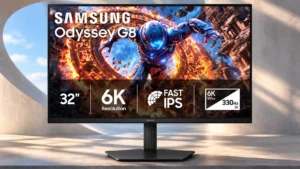
The non-grainy matte coating keeps ordinary glare manageable, though some dedicated work monitors handle bright reflections better.
Pros: Resolution, sharpness
Cons: value for money, HDR performance

The non-grainy matte coating keeps ordinary glare manageable, though some dedicated work monitors handle bright reflections better.
Pros: Resolution, sharpness
Cons: value for money, HDR performance
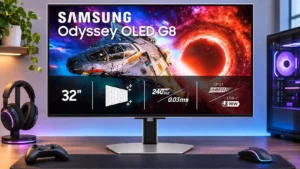
The matte Glare Free treatment diffuses direct window and lamp reflections far better than many glossy OLED competitors.
Pros: PC gaming compatibility, reflection handling
Cons: color accuracy, VRR flicker

Optional nano-texture glass is extremely effective against windows and lamps, while the glossy version can retain a punchier appearance.
Pros: refresh rate, HDR performance
Cons: value for money, Device compatibility

The Nano Matte coating handles windows, skylights, and room lighting extremely well. It adds only slight grain while keeping reflections from washing out the work area.
Pros: productivity versatility, aspect ratio
Cons: value for money, competitive gaming suitability
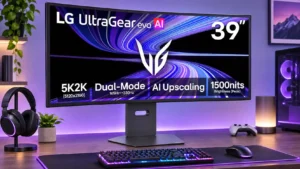
The matte anti-glare coating does a convincing job diffusing reflections, especially for a curved display, though direct sunlight can still distract.
Pros: Resolution, overall satisfaction
Cons: value for money, Image scaling
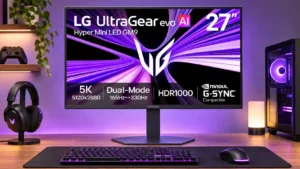
Its semi-matte surface reduces distracting room reflections without severe blur for most users. Glossy-screen fans may still notice a slightly grainy finish.
Pros: Resolution, Dual-mode versatility
Cons: value for money, GPU demands
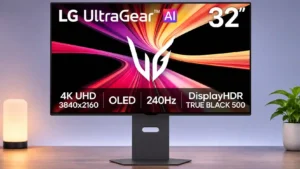
The matte surface substantially softens glare compared with glossy competitors, though it sacrifices some of their pristine-looking image clarity.
Pros: brightness, color gamut
Cons: AI scene optimization, value for money
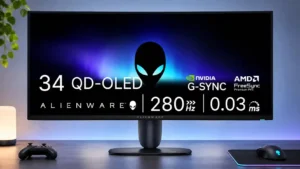
The revised anti-reflective coating noticeably cuts the old magenta tint and distracting glare. Direct reflections still matter more than on some WOLED alternatives.
Pros: brightness, value for money
Cons: port selection, built-in speakers

DarkArmor substantially reduces the purple tint and improves perceived blacks in bright rooms while retaining a sharp glossy image. Direct light can still reveal some tint and reflections, so darker...
Pros: brightness, reflection handling
Cons: cable management

BlackShield noticeably lessens direct reflections and purple-tinted raised blacks. It cannot fully match the brighter-room black depth of some WOLED alternatives.
Pros: color gamut, contrast
Cons: value for money, Resolution
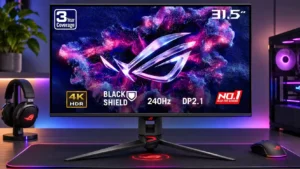
BlackShield visibly cuts reflections and purple-tinted blacks compared with older QD-OLEDs, while retaining a crisp glossy image. Direct lighting and WOLED comparisons expose the remaining limitations.
Pros: overall satisfaction, black levels
Cons: value for money, stand adjustability

The matte surface is effective against ordinary reflections, although direct window glare can still overpower it.
Pros: competitive gaming suitability, refresh rate
Cons: Dual-mode versatility, GPU demands
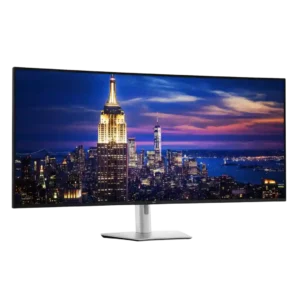
The matte anti-glare surface usually keeps overhead lights and windows under control without heavily softening the image. A lighter coating and shallow curve can still leave distracting reflections at certain...
Pros: productivity versatility, overall satisfaction
Cons: value for money, response time
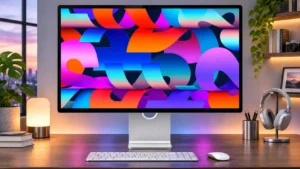
Nano-texture glass controls glare remarkably well; standard glossy glass can look clearer, and reviewers differ on which tradeoff they prefer.
Pros: Monitor daisy-chaining, overall picture quality
Cons: value for money, refresh rate
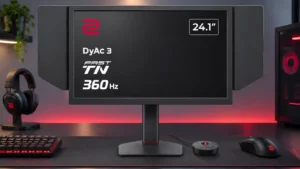
The matte surface keeps reflections subdued, making nearby light sources less distracting.
Pros: competitive gaming suitability, motion clarity
Cons: contrast, overall picture quality

The glossy or semi-gloss finish makes colors pop and handles reflections reasonably well in moderate lighting. Strong windows or intense room light can raise blacks, add a magenta tint, and...
Pros: color gamut, overall picture quality
Cons: brightness, HDR performance

The matte coating limits obvious reflections, although diffuse glare can reduce perceived contrast and crispness.
Pros: motion clarity, Backlight strobing
Cons: contrast, HDR performance

The newer finish suppresses much of the distracting ambient-light haze, but strong lights and off-axis views can still reveal reflections.
Pros: refresh rate, Text fringing
Cons: Resolution, GPU demands
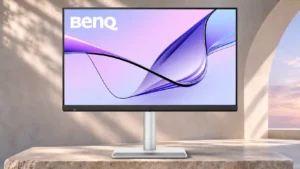
Experience depends heavily on room lighting: some reviewers barely noticed reflections, while others warned that windows and dark images expose the glossy surface.
Pros: port selection, color accuracy
Cons: built-in speakers, speaker quality

The glossy coating preserves clean blacks and sharpness but reflects nearby windows, lamps and faces more directly than matte finishes.
Pros: black levels, sharpness
Cons: value for money, brightness
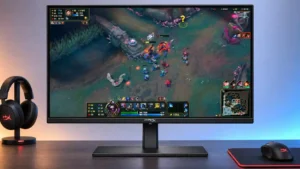
Reflections and bright windows can be a problem, although one demonstration finds the coating softens indoor light reflections effectively.
Pros: black levels, overall picture quality
Cons: brightness, Gaming feature selection
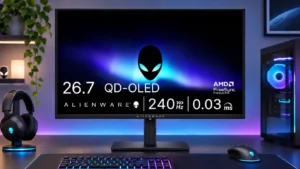
The glossy screen adds a clear, striking finish, but reflections and raised dark tones can be troublesome when light hits it directly.
Pros: value for money, panel type
Cons: brightness, port selection

Black levels remain deep under moderate ambient light, but bright windows and lamps can show obvious mirror-like reflections. A matte rival may be more comfortable in strongly lit rooms.
Pros: overall satisfaction, Text fringing
Cons: brightness, Edge dimming behavior
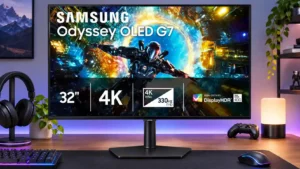
The glossy panel enhances clarity but has obvious mirror-like reflections compared with matte Samsung alternatives.
Pros: overall satisfaction, contrast
Cons: value for money, port selection