
Daisy-chaining simplifies matching dual 5K displays, giving more workspace with a single cable from the Mac.
Pros: refresh rate, HDR performance
Cons: value for money, Device compatibility

Daisy-chaining simplifies matching dual 5K displays, giving more workspace with a single cable from the Mac.
Pros: refresh rate, HDR performance
Cons: value for money, Device compatibility

Adding a second 5K panel is appealing, particularly when the screens share color and can be daisy-chained from one computer.
Pros: Monitor daisy-chaining, overall picture quality
Cons: value for money, refresh rate

The adjustable stand and compact base make it possible to fit alongside another display.
Pros: refresh rate, Text fringing
Cons: Resolution, GPU demands
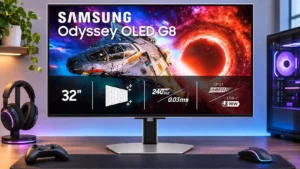
A laptop can connect to the monitor as a second screen while charging and gaining USB peripheral access through one cable.
Pros: PC gaming compatibility, reflection handling
Cons: color accuracy, VRR flicker
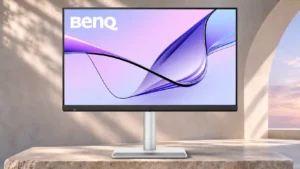
Thunderbolt chaining and suitable rotation options help build a tidy, expansive desk with fewer host cables.
Pros: port selection, color accuracy
Cons: built-in speakers, speaker quality
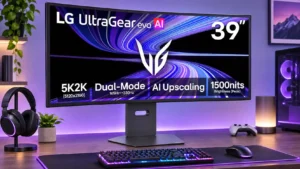
The large ultrawide can replace two side-by-side screens while preserving generous vertical resolution and reducing bezels.
Pros: Resolution, overall satisfaction
Cons: value for money, Image scaling

A display-alignment overlay helps line up multiple monitors, but offers little more sophisticated multi-display assistance.
Pros: value for money, panel type
Cons: brightness, port selection