
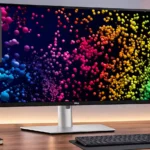
Dell U4025QW Feature Scores
Explore all 76 feature scores for Dell U4025QW, organized into pros and cons.
Scores by Feature
Summary
76 reviewed features-
Very positive 4.5-5.054 (71%)
-
Positive 3.5-4.47 (9%)
-
Neutral 2.5-3.48 (11%)
-
Negative 1.5-2.47 (9%)
Pros
Sort
-
Sharp detail, rich color, and improved IPS contrast give an excellent SDR picture. The lack of sophisticated HDR dimming remains the standout visual weakness.
-
The collection of Thunderbolt, USB, HDMI, DisplayPort, audio, and Ethernet connections is exceptionally complete for a monitor.
-
Forty inches of curved ultrawide space can replace multiple displays and improve workflow visibility, but requires a deep, spacious desk.
-
The overall response is enthusiastic among productivity and creative users, with high cost and a few specialist limitations preventing universal appeal.
-
The Thunderbolt 4 hub is a principal reason to buy, collapsing a complex laptop workstation into the monitor itself.
-
From spreadsheets to editing timelines and complex multi-machine desks, the monitor handles many professional workflows on one canvas.
-
Its 5120×2160 ultrawide canvas allows dense, detailed multitasking; the unusual 5K2K format is less straightforward for native video content and gaming hardware.
-
IPS Black gives the image more depth than typical IPS displays and helps still images and SDR content, without matching OLED's near-black performance.
-
Color reproduction is a standout strength, frequently praised straight from the factory. One Mac user cautions that choosing the right color mode matters for consistent output.
-
A concealed pop-out front bay makes it easy to attach temporary drives, accessories, and charging cables while keeping the desk clean.
-
Coverage of sRGB and wide P3-style color spaces is consistently strong, bringing rich colors to creative apps and everyday content.
-
A large accurate screen leaves room for images and editing tools at once, especially for photography headed to digital screens.
-
Crisp lettering and fine image detail are major strengths, particularly compared with lower-density 38-inch ultrawides.
-
Roughly 140ppi produces impressively fine text and images for a screen this large, although compact 6K displays can look sharper.
-
The gentle 2500R curve draws the edges into a comfortable viewing position without dramatic distortion; even users skeptical of curved screens often warm to it.
-
The restrained silver-and-black styling suits professional desks and avoids flashy gaming lights, though some find it plain.
-
The 120Hz refresh rate consistently improves scrolling, window movement, and perceived fluidity over 60Hz work displays.
-
Up to 140W through the main Thunderbolt connection can power many demanding laptops without a separate charger.
-
Multiple input windows and virtual display divisions let owners work across machines or keep a game and desktop visible together.
-
The built-in hub, retractable front ports, and stand pass-through can simplify a desk, though the number of rear connections can still make cable routing awkward.
-
Joystick navigation and clearly arranged menus make it straightforward to find inputs, color modes, and multi-screen features.
-
Tool-free assembly and included cables generally make installation simple, with the size and weight the main physical obstacles.
-
The 21:9 canvas is excellent for wide timelines, side-by-side windows, and supported ultrawide entertainment without feeling as extreme as a super-ultrawide.
-
Low-blue-light and flicker-conscious features, plus smooth scrolling, are appreciated for long desk sessions; individual comfort still depends on settings.
-
Sharing a keyboard and mouse across multiple connected computers is a meaningful strength, especially for complicated desk setups.
-
The integrated hub supplies more useful USB connections than typical work monitors, reducing the need for separate accessories.
-
Day-to-day SDR brightness generally satisfies office work, but opinions differ in sunny rooms and the peak brightness falls short of a standout HDR display.
-
Presets and fine-grained adjustments make it flexible for color workflows, even though most buyers won't need extensive correction of the already accurate factory setup.
-
The built-in 2.5Gb Ethernet jack is valued for giving connected laptops wired networking without a separate adapter.
-
Several testers report low perceived delay at 120Hz, helping desktop interaction and casual gaming despite slower pixel transitions.
-
The rigid plastic housing feels solid and well finished, with minimal flex or creaking during ordinary handling.
-
IPS Black is praised for better contrast and practical long-session use, with the expected compromise against OLED black depth.
-
Height, tilt, and swivel ranges are useful, but the heavy screen may wobble or fail to rise high enough for some standing-desk setups.
-
Adaptive refresh has worked reliably over tested connections, keeping compatible games free of tearing and stutter.
-
Connecting a second display through the downstream Thunderbolt connection can simplify expansion and reduce cabling back to the computer.
-
FreeSync/G-Sync-style variable refresh operation has worked well in several setups, reducing tearing for casual gaming.
-
IPS Black produces darker, more convincing blacks than ordinary IPS panels. Dark scenes still look gray beside OLED or effective local-dimming displays.
-
Long-running static desktop content has not produced persistent retention for one owner, a welcome reassurance compared with OLED burn-in concerns.
-
The useful selection of supplied video, power, and Thunderbolt cables makes it easy to get a workstation connected immediately.
-
Clean construction, practical details, and a tidy integrated power supply help the monitor feel like a high-end workstation product.
-
The understated matte coating cuts glare without obvious grain, though curved geometry can make reflections appear at unexpected angles.
-
Supported games benefit from an immersive field of view and a dramatic curved canvas, though the pixel count and response limitations remain.
-
Connected gaming PCs can benefit from the high resolution and refresh rate, but truly fast play is not its primary strength.
-
Longer-term owners remain satisfied after one to eighteen months, but that experience cannot establish durability over many years.
-
The lightly matte finish keeps reflections manageable without noticeably muddying text and images.
-
Single-cable Mac workflows generally work well, although fractional scaling, third-party brightness controls, and occasional sleep/wake quirks can require attention.
-
Standard 100×100 mounting is helpful, but the large heavy panel may exceed lightweight arms and make installation awkward.
-
Cinematic 21:9 material takes advantage of the extra width, while ordinary video formats may leave unused space.
-
At full resolution and refresh rate, the compression needed to carry the signal produced no visible artifacts during the long-term owner's use.
-
A tested DisplayPort connection started promptly and ran at the expected high refresh rate without flicker.
-
Recycled materials add appeal for buyers who value a less wasteful construction, alongside the monitor's functional strengths.
-
The default gamma curve was on target, keeping everyday tones natural without elaborate setup.
-
A built-in power supply eliminates the bulky external brick and makes the desk feel tidier.
-
Fast overdrive and stable high frame rates can help conceal blur, although the underlying panel cannot match top gaming screens.
-
One owner reports a quick one-to-two-second wake-up, keeping laptop desk use responsive.
-
The large curved image and smooth 120Hz feel especially satisfying for slower cinematic games rather than competitive play.
-
Dell Display Manager adds practical window layouts and KVM controls beyond the monitor's hardware menus.
-
Fine text appears crisp and free from color fringing in a writing-focused workflow.
-
Its IPS-style wide viewing angles keep images fairly consistent when seen from off-center positions.
-
Movement looks smoother than on 60Hz office panels, but blur and smeared fine details still trail the quickest gaming monitors; impressions vary by game.
-
HDMI 2.1 is a welcome part of the unusually flexible input selection, especially beside the Dell's Thunderbolt and DisplayPort connections.
Cons
Sort
-
This heavy 40-inch display is cumbersome to lift, position, or mount, and may require assistance or a stronger arm.
-
Without fine-grained backlight zones, illuminated areas lift surrounding blacks and weaken HDR contrast.
-
Its huge resolution, 120Hz ceiling, and relatively slow pixel response put it behind esports-focused screens for the fastest shooters.
-
The display and chunky stand demand considerable desk space, and smaller workstations may struggle to accommodate the base.
-
HDR is widely considered the clearest picture-quality weakness: insufficient local control leaves bright highlights less dramatic and dark backgrounds gray.
-
Driving 5120×2160 at 120Hz can strain gaming PCs and busy laptops, so the monitor works best with hardware suited to that workload.
-
The price is a serious hurdle; buyers who use its full workspace and dock may justify it, while simpler alternatives provide better economy.
-
A Mac owner finds monitor sleep and wake inconsistent, occasionally requiring time or a laptop-lid adjustment.
-
Thunderbolt docking is broadly capable, but some owners encounter reduced accessory throughput versus a dedicated full-speed dock.
-
Built-in sound is adequate for calls and podcasts in some setups, but others find it quiet, thin, or unreliable; external speakers remain the better choice for music and movies.
-
Most units look reasonably even for a large panel, yet some show darker edges, corner variation, or dirty-screen effects; uniformity compensation trades off some contrast.
-
Pixel response is serviceable for occasional play but can obscure fine moving details, making dedicated gaming displays faster and cleaner.
-
Presets are straightforward, but the standard mode may look better than the less appealing movie preset for users who mix work and games.
-
Ambient-light adaptation is convenient and may ease eye strain, but some users turn it off because it dims the screen more than they like.
-
Reports split between solid day-to-day support and noticeable wobble or creaking when adjusting or touching the screen.
Use Cases
Best for
Sort
-
Huge horizontal room for spreadsheets, dashboards, documents, and multiple apps is the clearest selling point, especially when replacing multiple smaller screens.
-
Charging and connecting a laptop through the display is convenient for switching between mobile and desk work.
-
A Thunderbolt connection can handle the display, laptop charging, accessories, and wired networking in one convenient docking move.
-
Long timelines, a large preview, and many visible tools make editing especially comfortable, although rapid-motion evaluation and HDR work are less convincing.
-
Ample ports, KVM switching, and simultaneous inputs make this especially convenient for desks alternating between two or more machines.
-
A single seamless panel can replace a two-screen arrangement and reduce head turning, though it cannot reposition its two halves independently.
-
A strong desktop for editing or office work can also run games or a console alongside a PC, provided the buyer accepts the gaming compromises.
-
Virtual screen divisions and picture-by-picture modes recreate many dual-display advantages without a bezel interrupting the workspace.
-
Accurate factory calibration and wide gamut make it a strong choice for screen-delivered work, but HDR grading and demanding print proofing need more specialized displays.
-
Wide-screen sharing and adequate built-in audio suit remote meetings, with external speakers or microphones potentially improving calls.
-
The wide canvas and strong SDR colors make cinematic video enjoyable, particularly for ultrawide content, but HDR spectacle is limited.
-
Sharp text, wide layouts, and room for multiple panels are helpful for code and automation diagrams, even if smaller Retina-density options are sharper.
-
The screen usually has enough luminance for well-lit offices, and its matte surface helps with glare; one owner found it underwhelming near bright windows.
-
Owners report satisfaction after extended daily use, with confidence in the IPS panel for static productivity layouts; decade-long durability remains unproven.
-
Games can look expansive and feel smooth at 120Hz, but slow pixel transitions and the demanding resolution make it a secondary gaming display rather than a dedicated one.
-
The broad, dense canvas gives designers extra room for tools and large projects without surrendering the main artwork area.
-
A Linux-based multi-machine workflow can coexist with the monitor's input switching and peripherals, although the setup takes some configuration.
-
A gaming laptop gains a large, high-refresh screen, Ethernet, and convenient accessory connections, but the full pixel load can be tough to drive.
-
The continuous workspace can help center a single task, but displaying too many windows at once can also feel overwhelming.
Conditional or not ideal for
Sort
-
Budget-conscious buyersThe premium price is difficult to justify when basic screen space can be bought much more cheaply; its docking extras only help if you'll actually use them.
-
HDR color gradingAccurate SDR color does not carry over into reference-grade HDR work: limited peak impact and backlight control make this a poor HDR grading choice.
-
Music listeningThe monitor's modest speakers are better for background audio than rich music playback, so external audio hardware is advisable.
-
Portrait orientationUnlike a conventional smaller monitor, this ultrawide cannot rotate to portrait orientation on its stand.
-
Print photo editingThe generous workspace helps with Lightroom controls, but the lack of a dedicated Adobe RGB proofing workflow makes fine-art print soft-proofing less compelling.
-
Racing gamesA wide field of view could be appealing, but there is only cautious enthusiasm and no strong racing-specific endorsement.