Best for Pixel density
Dell Alienware AW3926QW
5.0 attribute score
Highest scored product for this attribute based on supporting review evidence.

Highest scored product for this attribute based on supporting review evidence.
Balances the attribute score, supporting reviews, and overall product strength.
Has the broadest review evidence for this attribute.
Strongest overall product among items with scored evidence for this attribute.
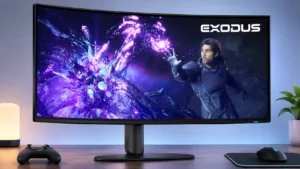
About 143 pixels per inch keeps this large ultrawide unusually crisp, including small interface elements and fine game details. That is a major advantage over lower-density large OLED alternatives.
Pros: overall satisfaction, Text fringing
Cons: brightness, Edge dimming behavior
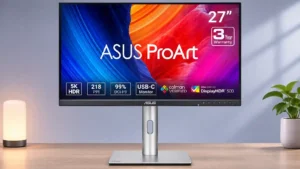
About 218–219 pixels per inch gives this large screen Retina-class detail and fine text. The coating can slightly reduce perceived sharpness despite the high underlying density.
Pros: value for money, Resolution
Cons: HDR performance, refresh rate
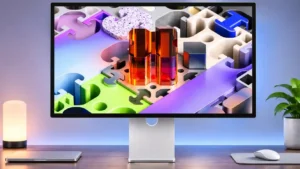
At 218 pixels per inch, text and detailed imagery remain finely resolved at typical desktop viewing distances.
Pros: refresh rate, HDR performance
Cons: value for money, Device compatibility
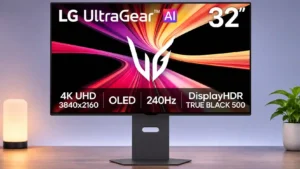
At 32 inches, 4K makes ordinary desktop text and images sharp, even if the pixel arrangement introduces some color fringes.
Pros: brightness, color gamut
Cons: AI scene optimization, value for money

Around 163 pixels per inch helps deliver exceptionally crisp text and detailed images on the 27-inch panel; it is not the 5K density of pricier Mac displays.
Pros: value for money, Resolution
Cons: port selection, competitive gaming suitability

1440p at 27 inches looks sharp in games and photographs, but text is not as finely defined as on higher-density 4K OLED displays.
Pros: color gamut, overall satisfaction
Cons: reflection handling, VRR flicker
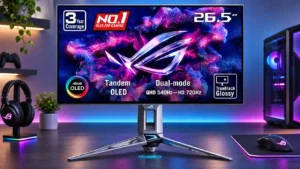
Around 110 pixels per inch is sensible for 27-inch gaming, though text and fine desktop details look less crisp than on 4K displays.
Pros: black levels, motion clarity
Cons: value for money, Dual-mode versatility
Pixel density is serviceable for Full HD at 24 inches, though fine details look noticeably less defined than on QHD or 4K.
Pros: adaptive sync performance, response time
Cons: HDR performance, console gaming compatibility
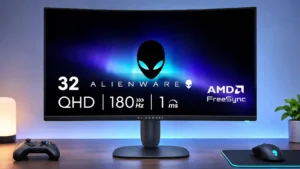
On a 32-inch 1440p display the relatively coarse pixel structure is a tradeoff: one account strongly dislikes its softness, while others find it workable for text and games.
Pros: value for money, overall satisfaction
Cons: HDR performance, Headphone output quality