Best for value for money
MSI Pro MP165 E6
4.6 attribute score
Highest scored product for this attribute based on supporting review evidence.

Highest scored product for this attribute based on supporting review evidence.
Balances the attribute score, supporting reviews, and overall product strength.
Has the broadest review evidence for this attribute.
Strongest overall product among items with scored evidence for this attribute.
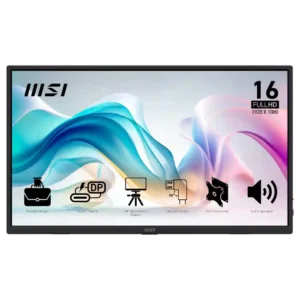
Value is a major strength when priced near or below $100, with many owners calling it a bargain. A few reviewers think cheaper rivals offer better picture or hardware for...
Pros: value for money, portability and weight
Cons: built-in speakers, color gamut
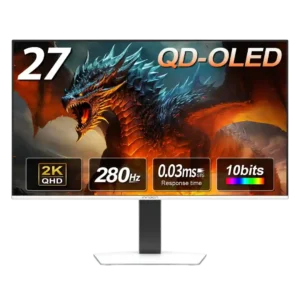
Most reviewers see the monitor as an exceptional OLED value around $380 to $450, especially for its speed and image quality. One reviewer argued that $400 is too close to...
Pros: color gamut, overall picture quality
Cons: brightness, HDR performance
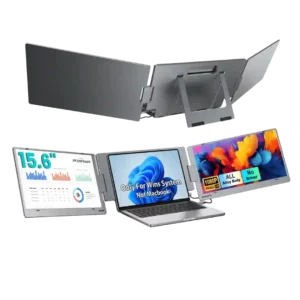
Value is widely praised, especially for getting two extra screens and a stand in one package at a comparatively modest price. A few negative experiences with brightness, stability, or outright...
Pros: overall satisfaction, portability and weight
Cons: reliability over time
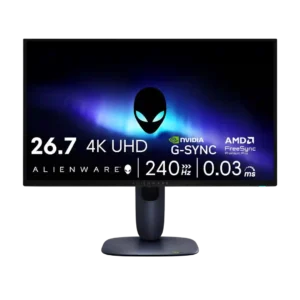
Value was broadly positive relative to competing 27-inch 4K OLEDs, but reviewers still stressed that the monitor is expensive.
Pros: value for money, sharpness
Cons: brightness, USB hub functionality
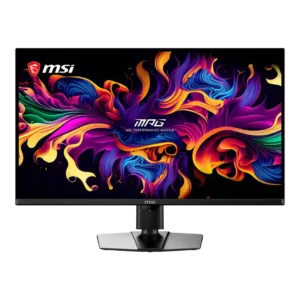
Reviewers generally consider the monitor strong value within the premium OLED category because it undercuts some same-panel rivals and includes extensive connectivity. It is still expensive, and cheaper trimmed-down models...
Pros: brightness, reflection handling
Cons: cable management
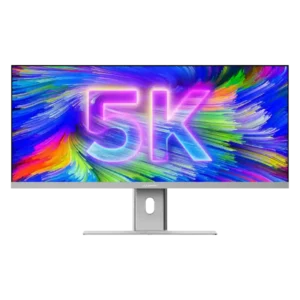
The price is high, but reviewers often saw fair value in the huge workspace, strong color, and integrated docking compared with multiple displays or premium Apple alternatives. Wobble and weak...
Pros: productivity versatility, aspect ratio
Cons: built-in speakers, competitive gaming suitability
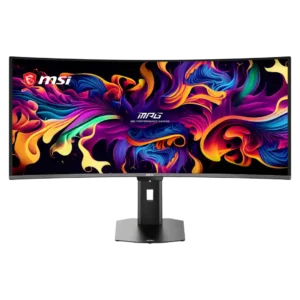
The monitor delivers flagship ultrawide OLED performance and a rich feature set at a competitive premium price. Cheaper 240Hz OLEDs remain better value for buyers who do not need 360Hz...
Pros: overall satisfaction, sharpness
Cons: Resolution, cable management
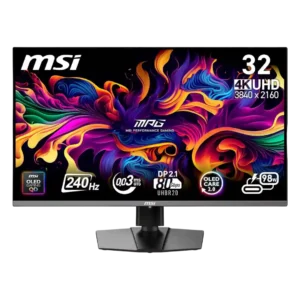
Reviewers strongly praise the performance but disagree sharply on value. Sale prices near $1,000 can feel worthwhile, while the $1,300 launch price and small upgrade over the 321URX are frequently...
Pros: color accuracy, value for money
Cons: reliability over time, brightness
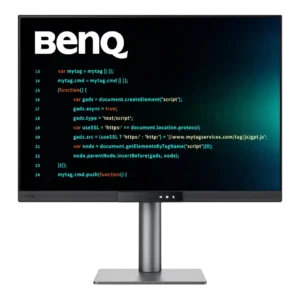
The premium price makes sense mainly for buyers who will use the 3:2 workspace and comfort features every day. Cheaper 4K, gaming, and color-focused monitors offer better value for narrower...
Pros: productivity versatility, aspect ratio
Cons: value for money, competitive gaming suitability
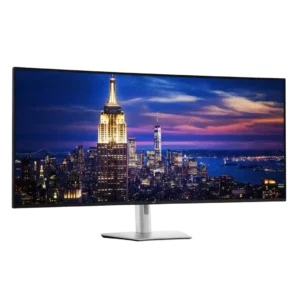
The roughly $2,900 price is the most repeated objection and is difficult to justify for ordinary users or gaming alone. Professionals who can replace several displays, a dock, and a...
Pros: productivity versatility, overall satisfaction
Cons: value for money, response time
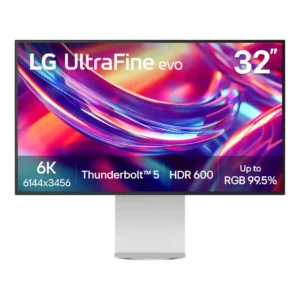
Value is highly price- and workflow-dependent. Reviewers who need 6K and Thunderbolt often justify the premium, especially at discounted pricing, while others argue cheaper 6K or 4K OLED alternatives make...
Pros: port selection, overall satisfaction
Cons: value for money, cable management
Value depends heavily on price and whether the dock, KVM, and connectivity will be used. Full MSRP draws criticism, while buyers at lower street prices often call it worth the...
Pros: overall satisfaction, productivity versatility
Cons: value for money, reliability over time
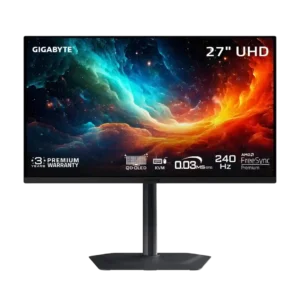
Value depends heavily on price. Two sources considered the $1,000 launch price uncompetitive beside cheaper rivals, while one considered it fair for the specifications and warranty.
Pros: motion clarity, PC gaming compatibility
Cons: color accuracy, software support
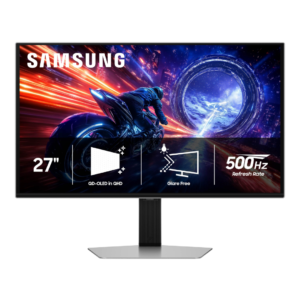
Value is the G6’s biggest weakness: multiple outlets found it expensive versus similar 500Hz QD-OLED rivals or cheaper lower-refresh OLEDs. A few lower street prices improved the equation, so discounts...
Pros: overall satisfaction, competitive gaming suitability
Cons: value for money, screen size