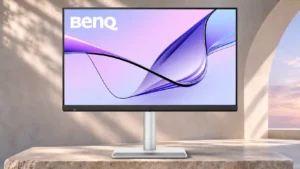
Overall: 4.4/5
The companion software generally works well and adds practical Mac-style settings rather than serving as a superficial extra.
Pros: port selection, color accuracy
Cons: built-in speakers, speaker quality

Overall: 4.4/5
The companion software generally works well and adds practical Mac-style settings rather than serving as a superficial extra.
Pros: port selection, color accuracy
Cons: built-in speakers, speaker quality
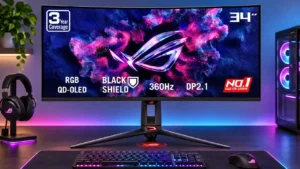
Overall: 4.5/5
DisplayWidget software makes OLED care and color adjustments easier than navigating several levels of physical menus.
Pros: color gamut, contrast
Cons: value for money, Resolution
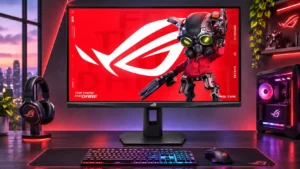
Overall: 3.9/5
Controls and firmware ran without major trouble in one test, though first-generation Pulsar updates have been important for improving behavior.
Pros: motion clarity, Backlight strobing
Cons: contrast, HDR performance
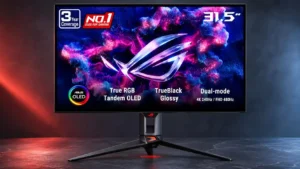
Overall: 4.3/5
ASUS companion software can change presets, tune display features and update firmware without relying entirely on the physical menu.
Pros: black levels, sharpness
Cons: value for money, brightness
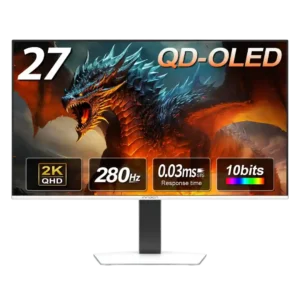
Overall: 4.3/5
A downloadable desktop app mirrors the OSD controls, letting users adjust the monitor without reaching for the rear joystick.
Pros: color gamut, overall picture quality
Cons: brightness, HDR performance
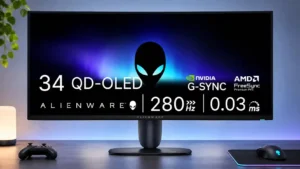
Overall: 4.4/5
Alienware Command Center provides convenient desktop control of display settings, with reported stability improvements over earlier versions.
Pros: brightness, value for money
Cons: port selection, built-in speakers
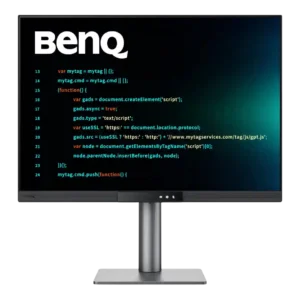
Overall: 4.4/5
Windows, macOS, and Linux support is unusually broad, and Linux brightness control worked immediately in testing. A few software and multi-input control quirks prevent a completely seamless experience.
Pros: productivity versatility, aspect ratio
Cons: value for money, competitive gaming suitability
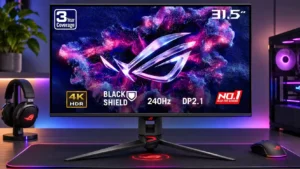
Overall: 4.2/5
DisplayWidget Center simplifies settings, profiles, and firmware maintenance without reaching for the joystick. Most testers find the menus flexible, though the utility adds another app to install.
Pros: overall satisfaction, black levels
Cons: value for money, stand adjustability
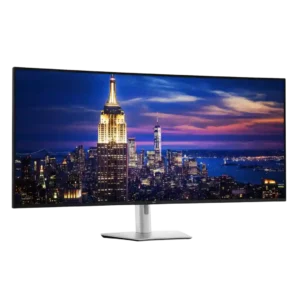
Overall: 4.3/5
Dell Display and Peripheral Manager adds useful window layouts, firmware updates, profiles, KVM controls, and screen management. Mac support, daisy-chain expectations, and some KVM functions are less consistent than the...
Pros: productivity versatility, overall satisfaction
Cons: value for money, response time
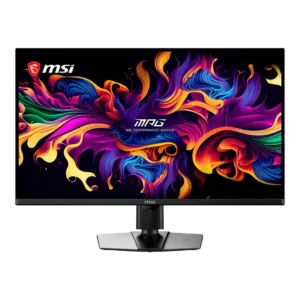
Overall: 4.4/5
Gaming Intelligence, the remote app, firmware updates, and AI Care controls provide extensive customization. Some promised features were not available during testing, and a few mode settings are not remembered...
Pros: brightness, reflection handling
Cons: cable management
Overall: 4.1/5
OMEN Gaming Hub is attractive and easy to navigate, although the monitor offers relatively little to customize.
Pros: black levels, overall picture quality
Cons: brightness, Gaming feature selection
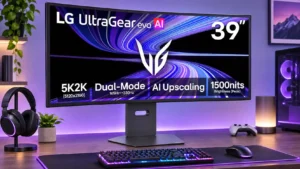
Overall: 4.1/5
LG’s desktop software makes adjusting settings easier than using the monitor controls, despite a brief loading delay.
Pros: Resolution, overall satisfaction
Cons: value for money, Image scaling
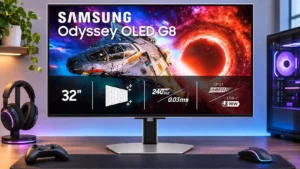
Overall: 4.1/5
Samsung’s official Windows driver and color profile are useful for proper device recognition and configuration.
Pros: PC gaming compatibility, reflection handling
Cons: color accuracy, VRR flicker
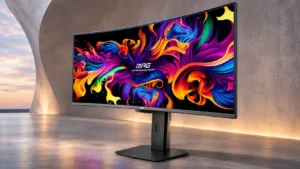
Overall: 4.4/5
MSI provides monitor control software, though test timing and firmware behavior affected some experiences.
Pros: refresh rate, Text fringing
Cons: Resolution, GPU demands
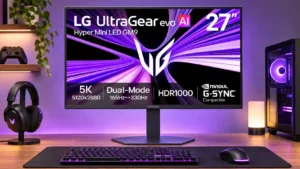
Overall: 4.0/5
LG Switch offers monitor controls and firmware upgrades, but slow updates, connection detection failures and bloatware worries spoil an otherwise refined interface.
Pros: Resolution, Dual-mode versatility
Cons: value for money, GPU demands
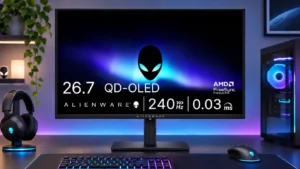
Overall: 3.8/5
Software and firmware conveniences are limited, with missing monitor-control support and restricted update options.
Pros: value for money, panel type
Cons: brightness, port selection