
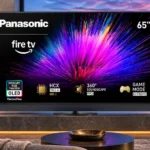
Panasonic Z95B OLED Feature Scores
Explore all 113 feature scores for Panasonic Z95B OLED, organized into pros and cons.
Scores by Feature
Summary
113 reviewed features-
Very positive 4.5-5.061 (54%)
-
Positive 3.5-4.421 (19%)
-
Neutral 2.5-3.413 (12%)
-
Negative 1.5-2.415 (13%)
-
Very negative below 1.53 (3%)
Pros
Sort
-
This is a top-tier cinematic OLED with exceptional accuracy, contrast and processing, held back mainly by software frustrations and occasional Dolby Vision artifacts.
-
Factory color reproduction is exceptionally close to reference, with convincing skin tones and almost imperceptible errors in accurate modes.
-
The Technics-tuned speakers sound fuller and more immersive than most TV audio, though an external system still wins for deep bass and true rear effects.
-
HDR movies look richly detailed, bright when called for, and notably accurate; isolated Dolby Vision gradients remain a caveat.
-
Rich, inky blacks create a convincing cinematic foundation, even with modest ambient lighting.
-
Fast refresh, VRR, accurate True Game color and responsive controls make this a very capable gaming OLED despite the limited HDMI 2.1 inputs.
-
DVDs, HD broadcasts and lower-resolution streams stay remarkably clear and natural, even when the original source is poor.
-
Refined processing retains detail and natural texture across sources; demanding Dolby Vision gradients are the standout exception.
-
The Z95B preserves film grain, lifelike skin tones and convincing depth without the excessive digital sharpness of some rivals.
-
Saturated hues stay vibrant through bright and dark HDR scenes, a clear improvement over previous WRGB designs, if not quite the best QD-OLEDs.
-
Its brightest HDR highlights can exceed 2,000 nits in suitable test conditions, giving OLED movies striking punch.
-
Its default tone mapping follows creative intent closely and preserves highlight gradation; increasing luminance can visibly compromise accuracy.
-
A broad, directional soundfield creates convincing placement, with occasional limitations in bass and voice anchoring.
-
PC gaming up to 4K/144Hz is fast and crisp, though LG and Samsung flagships can reach 165Hz.
-
Fast action looks clean and sharply resolved, although film cadence and broadcast material can reveal occasional judder or stutter.
-
The tandem OLED panel has exceptional brightness potential, but accurate picture presets can appear unexpectedly dim with some content until adjusted.
-
The solid central pedestal balances the screen confidently and adds a convenient rotating base in applicable sizes.
-
Upward and side-firing drivers make film soundtracks spacious, though their effects cannot fully mimic rear speakers.
-
Fabric-wrapped speakers give the TV a distinctive premium character; some prefer the refined redesign while others dislike its bulk.
-
Subtle dark-scene gradations are often superb, although a few picture modes or films can make shadow detail look too restrained.
-
Low-bitrate material benefits from effective artifact cleanup that avoids scrubbing away valuable scene detail.
-
Room tuning, equalization and directional sound controls make it easy to tailor the integrated speakers to a room.
-
The tandem panel improves wide-gamut coverage compared with older Panasonic OLEDs, although QD-OLED rivals retain an advantage at the extremes.
-
Small bright details stand out against deep blacks, and carefully judged tone mapping preserves subtle highlights even in demanding HDR masters.
-
The rotating pedestal makes it easy to redirect the screen and reach connections from different seating positions.
-
Detailed controls make reference-level calibration achievable, although factory accuracy is so good that many viewers will need little adjustment.
-
Color and contrast stay impressively consistent across wide seating arrangements, with only mild shifts toward extreme angles.
-
The dedicated wired output offers a straightforward route to fuller low frequencies without replacing the integrated sound system.
-
Dolby Vision, HDR10+, HDR10 and HLG give this set particularly complete HDR compatibility.
-
HDR10+ is available in addition to Dolby Vision, providing broad dynamic-HDR compatibility with supported discs and streams.
-
Standard-dynamic-range films and broadcasts display especially natural color and refined contrast, with excellent out-of-box accuracy.
-
The soundfield can be surprisingly immersive and steered toward different seats, even if overhead effects are not a full-surround substitute.
-
True Game produces a quick, responsive feel, especially at 120–144Hz, even if a few rivals measure slightly lower latency.
-
Many 24fps movies play with correct cadence and little judder, though certain older 60Hz feeds or pans expose flaws.
-
Supported VRR modes keep fast play smooth across changing frame rates, including AMD and NVIDIA ecosystems.
-
Window and lamp reflections are reasonably well contained, although harsher lighting exposes the limits of the glossy finish.
-
PS5 and Xbox games can run at 4K/120Hz with responsive input and smooth motion.
-
The built-in speaker layout creates meaningful Dolby Atmos height and spaciousness without requiring a separate soundbar.
-
Dolby Vision and HDR10+ support together cover nearly all premium HDR releases, with some playback-specific quirks.
-
FreeSync enables smoother variable-frame-rate gaming on compatible systems.
-
NVIDIA-compatible variable refresh works well and offers a nearly tear-free experience.
-
Speech is generally clear and well projected; one test notes occasional sibilance and thinness.
-
HDR10 gradients are mostly smooth, while Dolby Vision and near-black scenes can expose occasional uneven transitions.
-
A premium price can be justified by the pairing of excellent image quality and unusually capable audio, especially after discounts.
-
Pixel-level black is essentially perfect without halos, although a different near-black banding issue can emerge on almost-black gray screens.
-
Individually controlled OLED pixels create superb separation between pinpoint highlights and deep blacks.
-
Standard-definition material looks far cleaner than expected, though very low-bit-rate channels can still appear soft.
-
Instant pixel transitions keep fast-moving game objects particularly sharp with very little trailing blur.
-
Fine textures and small highlights lend 4K material convincing depth, including animation and demanding HDR films.
-
Nearly instantaneous transitions deliver crisp high-refresh gaming motion, with some inherent 60Hz sample-and-hold softness.
-
Neutral tones are already very close to target, and careful calibration can iron out the last subtle deviations.
-
Full-screen bright content fares well for an OLED, although very bright stationary elements still dim with time.
-
Bright screens are usually clean; near-black gray material can show faint vertical bars or retention that varies with the panel and scene.
-
Solid, premium materials and a sturdy chassis convey excellent construction despite slight unit-to-unit stand lean.
-
Its two high-bandwidth ports enable advanced gaming features, though four-port alternatives suit hardware-heavy setups better.
-
Major streaming services and regional catch-up options are well represented, keeping the TV capable as an all-in-one streamer.
-
Freely improves free live and catch-up viewing for UK households, though channel changes can still be slow.
-
High frequencies generally retain crispness and definition, with occasional tinny effects in demanding material.
-
Several accurate and brighter modes provide real flexibility, though achieving both full brightness and faithful tone mapping requires care.
-
Compatible consoles trigger a responsive low-lag picture automatically, sparing manual switching.
-
The high-output panel and new cooling approach reduce dimming concerns with bright game or sports screens.
-
Bright stars and tiny highlights appear without halos because each OLED pixel is controlled independently.
-
Colors and blacks hold up surprisingly well with room lighting, making typical daytime viewing practical.
-
The sound-directing controls help focus voices toward a desired listener or area of the room.
-
Side-facing connectors remain easy to reach, including when the TV is mounted.
-
Older HD movie transfers retain a pleasingly film-like appearance rather than becoming oversharpened or artificially smooth.
-
The speakers can get impressively loud while keeping dialogue intelligible.
-
Dark-visibility adjustments help reveal or suppress shadow areas in games without abandoning the TV's accurate HDR presentation.
-
Basic Fire TV setup can be quick and straightforward, although experiences with ongoing interface speed are inconsistent.
-
The integrated speaker array handles dialogue, music and action exceptionally well for a television.
-
Voice search generally responds promptly and finds requested content without much fuss.
-
Its integrated speakers and cooling give it more depth than ultra-thin rivals; the updated uniform profile looks cleaner to some, but wall-mount minimalists may object.
-
The handset offers satisfying tactile controls and a comfortable feel, but not everyone appreciates its basic or button-heavy design.
-
Filmmaker Mode prioritizes faithful color and gradation, but its restrained luminance can look too subdued until the room or settings are adjusted.
-
The game menu makes useful controls accessible, but one design takes up too much of the picture and feels distracting.
-
A built-in channel helps conceal cables routed down the central stand.
-
The brighter tandem OLED design aims to deliver higher output with less strain on the panel.
-
The anti-reflection finish limits many bright-room distractions, but strong direct light sources can remain visible on dark images.
-
Even off-center seats preserve most of the picture's richness, despite small color changes at wider angles.
-
Dedicated Netflix and Prime Video modes can tailor images to their streams, although the most accurate general modes may still be preferable.
-
Basic Fire TV navigation can be straightforward, although added settings layers and app-management steps hurt convenience.
-
The new 77-inch choice is welcome, but buyers seeking 83 inches or larger remain without an option.
Cons
Sort
-
Persistent Fire TV promotional material interrupts the premium feel, and the standard interface offers no complete opt-out.
-
There are only two full-speed HDMI 2.1 sockets, one shared with eARC, so multi-console and soundbar installations face a tradeoff.
-
Some like the full set of shortcuts, while others find the bulky layout difficult to navigate quickly.
-
Storage handling, power commands and occasional HDR brightness fluctuations make software the weakest part of the premium package.
-
Linked external gear can occasionally misfire on power or input changes, affecting otherwise simple control routines.
-
The TV may fail to display basic subtitle tracks from local USB videos, an awkward omission for offline film libraries.
-
Automatic AI modes can look overbright or introduce unnatural smoothing, making the accurate cinema presets preferable.
-
DTS audio handling is missing, an unwelcome restriction for some Blu-ray collections and AV setups.
-
USB playback is undermined by recurring storage prompts and limited subtitle handling in some local files.
-
Fire TV has broad app access and Alexa integration, but its ad-heavy layout, clunky navigation and intermittent bugs disappoint.
-
Getting apps onto the preferred home-screen row can require surprisingly awkward extra steps.
-
Free live TV is appealing, but switching between some UK Freely channels was painfully slow in testing.
-
The limited cloud-gaming options lag those of some competing high-end TVs.
-
Boosting bass too far can produce unpleasant distortion, limiting the otherwise capable internal speakers.
-
Dolby Vision games are supported, but one technical assessment recommends HDR10 instead for more reliable game tone mapping.
-
Some HDMI device power events cause unintended input changes, making external-source setups less dependable.
-
Panasonic offers plenty of useful picture controls, but the menu layout can make advanced adjustments harder to find than necessary.
-
Commands may lag noticeably when changing volume or pausing video, an irritation on such a costly set.
-
One Wi-Fi setup struggled until moved to Ethernet, making a wired connection a sensible fallback for streaming stability.
-
Mixed-content use is relatively safe, but static logos and prolonged fixed elements carry a meaningful permanent burn-in risk.
-
Suggestions can lean too strongly toward Amazon's catalog and miss the household's actual interests.
-
The fast OLED response can make low-frame-rate camera pans appear uneven, with mild interpolation offering a compromise.
-
Low frequencies have more weight than typical TV speakers, but they can sound thin, droney or rattly under pressure.
-
Ordinary HDR10 scenes are generally clean, but some Dolby Vision material reveals posterization and near-black bands.
-
Fire TV responsiveness varies widely, from smooth operation to slow inputs and frustrating delays.
-
Ordinary scenes are mostly free of distracting flicker, although very sensitive viewers may notice minor luminance fluctuations.
-
Common panel risks are relatively controlled, but permanent static-image burn-in and potential edge-pixel issues remain considerations.
-
The stand holds the set securely, although some units exhibit a slight forward lean.
-
Full-screen and everyday SDR brightness is generally ample, although some accurate modes start very dim and need a brighter preset for daylight.
-
Gentle settings can ease 24p stutter, but aggressive interpolation introduces artificial motion or processing errors.
-
Rich Dolby Vision images are often striking, but shadow transitions can show banding or posterization in select scenes.
Use Cases
Best for
Sort
-
Films benefit from reference-like color, precise shadow detail and a natural cinematic texture, though some Dolby Vision scenes need care.
-
Accurate film presentation, bright HDR highlights and rich built-in sound are exceptionally well suited to a serious home cinema.
-
The built-in sound provides greater fullness and immersion than most rivals, making an added soundbar optional for many rooms.
-
The upscaler gives HD films and streams attractive clarity without obvious digital harshness.
-
4K/144Hz with VRR is excellent for most PCs, but four-port 165Hz rivals are more flexible for maximalist gaming desks.
-
PS5 and Xbox titles feel responsive and vibrant with 4K/120Hz and VRR, while only two full-bandwidth HDMI inputs restrict elaborate setups.
-
Fast response and largely uncompromised game-mode HDR brightness make vivid games immersive, with a Dolby Vision tone-mapping caveat.
-
Premium 4K discs highlight the TV's lifelike color, deep contrast and precise HDR details; its integrated audio adds cinematic scale.
-
The screen is capable in ordinary daylight, but strong reflections and dim default Filmmaker settings may favor competitors in sunny rooms.
-
PS5 games take advantage of 4K/120Hz, VRR and the low-latency True Game picture, with responsive action and crisp motion.
-
High-quality streams showcase precise color and striking contrast, while the Fire TV interface is a more mixed experience.
-
An external streamer can improve the experience for Fire TV skeptics, although HDMI-CEC quirks complicate some setups.
-
A Switch 2 game's 4K remaster looks particularly sharp and vibrant on the Z95B.
-
Wide OLED viewing angles let people seated across a couch retain most of the picture's color and contrast.
-
Story-heavy and less frantic games look especially smooth and cinematic, even if broadcast sports motion is less consistently polished.
-
Even DVDs gain a surprisingly sharp, clean presentation, though extremely poor sources remain limited.
-
Bright-field sports remain reasonably visible in well-lit rooms, although glare and highly compressed broadcasts can be distracting.
-
The picture and sound work beautifully for daily entertainment, though Fire TV quirks can undermine the convenience expected from a premium set.
Conditional or not ideal for
Sort
-
Multiple high-bandwidth gaming devicesTwo HDMI 2.1 ports, with one used for eARC, make several consoles and an external audio system awkward to connect at full capability.
-
Long-term ownershipVaried viewing habits mitigate most OLED durability concerns, though static content and image retention deserve caution.
-
Amazon ecosystem householdsFire TV's Amazon-centric content and Alexa tools may appeal to Prime-heavy homes, but other viewers can find the emphasis intrusive.
-
Sports watchingSports can look vibrant, but highly compressed broadcast motion may still suffer visible artifacts or softness.