
If you want better banding control
Choose Roku Pro Series (2026). It scores 4.5 vs 1.0 for banding control, with a 4.1 overall score.

Four full-bandwidth HDMI 2.1 ports and excellent OLED blacks make the BRAVIA 6 appealing for dark-room gaming. Weak HDR brightness, reflections, and reported software freezes make cheaper rivals hard to ignore.
Dark-room movie watching and households connecting several current-generation gaming consoles: OLED blacks, very low input lag, and four full-speed HDMI 2.1 ports make those uses particularly appealing.
Budget-focused buyers and people who primarily watch daytime TV in a bright living room. Its low brightness, conspicuous reflections, and reported operating glitches make more versatile alternatives attractive.
The Sony BRAVIA 6 OLED gets two important things right: true OLED contrast and unusually flexible connectivity. Four full-bandwidth HDMI 2.1 ports accept 4K at 120Hz, and responsiveness is excellent for consoles and PCs. In a dim room, inky blacks, wide viewing angles, and clean motion make movies and games enjoyable. The compromises are hard to overlook at its price, however. HDR highlights look weak, sunlight overwhelms the screen, and low-quality streaming footage can lose texture. Its ability to remove judder from 60p sources is limited, and near-black scenes can show obvious vertical banding. Google TV offers lots of apps, but one hands-on source experienced repeated freezes that required unplugging the TV. The appealing feature list is not enough to guarantee better value than cheaper LG or Samsung OLED alternatives.
Compared with other TVs, this product is above average in account requirements, response time, PC text clarity, near average in black levels, picture quality, below average in FreeSync support, app performance, daytime viewing performance.
| Attribute | This product | Category average | Difference |
|---|---|---|---|
| FreeSync support | 1.5 | 4.4 | -2.9 |
| app performance | 1.0 | 3.9 | -2.9 |
| daytime viewing performance | 1.0 | 3.9 | -2.9 |
| banding control | 1.0 | 3.7 | -2.7 |
| HDR brightness | 1.5 | 4.1 | -2.6 |
| judder handling | 1.5 | 3.9 | -2.4 |
| sustained brightness | 1.5 | 3.8 | -2.3 |
| HDR performance | 2.0 | 4.2 | -2.2 |
Choose Roku Pro Series (2026). It scores 4.5 vs 1.0 for banding control, with a 4.1 overall score.
Choose Hisense U6SF. It scores 4.8 vs 1.0 for daytime viewing performance, with a 4.3 overall score.
Choose LG G6. It scores 5.0 vs 1.5 for FreeSync support, with a 4.4 overall score.
Choose Sony Bravia 8 II. It scores 4.5 vs 1.5 for HDR brightness, with a 3.9 overall score.
Products reviewers directly compared with this model, grouped into quick takeaways.
Yes for console gaming: all four HDMI inputs support 4K at 120Hz, input lag is low, and VRR reduces tearing. It lacks native 1440p support and FreeSync support for certain older AMD cards.
Not particularly well. Modest SDR brightness and visible reflections make it best suited to dark or light-controlled rooms.
Perfect OLED blacks look excellent, but HDR highlights are dim and some bright details clip. It is much more convincing for dark-room contrast than raw HDR impact.
Yes. All four HDMI ports support full-bandwidth HDMI 2.1, and eARC can send high-quality audio to a soundbar or receiver. Check stand positioning and clearance for a soundbar.
The interface is widely praised for its app choice and speed, but a hands-on test reported repeated freezes and even trouble playing video from USB. Reliability is an important purchase consideration.
Only if the four full-bandwidth HDMI inputs and Sony ecosystem matter more to you than peak brightness and value. Detailed comparisons find several competing OLEDs brighter and, in some cases, better at processing video.
These are a few of the reviews included in our analysis.


The Sony BRAVIA 6 OLED is a mid-range TV released in 2026. It's a new model in Sony's lineup, sitting between the Sony BRAVIA 3 II and the...
Our Sony BRAVIA 6 (A65) review tests OLED picture quality, HDR, gaming and Google TV. Explore the pros and cons of Sony’s cheapest OLED TV...
The all-new Bravia 6 is Sony's most affordable OLED TV, and it's sure to give the LG C6 and Samsung S90H a run for their money.
Sony’s 2026 BRAVIA 6 OLED offers five sizes, four HDMI 2.1 inputs with 4K120, VRR and ALLM, Dolby Vision, Google TV and pixel-level contrast.
Sony's affordable OLEDs look good, especially for gamers, but they're up against some seriously talented TVs
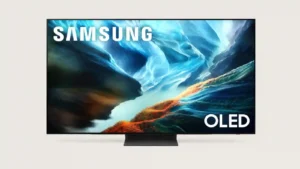
Choose the S90H for bright-room OLED viewing, deep blacks and top-tier gaming without flagship pricing. Skip it if you want Dolby Vision, a glossy screen or the simplest smart-TV software.
Pros: glare resistance, black levels
Cons: Dolby Vision support, color gamut
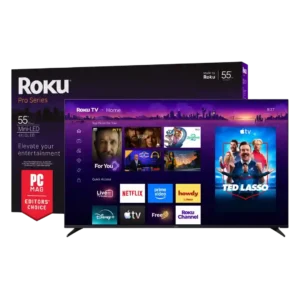
Best for bright Mini-LED picture, excellent built-in audio, easy Roku navigation, and responsive 4K/120 gaming. Skip it if you want ad-free menus, premium motion consistency, or stronger confidence in long-term...
Pros: overall satisfaction, picture quality
Cons: reliability, portability and versatility
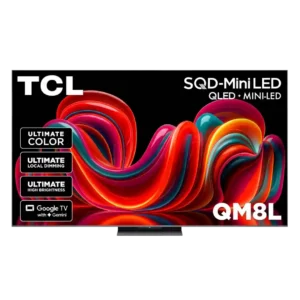
Choose the QM8L for a big, brilliantly bright TV with vivid HDR, deep mini-LED blacks, low input lag, and four HDMI 2.1 ports. Skip it if you need OLED-clean motion,...
Pros: picture quality, value for money
Cons: stand quality, judder handling

Choose the G6 for class-leading bright-room OLED picture, rich color, deep blacks and elite gaming. Skip it if you want strong built-in audio, polished launch firmware, no account sign-in, or...
Pros: picture quality, peak brightness
Cons: value for money, sound quality