If you want better HDR brightness
Choose Hisense U7SG. It scores 4.8 vs 1.2 for HDR brightness, with a 4.2 overall score.

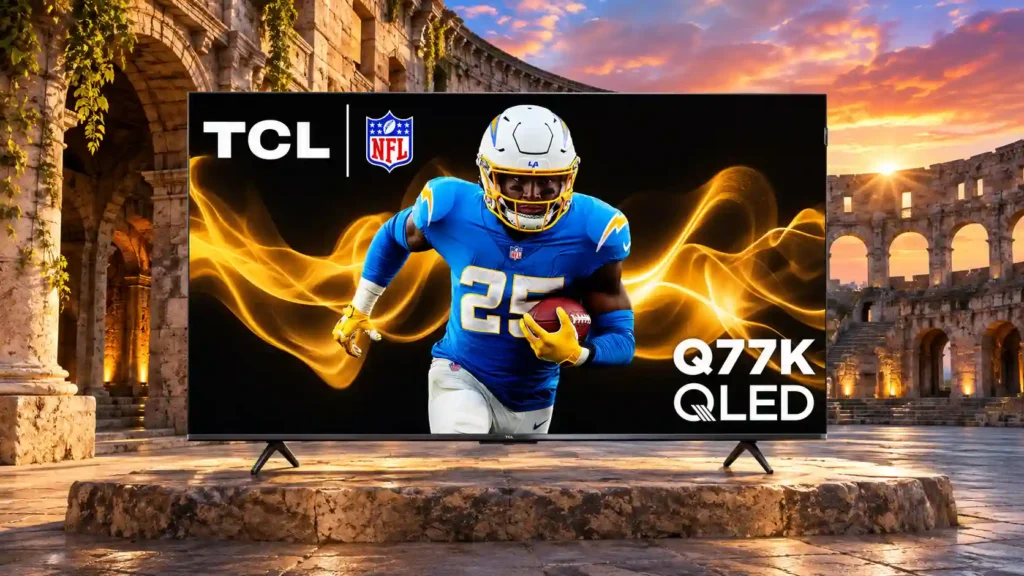
The TCL Q77K packs excellent gaming connectivity and high refresh rates into an affordable big screen. Its dim HDR, washed-out blacks and blurry 60Hz motion make it much less attractive for serious movies or sports.
Budget-conscious PC and console players who prioritize responsive high-refresh gaming and a large screen in a controlled-light room.
HDR movie enthusiasts, demanding home-theater shoppers, bright-room viewers and people who watch lots of fast 60Hz sports.
The TCL Q77K is an unusually gaming-focused budget TV. Its 144Hz 4K capability, high-refresh 1080p modes, wide VRR support, automatic Game Mode and extremely low input lag are rare strengths at this price. Google TV offers plenty of apps, and inexpensive large sizes make it appealing for a PC or console setup. Everyday 4K streams can look sharp, especially in a moderately lit room. But this is not a well-rounded picture-quality bargain: the basic backlight has no local dimming, so HDR highlights look flat and black levels are elevated. Glossy versions struggle with lamps and windows, while detailed 60Hz response tests reveal blur and artifacts that hurt sports and regular TV. Internal sound is serviceable for dialogue but lacks bass. If gaming features and screen size are your priorities, it earns consideration; if a brighter Mini LED alternative costs only modestly more, that upgrade is more compelling for mixed viewing.
Compared with other TVs, this product is above average in warranty, Size-specific gaming refresh limits, high-refresh-rate gaming, near average in Picture detail, viewing angles, below average in cable management, HDR brightness, HDR performance.
| Attribute | This product | Category average | Difference |
|---|---|---|---|
| cable management | 1.0 | 3.6 | -2.6 |
| HDR brightness | 1.2 | 3.5 | -2.4 |
| HDR performance | 1.5 | 3.7 | -2.2 |
| local dimming performance | 1.1 | 3.3 | -2.2 |
| SDR brightness | 1.5 | 3.6 | -2.1 |
| soundstage | 1.8 | 3.7 | -2.0 |
| peak brightness | 1.8 | 3.7 | -1.9 |
| glare resistance | 1.2 | 3.1 | -2.0 |
Choose Hisense U7SG. It scores 4.8 vs 1.2 for HDR brightness, with a 4.2 overall score.
Choose Hisense UR8SG. It scores 4.8 vs 1.1 for local dimming performance, with a 4.0 overall score.
Choose Hisense UR9SG. It scores 4.9 vs 1.8 for peak brightness, with a 4.1 overall score.
Choose Hisense U8QG. It scores 5.0 vs 1.8 for soundstage, with a 4.1 overall score.
Products reviewers directly compared with this model, grouped into quick takeaways.
Yes. The tested model supports 4K up to 144Hz, VRR and very low input lag on high-bandwidth inputs. HDR and 60Hz motion are weaker than its gaming specifications suggest.
No. Its direct-lit backlight cannot darken separate areas, so blacks look raised and HDR highlights lack impact.
Not particularly well. Its modest brightness and glossy finish on smaller models show glare; the 85- and 98-inch matte variants reduce reflections but are not significantly brighter.
Yes, on the high-bandwidth ports. The tested 75-inch set has two such HDMI inputs, so check your exact size before connecting several fast devices.
The high refresh rate helps games, but slower 60Hz pixel transitions can blur ball movement, players and scrolling text. Assessments vary, with detailed testing reporting more blur.
They can handle speech and casual shows, but bass, spaciousness and loudness are limited. A soundbar is advisable for films and music.
For HDR, dark movies and bright rooms, yes: its Mini LED dimming and stronger brightness make a noticeable difference. The Q77K makes more sense when savings and high-refresh gaming matter most.
These are a few of the reviews included in our analysis.
Our TCL Q77K review covers picture quality, gaming, prices, and how this Costco-exclusive QLED TV compares with the TCL QM6K.
Do you want a big 4K TV without spending a lot? The TCL Q77K might have caught your eye at Costco. A 65 inch QLED with a 144Hz screen and...
TCL Q77K review covering every size, gaming, HDR, sports motion, HDMI ports, reflections, warranty, and whether the QM6K is worth the upgrade.
TCL Q77K review covering 50–98-inch models, 144Hz gaming, HDR, motion, HDMI ports, picture quality, QM6K comparisons and which size is worth...
The TCL Q77K is an entry-level 4k TV released in 2025 as a Costco exclusive in North America. It's surprisingly feature-packed for the price...
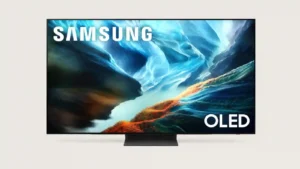
Choose the S90H for bright-room OLED viewing, deep blacks and top-tier gaming without flagship pricing. Skip it if you want Dolby Vision, a glossy screen or the simplest smart-TV software.
Pros: glare resistance, black levels
Cons: Dolby Vision support, color gamut
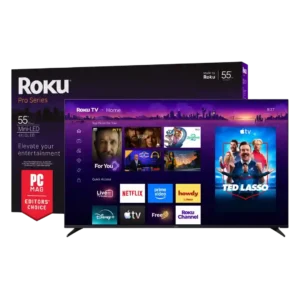
Best for bright Mini-LED picture, excellent built-in audio, easy Roku navigation, and responsive 4K/120 gaming. Skip it if you want ad-free menus, premium motion consistency, or stronger confidence in long-term...
Pros: overall satisfaction, picture quality
Cons: reliability, portability and versatility
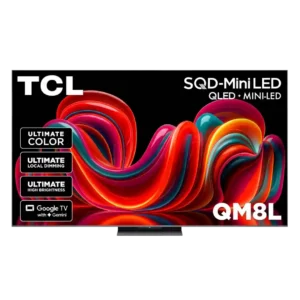
Choose the QM8L for a big, brilliantly bright TV with vivid HDR, deep mini-LED blacks, low input lag, and four HDMI 2.1 ports. Skip it if you need OLED-clean motion,...
Pros: picture quality, value for money
Cons: stand quality, judder handling

Choose the G6 for class-leading bright-room OLED picture, rich color, deep blacks and elite gaming. Skip it if you want strong built-in audio, polished launch firmware, no account sign-in, or...
Pros: picture quality, peak brightness
Cons: value for money, sound quality