If you want better response time
Choose Hisense U65QF. It scores 5.0 vs 1.0 for response time, with a 4.2 overall score.

Choose it for exceptional bright-room HDR, accurate color, strong processing and unusually capable built-in sound. Skip it if you prioritize OLED-perfect blacks, four HDMI 2.1 ports, high-refresh PC gaming or maximum value.
Bright-room viewers and movie fans who want reference-minded color, huge HDR impact, strong processing and unusually capable built-in sound without moving to OLED.
Value-focused buyers, high-refresh PC gamers, or dark-room purists who prioritize perfect blacks, four full-bandwidth HDMI 2.1 ports or the lowest possible price.
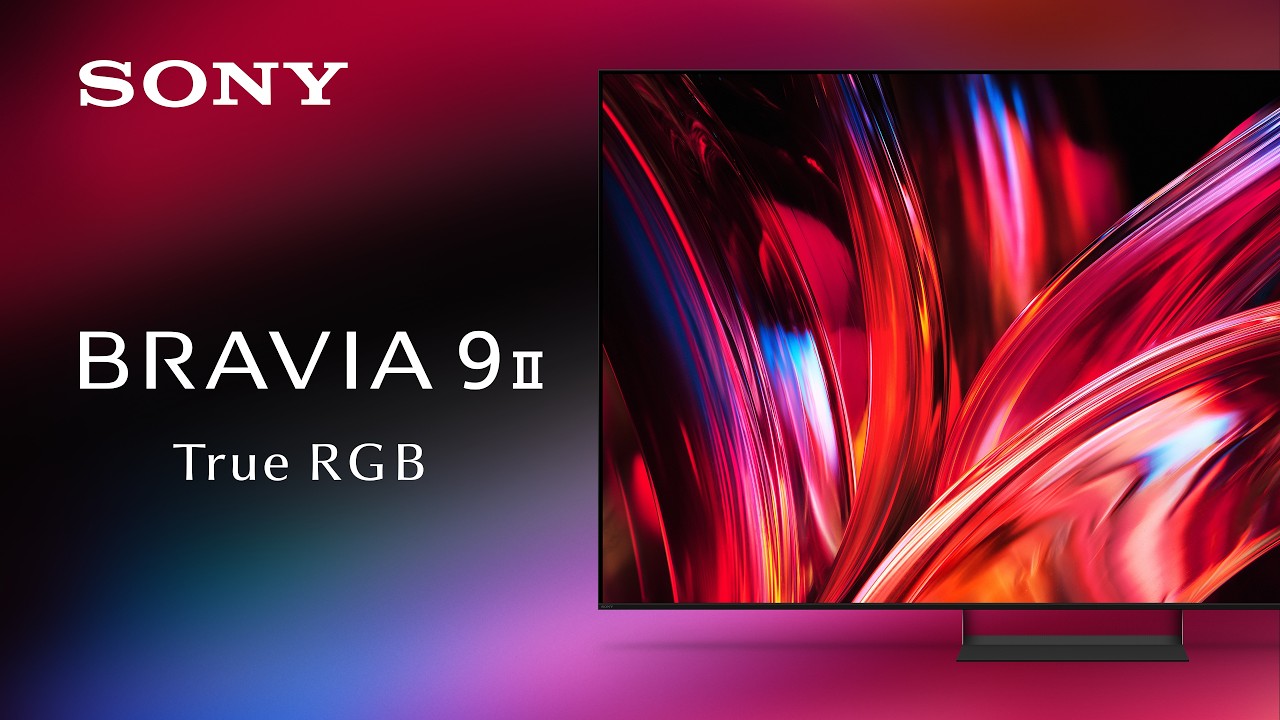
Sony’s Bravia 9 II is a showcase for how far premium LCD can go. Its True RGB backlight combines immense HDR brightness, wide color, strong black levels and unusually refined processing, while the anti-reflective screen makes it especially convincing in bright rooms. Built-in sound is another standout, with a large, immersive presentation that reduces the urgency of adding a soundbar. The tradeoffs are meaningful: it is expensive, only two HDMI ports deliver full HDMI 2.1 bandwidth, and blooming or color shifts can become more visible off-axis. Gaming is capable rather than class-leading, with low input lag but weaker high-refresh motion in some testing. OLED remains more consistent for perfect blacks and dark-room precision, but this Sony makes a compelling case when brightness, color volume and mixed-room versatility matter most.
Compared with other TVs, this product is above average in advertising intrusiveness, tuner support, maximum volume, near average in overall satisfaction, overall image accuracy, below average in high-refresh-rate gaming, response time, voice control accuracy.
| Attribute | This product | Category average | Difference |
|---|---|---|---|
| high-refresh-rate gaming | 1.0 | 4.3 | -3.3 |
| response time | 1.0 | 3.9 | -2.9 |
| voice control accuracy | 1.0 | 3.4 | -2.4 |
| refresh rate | 2.0 | 4.4 | -2.4 |
| eARC support | 2.0 | 4.4 | -2.4 |
| advertising intrusiveness | 5.0 | 2.7 | +2.3 |
| Dolby Vision support | 2.0 | 4.3 | -2.3 |
| audio passthrough | 1.0 | 3.2 | -2.2 |
Choose Hisense U65QF. It scores 5.0 vs 1.0 for response time, with a 4.2 overall score.
Choose LG G6. It scores 4.8 vs 1.0 for high-refresh-rate gaming, with a 4.4 overall score.
Choose TCL QM8L. It scores 5.0 vs 2.0 for stutter handling, with a 4.4 overall score.
Choose TCL QM7L. It scores 4.8 vs 1.0 for voice control accuracy, with a 3.9 overall score.
Products reviewers directly compared with this model, grouped into quick takeaways.
Yes. Its very high brightness and unusually effective anti-reflective screen are repeatedly praised for keeping contrast, color and visibility strong in daylight.
It has two full-bandwidth HDMI 2.1 ports, and one also handles eARC. That can be restrictive if you use multiple current-generation consoles or a gaming PC plus an eARC sound system.
It is strong for mainstream console gaming with 4K/120Hz, VRR, ALLM and low input lag, but high-refresh motion results are mixed and the 120Hz ceiling is less appealing for demanding PC gamers.
They are unusually capable for a TV, with clear dialogue, a large soundstage and convincing height effects. Bass is the main limitation, and Sony’s wireless subwoofer and rear-speaker expansion can add substantially more impact.
It can outperform OLED in full-screen brightness, color volume and bright-room usability, while getting impressively close on blacks for an LCD. OLED still has the advantage for perfect blacks, pixel-level precision and the widest viewing angles.
The performance can justify the premium for viewers who specifically need its brightness, anti-glare screen and flagship processing, but several comparisons point to cheaper OLEDs or the Bravia 7 II as stronger value choices.
These are a few of the reviews included in our analysis.



Sony's flagship True RGB TV for 2026 offers excellent performance for an LCD TV, but can it challenge OLED where it matters?
Sony’s premium True RGB TV delivers a spectacular showcase of what this new technology can do
The Sony Bravia 9 II True RGB TV is one of the top LED TVs of 2026, but the step-down Bravia 7 II is more affordable. Here's how they compare...
The Japanese electronics giant has matched the Bravia 9 II’s outstanding image quality with exceptional sound reproduction, world-class...
The Bravia 9 II isn’t perfect, but it’s a contender for the best TV of 2026 with its fantastically authentic picture quality and great sound

Choose the S90H for bright-room OLED viewing, deep blacks and top-tier gaming without flagship pricing. Skip it if you want Dolby Vision, a glossy screen or the simplest smart-TV software.
Pros: glare resistance, black levels
Cons: Dolby Vision support, color gamut

Best for bright Mini-LED picture, excellent built-in audio, easy Roku navigation, and responsive 4K/120 gaming. Skip it if you want ad-free menus, premium motion consistency, or stronger confidence in long-term...
Pros: overall satisfaction, picture quality
Cons: reliability, portability and versatility

Choose the QM8L for a big, brilliantly bright TV with vivid HDR, deep mini-LED blacks, low input lag, and four HDMI 2.1 ports. Skip it if you need OLED-clean motion,...
Pros: picture quality, value for money
Cons: stand quality, judder handling

Choose the G6 for class-leading bright-room OLED picture, rich color, deep blacks and elite gaming. Skip it if you want strong built-in audio, polished launch firmware, no account sign-in, or...
Pros: picture quality, peak brightness
Cons: value for money, sound quality