If you want better noise reduction
Choose LG QNED75B. It scores 4.0 vs 1.0 for noise reduction, with a 3.4 overall score.

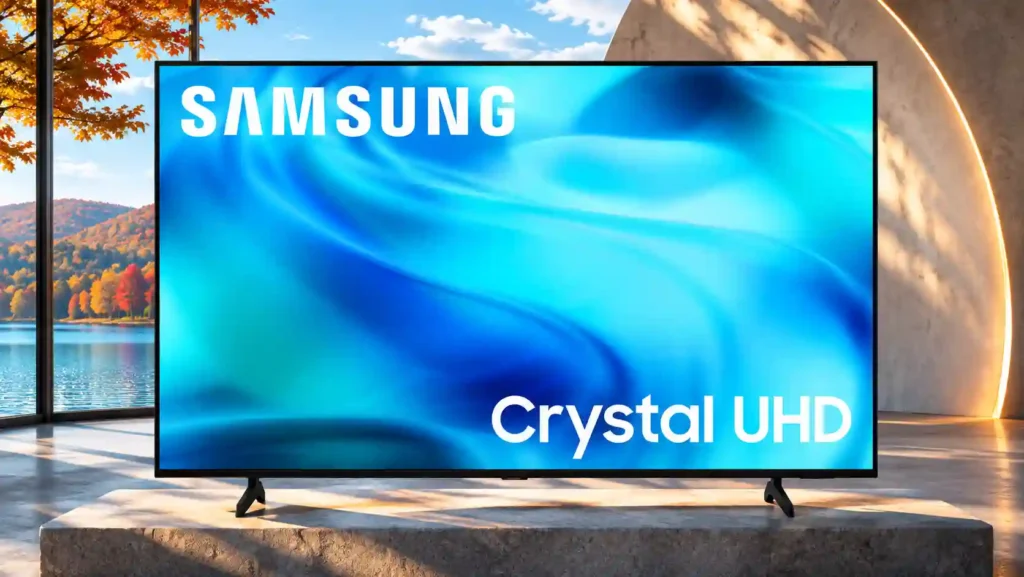
An attractive low-cost Samsung with convenient Tizen streaming, the U8000H handles everyday TV better than demanding content. Dim HDR, blurry motion, weak bass and a stripped-down remote make brighter budget alternatives worth considering.
Budget buyers who mainly stream everyday shows in moderately lit rooms from a central seat, especially those who value Samsung’s Tizen apps and connected-home ecosystem.
Bright rooms, wide seating groups, serious HDR movie fans, competitive gamers, or anyone expecting true 4K/120Hz from modern consoles.
The Samsung U8000H is easiest to appreciate as a simple, inexpensive television for everyday streaming. Its slim bezels, broad app platform and watchable 4K picture are appealing, and some side-by-side comparisons favor its color balance and value over other bargain sets. Yet the picture has a low ceiling: measured brightness is poor, dark scenes lack depth, and HDR highlights rarely stand out. Slow pixel response and limited 4K/60Hz gaming also hold back sports and fast-paced games. Certain larger sizes offer a compromised 1080p/120Hz option, not true 4K/120Hz. The built-in sound is adequate for dialogue but thin, while scarce app storage and the remote’s missing buttons may encourage additional purchases. It can be sensible at a steep discount for centered seating in moderate light, but brighter Mini-LED rivals are more compelling when priced nearby.
Compared with other TVs, this product is above average in HDR tone mapping accuracy, tone mapping, stutter handling, near average in white balance accuracy, screen uniformity, below average in 4K at 120 Hz support, HDMI 2.1 support, 1440p input compatibility.
| Attribute | This product | Category average | Difference |
|---|---|---|---|
| 4K at 120 Hz support | 1.3 | 4.2 | -2.9 |
| HDMI 2.1 support | 1.5 | 4.4 | -2.9 |
| 1440p input compatibility | 1.0 | 3.9 | -2.9 |
| noise reduction | 1.0 | 3.8 | -2.8 |
| cable management | 1.0 | 3.8 | -2.8 |
| local dimming performance | 1.0 | 3.7 | -2.7 |
| Dolby Atmos support | 1.5 | 3.9 | -2.4 |
| HDR brightness | 1.4 | 3.7 | -2.3 |
Choose LG QNED75B. It scores 4.0 vs 1.0 for noise reduction, with a 3.4 overall score.
Choose Samsung S85H OLED. It scores 5.0 vs 1.0 for local dimming performance, with a 4.0 overall score.
Choose LG B6E OLED. It scores 4.9 vs 1.3 for 4K at 120 Hz support, with a 4.0 overall score.
Choose Sony BRAVIA 3 II. It scores 4.3 vs 1.0 for glare resistance, with a 3.8 overall score.
Products reviewers directly compared with this model, grouped into quick takeaways.
No. Native 4K input is capped at 60Hz. Select larger sizes offer a reduced-resolution 1080p/120Hz gaming option, but this is not 4K/120Hz.
Not especially. Low peak brightness, weak color saturation and no local dimming keep HDR highlights from standing out and dark scenes from looking deep.
It struggles with strong daylight or windows facing the screen because the glossy coating reflects light and the panel is not bright enough to overcome glare.
It supports 4K/60Hz console play with conveniences including ALLM and VRR. Slow response, input lag and missing 4K/120Hz make it a weak choice for serious fast-paced gaming.
Tizen provides a broad selection of streaming services, but available app storage is limited. The supplied remote lacks a dedicated input button, number pad and microphone.
Dialogue is understandable at moderate levels, but bass and maximum volume are limited. A compatible HDMI ARC/eARC soundbar can improve the experience; there is no optical audio output.
The two sets are very similar in overall picture quality. The newer U8000H adds a reduced-resolution 120Hz gaming option on selected sizes, but offers little other reason to upgrade.
These are a few of the reviews included in our analysis.
Buy it for central-seat streaming in a bedroom, not for bright-room sports, serious HDR, or 120 Hz gaming.
The Samsung U8000H is a stylish and capable 4K smart TV with an excellent Tizen experience, but its basic panel limits picture quality, HDR...
I compared the Samsung U8000H to the Amazon Ember 4-Series with three UHD Blu-ray movies.
The Samsung U8000H is a very basic TV released in 2026. Sitting at the bottom of Samsung's 2026 TV lineup, it has very little to offer, with...
Tech Steve reviews the 2026 Samsung U8000H Crystal UHD TV, covering picture quality, HDR, 60Hz gaming, DLG 120Hz, Tizen, sound and every...
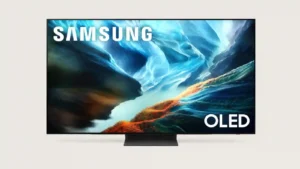
Choose the S90H for bright-room OLED viewing, deep blacks and top-tier gaming without flagship pricing. Skip it if you want Dolby Vision, a glossy screen or the simplest smart-TV software.
Pros: glare resistance, black levels
Cons: Dolby Vision support, color gamut
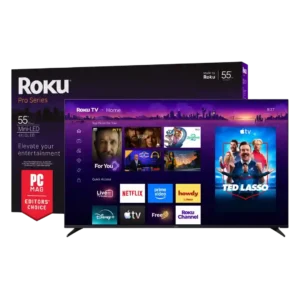
Best for bright Mini-LED picture, excellent built-in audio, easy Roku navigation, and responsive 4K/120 gaming. Skip it if you want ad-free menus, premium motion consistency, or stronger confidence in long-term...
Pros: overall satisfaction, picture quality
Cons: reliability, portability and versatility
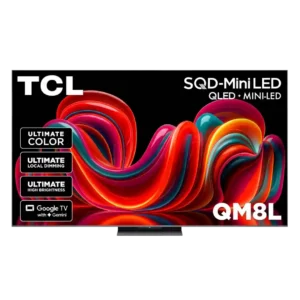
Choose the QM8L for a big, brilliantly bright TV with vivid HDR, deep mini-LED blacks, low input lag, and four HDMI 2.1 ports. Skip it if you need OLED-clean motion,...
Pros: picture quality, value for money
Cons: stand quality, judder handling
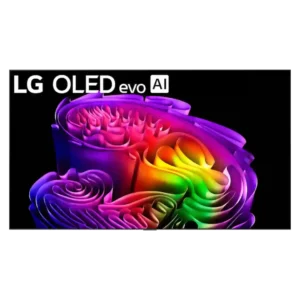
Choose the G6 for class-leading bright-room OLED picture, rich color, deep blacks and elite gaming. Skip it if you want strong built-in audio, polished launch firmware, no account sign-in, or...
Pros: picture quality, peak brightness
Cons: value for money, sound quality