
If you want better Black uniformity
Choose LG C6H OLED. It scores 5.0 vs 1.0 for Black uniformity, with a 4.1 overall score.

The S95H makes HDR movies and high-refresh gaming look extraordinary, with fierce brightness and vibrant color. Its matte coating lifts blacks in daylight, while the polarizing frame, missing Dolby Vision, and flagship price narrow its appeal.
Movie lovers who value vivid HDR and OLED black levels in dim rooms, gamers who need 4K/120–165Hz responsiveness, and living rooms where strong glare control matters.
Budget-conscious shoppers, people who insist on Dolby Vision or glossy blacks in daylight, and buyers who dislike an oversized frame or need perfect near-black uniformity.
The Samsung S95H is an exceptional premium OLED for shoppers who want dazzling HDR, saturated colors, and fast gaming on one screen. Its QD-OLED sizes pair deep dark-room contrast with some of the brightest highlights tested on OLED, while the matte coating keeps lamps and windows from reflecting sharply. Four full-bandwidth HDMI 2.1 ports, up to 4K/165Hz PC play, and low input lag make it particularly compelling for gamers. The tradeoffs are substantial: ambient light can turn black areas gray or magenta, darker films can need picture-mode adjustments, and the thick metallic frame looks better wall-mounted than on its plastic feet. Dolby Vision and DTS are absent, and the Art Store’s larger library requires a subscription. Built-in sound is capable, but a soundbar helps movies match the screen’s spectacle. With a high price and strong discounts on the older S95F, its value depends on how much these refinements matter to you.
Compared with other TVs, this product is above average in response time, glare resistance, speaker quality, near average in bass performance, black levels, below average in app performance, Black uniformity, Wi-Fi performance.
| Attribute | This product | Category average | Difference |
|---|---|---|---|
| app performance | 1.0 | 3.9 | -2.9 |
| Black uniformity | 1.0 | 3.8 | -2.8 |
| Wi-Fi performance | 1.0 | 3.7 | -2.7 |
| frame customization | 2.0 | 4.5 | -2.5 |
| response time | 5.0 | 2.8 | +2.2 |
| gaming mode quality | 2.0 | 4.2 | -2.2 |
| glare resistance | 4.9 | 3.2 | +1.7 |
| speaker quality | 5.0 | 2.9 | +2.1 |
Choose LG C6H OLED. It scores 5.0 vs 1.0 for Black uniformity, with a 4.1 overall score.
Choose Hisense UR8SG. It scores 5.0 vs 1.0 for app performance, with a 4.0 overall score.
Choose Samsung S85H OLED. It scores 4.5 vs 1.0 for Wi-Fi performance, with a 4.0 overall score.
Choose Hisense U7SG. It scores 5.0 vs 2.0 for gaming mode quality, with a 4.2 overall score.
Products reviewers directly compared with this model, grouped into quick takeaways.
Yes. Its high brightness and Glare Free matte coating reduce distracting reflections dramatically, although ambient light can make black areas look gray or magenta.
Yes. Four HDMI 2.1 inputs, up to 4K at 165Hz from a PC, VRR, and very low input lag make it excellent for modern games. Some game picture presets benefit from adjustment.
No. It supports HDR10 and HDR10+, but not Dolby Vision, including Dolby Vision games.
The S95H is generally brighter and has revised styling with built-in ports, but the picture upgrade is relatively modest. The S95F can be a better value when heavily discounted.
Yes. Art Mode uses Samsung’s Art Store, with a limited free selection; wider access requires a subscription. Personal photos can also be displayed.
Not for basic dialogue and TV shows, where the built-in speakers perform well. A good soundbar or external system offers deeper bass and a larger cinematic soundstage.
No. In the U.S., 55-, 65-, and 77-inch models use QD-OLED, while the 83-inch model uses RGB Tandem WOLED and may perform differently.
These are a few of the reviews included in our analysis.


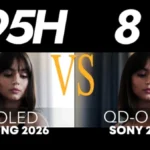

Looking for rich picture quality and inky-black shadows? These OLED TVs are the ones you want for your next movie night.
This flagship-quality OLED performs great, with rich texture and high brightness, but faces new competition when it comes to color dominance.
Samsung’s S95H is an excellent OLED TV. It has wonderfully vivid colors, enough brightness to hold up in a sunny room, and some of the best...
We tested the Samsung S95H (S99H), Samsung's flagship QD-OLED TV for 2026. Discover its HDR performance, brightness, colors, gaming features...
Samsung's latest flagship OLED TV, the S95H, delivers on picture and performance, but features a controversial design change.
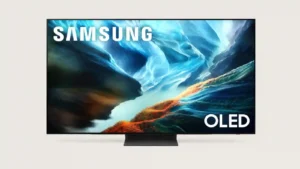
Choose the S90H for bright-room OLED viewing, deep blacks and top-tier gaming without flagship pricing. Skip it if you want Dolby Vision, a glossy screen or the simplest smart-TV software.
Pros: glare resistance, black levels
Cons: Dolby Vision support, color gamut
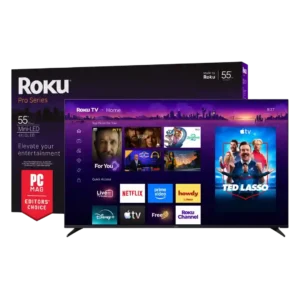
Best for bright Mini-LED picture, excellent built-in audio, easy Roku navigation, and responsive 4K/120 gaming. Skip it if you want ad-free menus, premium motion consistency, or stronger confidence in long-term...
Pros: overall satisfaction, picture quality
Cons: reliability, portability and versatility
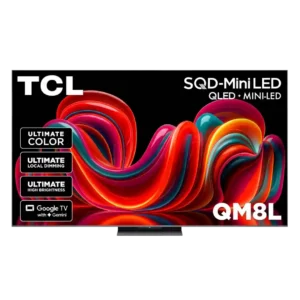
Choose the QM8L for a big, brilliantly bright TV with vivid HDR, deep mini-LED blacks, low input lag, and four HDMI 2.1 ports. Skip it if you need OLED-clean motion,...
Pros: picture quality, value for money
Cons: stand quality, judder handling
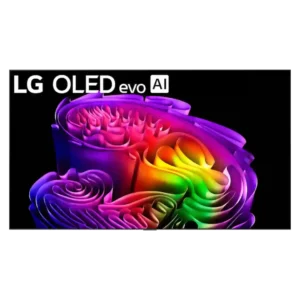
Choose the G6 for class-leading bright-room OLED picture, rich color, deep blacks and elite gaming. Skip it if you want strong built-in audio, polished launch firmware, no account sign-in, or...
Pros: picture quality, peak brightness
Cons: value for money, sound quality