If you want better peak brightness
Choose Samsung S95F OLED. It scores 4.5 vs 4.0 for peak brightness, with a 4.0 overall score.

Rich QD-OLED color, deep blacks, and exceptional gaming make the S90F a standout midrange OLED. Check the exact panel for your size, and account for lifted blacks in bright rooms and absent Dolby Vision.
Movie watchers in dim or moderately lit rooms and console or PC gamers seeking rich HDR, fast response, and several full-bandwidth HDMI inputs.
Viewers who primarily watch in strong direct sunlight or plan lengthy static-screen use; a soundbar may also be needed for film-focused setups.
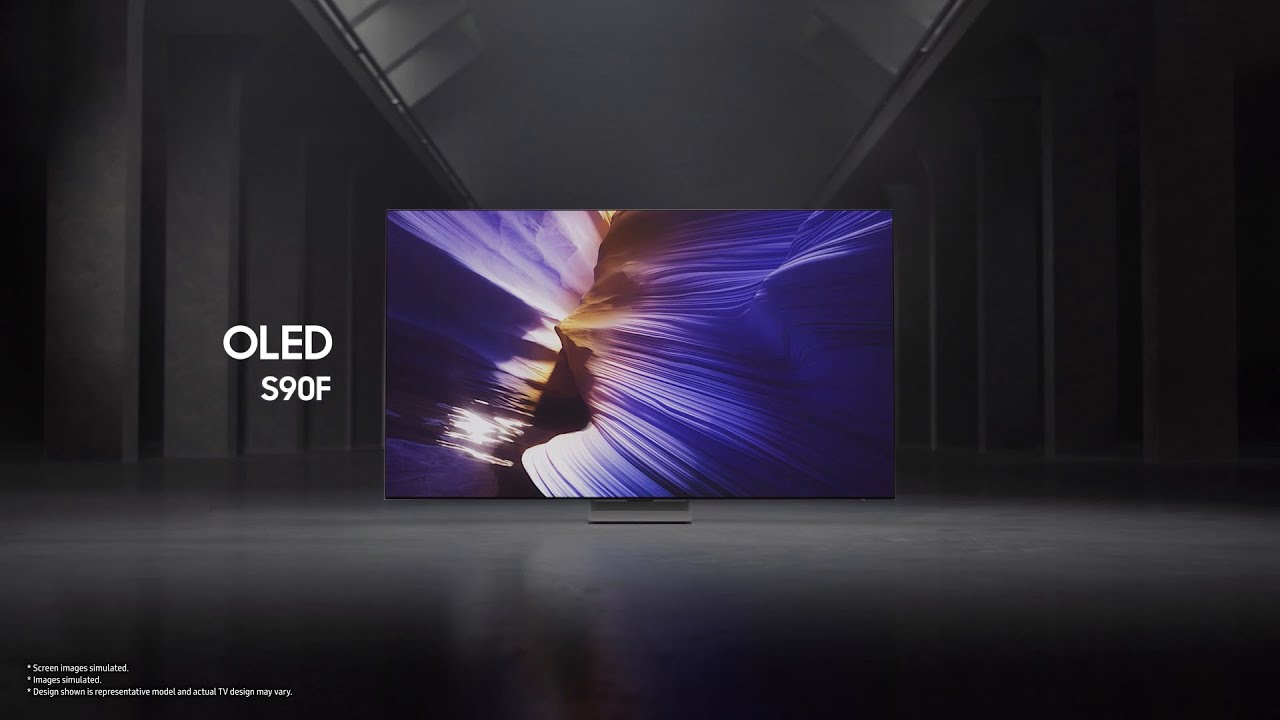
The Samsung S90F offers much of the picture and gaming performance associated with more expensive OLED televisions. Its strongest versions use QD-OLED panels, producing vivid HDR colors, exceptional black levels in dark rooms, excellent viewing angles, and strikingly responsive gaming with four HDMI 2.1 ports and up to 4K at 144 Hz. Upscaling and everyday streaming are generally strong, and the improved Tizen platform is more convenient than older iterations. However, the S90F is not one uniform display: the panel can change with screen size and region, so the tested 65-inch QD-OLED experience cannot simply be applied to every model. Strong ambient light can raise QD-OLED blacks, Dolby Vision and DTS are absent, and the built-in speakers lack cinematic bass. At a discount, a confirmed QD-OLED version is an excellent buy for movies and games.
Compared with other TVs, this product is above average in response time, Motion artifacts, HDR highlight detail, near average in color accuracy, input lag, below average in burn-in resistance, AI Game Mode optimization, Dolby Vision support.
| Attribute | This product | Category average | Difference |
|---|---|---|---|
| burn-in resistance | 1.8 | 4.3 | -2.5 |
| AI Game Mode optimization | 2.0 | 4.5 | -2.5 |
| response time | 4.6 | 2.6 | +1.9 |
| Motion artifacts | 4.3 | 2.3 | +1.9 |
| Dolby Vision support | 2.0 | 3.3 | -1.3 |
| HDR highlight detail | 4.8 | 3.1 | +1.7 |
| Broadcast TV guide functionality | 2.0 | 3.5 | -1.5 |
| HGiG game HDR calibration | 4.0 | 2.6 | +1.4 |
Choose Samsung S95F OLED. It scores 4.5 vs 4.0 for peak brightness, with a 4.0 overall score.
Choose LG C5 OLED. It scores 4.5 vs 2.0 for Broadcast TV guide functionality, with a 4.0 overall score.
Choose Samsung QN990F 8K. It scores 5.0 vs 1.8 for burn-in resistance, with a 3.8 overall score.
Choose Samsung S95H OLED. It scores 4.4 vs 2.9 for sound quality, with a 4.2 overall score.
Products reviewers directly compared with this model, grouped into quick takeaways.
No. Panel technology varies by region and screen size. In North America, the 55-, 65-, and 77-inch versions generally use QD-OLED, while the 42-, 48-, and 83-inch versions are WOLED; verify the exact model code.
Yes. It offers four HDMI 2.1 ports, low input lag, VRR and 4K/120 Hz for current consoles, plus up to 4K/144 Hz for compatible PCs. Xbox Dolby Vision gaming is not supported.
Its brightness and glossy reflection handling work well in many rooms, but strong ambient light can make QD-OLED blacks look gray or purple. A darker or controllably lit room shows the best contrast.
No. It supports HDR10 and HDR10+ instead. Dolby Vision and DTS are recurring omissions for viewers with compatible discs, games, or audio equipment.
The built-in speakers are adequate for casual viewing and dialogue. A soundbar helps substantially with bass, louder movies and a more cinematic soundtrack.
Mixed video viewing is less concerning, but prolonged exposure to static news banners, desktop elements or game HUDs increases the risk of permanent burn-in.
The S90F delivers exceptionally colorful QD-OLED pictures and versatile gaming for less than many flagships, especially when discounted. The S95F adds stronger glare control and brightness, while the LG C5 offers Dolby Vision; current prices and the exact S90F panel should drive the choice.
These are a few of the reviews included in our analysis.




Samsung S90F review: the 2025 OLED is excellent for HDR movies and gaming, with four HDMI 2.1 ports and 4K/144Hz. Panel variation, no Dolby...
The LG G4 and the Samsung S95F are flagship OLED TVs with plenty in common. Here's how they stack up when it comes to performance, features...
With impeccable accuracy and poise, Samsung’s midrange OLED dazzles on the little things.
The Samsung S90F OLED TV has everything going for it: a great price, incredible performance and a stellar list of gaming features.
If you're deciding between Samsung's 2024 and 2025 OLED model, I've put the two to the test to see which offers the best value and upgrades...
Choose the S90H for bright-room OLED viewing, deep blacks and top-tier gaming without flagship pricing. Skip it if you want Dolby Vision, a glossy screen or the simplest smart-TV software.
Pros: glare resistance, black levels
Cons: Dolby Vision support, color gamut
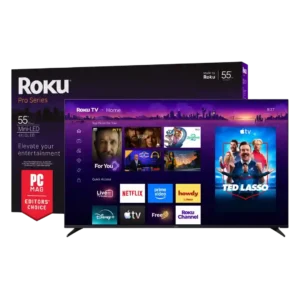
Best for bright Mini-LED picture, excellent built-in audio, easy Roku navigation, and responsive 4K/120 gaming. Skip it if you want ad-free menus, premium motion consistency, or stronger confidence in long-term...
Pros: overall satisfaction, picture quality
Cons: reliability, portability and versatility
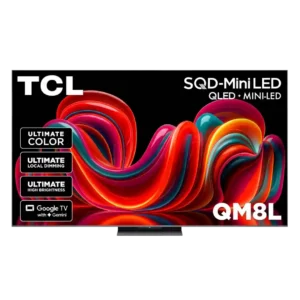
Choose the QM8L for a big, brilliantly bright TV with vivid HDR, deep mini-LED blacks, low input lag, and four HDMI 2.1 ports. Skip it if you need OLED-clean motion,...
Pros: picture quality, value for money
Cons: stand quality, judder handling

Choose the G6 for class-leading bright-room OLED picture, rich color, deep blacks and elite gaming. Skip it if you want strong built-in audio, polished launch firmware, no account sign-in, or...
Pros: picture quality, peak brightness
Cons: value for money, sound quality