
If you want better white balance accuracy
Choose Hisense U6SF Pro. It scores 4.0 vs 1.5 for white balance accuracy, with a 4.1 overall score.

Vivid RGB MiniLED color, very bright HDR and four HDMI 2.1 ports make the UR8SG especially appealing for gaming and daytime watching. Dark-scene haloing, inconsistent color accuracy and some motion blur stop it short of a universal home-theater recommendation.
Bright-room viewers, HDR fans and console or PC gamers who want flexible high-bandwidth connections and punchy RGB color.
Dark-room cinema purists, viewers sitting far off-axis and competitive gamers who are very sensitive to pixel blur.
The Hisense UR8SG makes a persuasive case for RGB MiniLED when bright HDR, saturated color and gaming connectivity matter more than absolute picture accuracy. Its four full-bandwidth HDMI 2.1 ports, 4K/120Hz console support and 180Hz PC option are unusually generous, and input lag can be excellent once gaming settings are configured. The set also offers a capable smart platform, effective upscaling and surprisingly substantial sound for some listeners. The tradeoff is consistency: dark scenes can reveal raised blacks or halos, factory SDR colors may run too warm, and fast motion sometimes smears. Side seating also weakens the picture, while the most flattering RGB color measurements do not always translate into dramatically better real-world images. Its value is therefore highly price-dependent. A discounted UR8SG suits a bright living room or game-focused setup better than a demanding dark-room theater.
Compared with other TVs, this product is above average in HDMI port accessibility, Game Mode interpolation, voice control accuracy, near average in color volume, color accuracy, below average in white balance accuracy, Off-axis color shift, PC text clarity.
| Attribute | This product | Category average | Difference |
|---|---|---|---|
| HDMI port accessibility | 5.0 | 2.0 | +3.0 |
| Game Mode interpolation | 5.0 | 2.4 | +2.6 |
| white balance accuracy | 1.5 | 3.4 | -1.9 |
| voice control accuracy | 5.0 | 3.3 | +1.7 |
| Off-axis color shift | 1.0 | 2.6 | -1.6 |
| PC text clarity | 2.0 | 3.6 | -1.6 |
| Image realism and naturalness | 5.0 | 3.6 | +1.4 |
| 1440p input compatibility | 4.5 | 3.0 | +1.5 |
Choose Hisense U6SF Pro. It scores 4.0 vs 1.5 for white balance accuracy, with a 4.1 overall score.
Choose Samsung R95H. It scores 4.0 vs 2.0 for Backlight strobing, with a 3.7 overall score.
Choose Sony BRAVIA 3 II. It scores 4.5 vs 2.0 for PC text clarity, with a 3.8 overall score.
Choose TCL RM9L. It scores 4.5 vs 2.8 for dark-room performance, with a 3.8 overall score.
Products reviewers directly compared with this model, grouped into quick takeaways.
Yes. Its four HDMI 2.1 ports support 4K at 120Hz, VRR and automatic low-latency mode, and gaming usually feels responsive. Check Game Mode and enhanced input settings to achieve the best response.
A capable PC can send up to 4K/180Hz, while modern consoles typically top out at 4K/120Hz. Faster boosted modes require lowering resolution, and pixel blur can remain visible despite the high refresh rate.
High SDR and HDR brightness make it suitable for daytime viewing, and its coating reduces a lot of ambient reflection. Direct lamps or windows across from the TV can still be visible.
It offers vivid highlights and crisp detail, but black depth, shadow clarity and halos around subtitles are less consistent than on some rivals. It is a better fit if those issues are not your highest priority.
Some sets show a notably warm, red-tinted SDR picture out of the box. Calibration can greatly improve this, but precise white-balance values should be adjusted on the actual panel rather than copied blindly.
They can deliver clear dialogue and engaging bass for casual viewing, but loudness and surround spaciousness get mixed reactions. A soundbar is worth considering for more enveloping movie audio.
These are a few of the reviews included in our analysis.
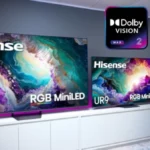
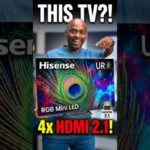
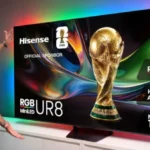
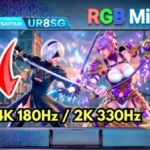
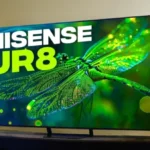
Bright and colorful images, booming audio, and smooth gameplay make this one of the most entertaining TVs we've seen.
It's more affordable than competitors and offers exceptional color accuracy, but is otherwise just OK, with middling brightness, contrast...
The Hisense UR8SG pairs bright HDR highlights, gaming features and RGB MiniLED with lower full-screen brightness. See test results, regional...
The Hisense UR8SG brings RGB MiniLED, high HDR highlights and gaming features. See measured brightness, regional differences, caveats and...
Explore the 2026 Hisense UR8SG RGB MiniLED TV, including 4K/180Hz gaming, HDR formats, dimming zones, Google TV and 55- to 100-inch differences.
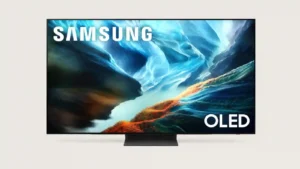
Choose the S90H for bright-room OLED viewing, deep blacks and top-tier gaming without flagship pricing. Skip it if you want Dolby Vision, a glossy screen or the simplest smart-TV software.
Pros: glare resistance, black levels
Cons: Dolby Vision support, color gamut
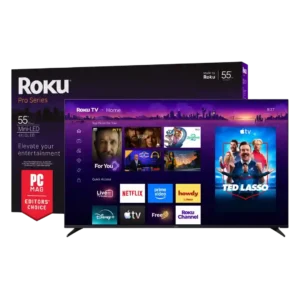
Best for bright Mini-LED picture, excellent built-in audio, easy Roku navigation, and responsive 4K/120 gaming. Skip it if you want ad-free menus, premium motion consistency, or stronger confidence in long-term...
Pros: overall satisfaction, picture quality
Cons: reliability, portability and versatility
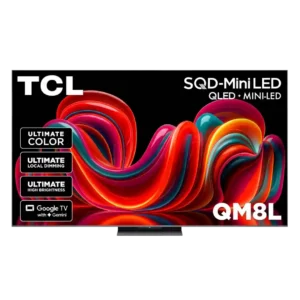
Choose the QM8L for a big, brilliantly bright TV with vivid HDR, deep mini-LED blacks, low input lag, and four HDMI 2.1 ports. Skip it if you need OLED-clean motion,...
Pros: picture quality, value for money
Cons: stand quality, judder handling
Choose the G6 for class-leading bright-room OLED picture, rich color, deep blacks and elite gaming. Skip it if you want strong built-in audio, polished launch firmware, no account sign-in, or...
Pros: picture quality, peak brightness
Cons: value for money, sound quality