
If you want better contrast ratio
Choose LG QNED92A. It scores 4.8 vs 2.6 for contrast ratio, with a 3.9 overall score.

Convenient streaming, accurate-looking SDR color and responsive 60Hz gaming make this a usable budget TV in controlled lighting. Weak HDR brightness, glare handling and motion leave stronger alternatives worth considering.
Budget-conscious shoppers wanting familiar streaming apps, simple 60Hz games, or a secondary-room TV where lighting can be controlled.
Bright-room sports fans, viewers seeking strong HDR home-theater contrast, wide seating on VA models, and gamers wanting 4K at 120Hz.
The Samsung U8000F is an entry-level 4K TV with a good streaming platform, notably low gaming input lag, and often natural-looking SDR color. It can work well for casual television in a bedroom or moderately lit room, particularly when deeply discounted. Assembly is simple, apps are plentiful, and ordinary dialogue is usually clear. However, the panel is not bright enough to make HDR shine or to fight strong daylight glare. Motion blur, limited 60Hz gaming, and inconsistent black levels are meaningful drawbacks. Some VA-panel samples offer better dark-scene contrast but narrower viewing angles; an IPS sample improves side seating at the expense of blacks. Opinions about motion and picture quality vary considerably by screen size, picture mode, and testing conditions. At prices close to brighter Mini LED competitors, this Samsung is difficult to recommend.
Compared with other TVs, this product is above average in distortion control, Wi-Fi performance, Stand assembly, near average in bass performance, motion clarity, below average in noise reduction, HDR brightness, refresh rate.
| Attribute | This product | Category average | Difference |
|---|---|---|---|
| noise reduction | 1.0 | 3.6 | -2.6 |
| HDR brightness | 1.1 | 3.5 | -2.4 |
| refresh rate | 1.6 | 3.8 | -2.3 |
| cable management | 1.0 | 3.5 | -2.5 |
| HDMI 2.1 port count | 1.8 | 4.1 | -2.3 |
| solar remote charging | 1.7 | 4.0 | -2.3 |
| HDR performance | 1.6 | 3.6 | -2.0 |
| VRR range | 1.5 | 3.7 | -2.2 |
Choose LG QNED92A. It scores 4.8 vs 2.6 for contrast ratio, with a 3.9 overall score.
Choose Samsung S85H OLED. It scores 5.0 vs 1.0 for response time, with a 4.0 overall score.
Choose TCL QM9K. It scores 4.8 vs 1.1 for HDR brightness, with a 3.9 overall score.
Choose Hisense U8QG. It scores 4.7 vs 1.4 for high-refresh-rate gaming, with a 4.1 overall score.
Products reviewers directly compared with this model, grouped into quick takeaways.
Not especially. Its modest brightness and reflections can make daylight viewing difficult, particularly near windows.
No. The tested U8000F models are limited to 4K at 60Hz, though low input lag and ALLM make many 60fps games responsive.
It accepts HDR10+ signals but usually lacks the brightness and color range for impactful HDR. Dolby Vision is not supported.
Tizen includes most popular services and Samsung TV Plus. Some reviewers report sluggish menus and slower app launches.
It depends on the panel. VA-panel reviews criticize side-angle contrast loss, while one IPS-model evaluation reports wider viewing angles.
They are generally clear for dialogue and normal shows, though bass and volume headroom are limited. A soundbar adds impact.
Only at a meaningful discount for shoppers prioritizing a large screen and Samsung software. Several similarly priced rivals have stronger brightness, contrast, and gaming features.
These are a few of the reviews included in our analysis.

Our Samsung U8000F review covers picture quality, HDR, gaming, Tizen, sound, ports, viewing angles, and who should—or should not—buy this...
The U8000F strips back Samsung’s usually imposing premium features and specs in a bid for mass market glory
We've tested and reviewed products since 1936. Read CR's review of the Samsung UN55U8000F tv to find out if it's worth it.
We've tested and reviewed products since 1936. Read CR's review of the Samsung UN65U8000F tv to find out if it's worth it.
John Archer has written about TVs, projectors and other AV gear for, terrifyingly, nearly 30 years. Having started out with a brief but fun...
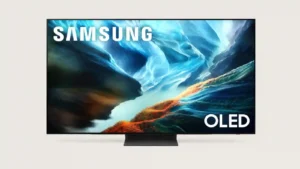
Choose the S90H for bright-room OLED viewing, deep blacks and top-tier gaming without flagship pricing. Skip it if you want Dolby Vision, a glossy screen or the simplest smart-TV software.
Pros: glare resistance, black levels
Cons: Dolby Vision support, color gamut
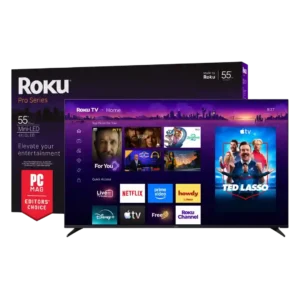
Best for bright Mini-LED picture, excellent built-in audio, easy Roku navigation, and responsive 4K/120 gaming. Skip it if you want ad-free menus, premium motion consistency, or stronger confidence in long-term...
Pros: overall satisfaction, picture quality
Cons: reliability, portability and versatility
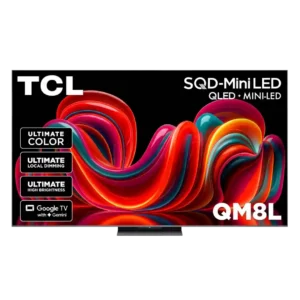
Choose the QM8L for a big, brilliantly bright TV with vivid HDR, deep mini-LED blacks, low input lag, and four HDMI 2.1 ports. Skip it if you need OLED-clean motion,...
Pros: picture quality, value for money
Cons: stand quality, judder handling
Choose the G6 for class-leading bright-room OLED picture, rich color, deep blacks and elite gaming. Skip it if you want strong built-in audio, polished launch firmware, no account sign-in, or...
Pros: picture quality, peak brightness
Cons: value for money, sound quality