
If you want better local dimming performance
Choose Samsung QN80H. It scores 4.3 vs 1.0 for local dimming performance, with a 3.8 overall score.

Fast 4K/144Hz inputs, VRR and responsive controls make the M80H appealing to gamers, while Tizen is an excellent everyday platform. Weak HDR brightness, no real local dimming and inconsistent motion clarity limit its value against picture-focused rivals.
Best for console and PC gamers prioritizing low-lag 120–144Hz modes, plus Samsung households using Tizen and SmartThings in moderately lit living rooms.
Not for viewers prioritizing bright-room sports, deep-black HDR movies or wide shared seating, or gamers who are especially sensitive to visible motion blur.
The Samsung M80H makes more sense as a gaming-focused smart TV than as a showcase for Mini LED picture quality. Its three high-bandwidth HDMI ports handle 4K at 120Hz on consoles and up to 144Hz on compatible PCs, with low input lag, wide VRR support and a well-equipped Game Bar. Tizen, SmartThings and free streaming channels also make it convenient for everyday use. The compromise is hard to ignore: despite the Mini LED label, there is no genuine local dimming, HDR highlights are weak, and blacks often look gray in a dark room. Motion assessments are unusually divided, with some hands-on testing praising fast sports and games while instrumented testing finds sluggish pixel response and visible blur. Its colors can be natural and pleasing, particularly in SDR, but cheaper competitors with brighter, properly dimmed panels may be better value for movies or sunny rooms. It is most convincing when gaming features matter more than cinematic contrast.
Compared with other TVs, this product is above average in VRR range, refresh rate, reliability, near average in color accuracy, shadow detail, below average in wall flushness, local dimming performance, Soundbar clearance.
| Attribute | This product | Category average | Difference |
|---|---|---|---|
| wall flushness | 1.0 | 3.7 | -2.7 |
| local dimming performance | 1.0 | 3.3 | -2.3 |
| Soundbar clearance | 1.8 | 4.2 | -2.4 |
| HDR brightness | 1.5 | 3.6 | -2.1 |
| glare resistance | 1.0 | 3.3 | -2.3 |
| remote control quality | 1.5 | 3.7 | -2.2 |
| HDR performance | 1.8 | 3.7 | -2.0 |
| gaming mode quality | 2.0 | 4.2 | -2.2 |
Choose Samsung QN80H. It scores 4.3 vs 1.0 for local dimming performance, with a 3.8 overall score.
Choose Samsung S85H OLED. It scores 5.0 vs 1.8 for dark-room performance, with a 4.0 overall score.
Choose Samsung R95H. It scores 4.4 vs 1.0 for glare resistance, with a 3.7 overall score.
Choose Hisense UR8SG. It scores 5.0 vs 1.3 for HDMI port accessibility, with a 4.0 overall score.
Products reviewers directly compared with this model, grouped into quick takeaways.
No. Its Mini LED-branded direct backlight has no independently controlled local-dimming zones, so dark scenes can look gray despite decent native contrast.
Yes. It supports 4K/120Hz, VRR and automatic low-latency mode on compatible consoles. Dolby Vision gaming is not supported.
A compatible PC can send 4K at up to 144Hz through its HDMI 2.1 ports. A 240Hz mode is available only at 1080p.
Not necessarily. Input lag is excellent, but motion clarity is disputed and measured pixel transitions can be slow, resulting in visible blur.
It is not ideal for either. HDR highlights are dim, blacks lack zonal depth and the glossy screen struggles with reflections under strong light.
Yes, HDMI eARC and Samsung Q-Symphony help with compatible soundbars. The stand leaves limited clearance, and DTS and optical audio output are absent.
The M80H adds stronger processing, 4K high-refresh gaming, a fuller Game Bar and more smart features. The M70H can still be better value for casual viewing.
These are a few of the reviews included in our analysis.

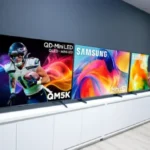
Samsung M80H review: HDMI 2.1, 144Hz and VRR for gaming, but no local dimming, weak HDR brightness and blurry motion per RTINGS. Who should...
The Samsung M80H supports 144Hz gaming and VRR, but RTINGS reports weak HDR brightness, no local dimming, and blurry motion. See who should...
The 2026 Samsung M80H offers 144Hz gaming features, but RTINGS reports weak HDR brightness, no local dimming and blurry motion. See who...
Samsung M80H (55, 65, 75, 85-inch) reviewed: strong 144Hz/HDMI 2.1 gaming, but weak HDR brightness, no local dimming and blurry motion per...
Samsung M80H offers a 144Hz refresh rate, low input lag, HDMI 2.1 and extensive gaming features. We test its picture quality, HDR performance...
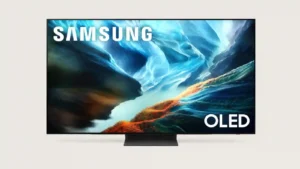
Choose the S90H for bright-room OLED viewing, deep blacks and top-tier gaming without flagship pricing. Skip it if you want Dolby Vision, a glossy screen or the simplest smart-TV software.
Pros: glare resistance, black levels
Cons: Dolby Vision support, color gamut
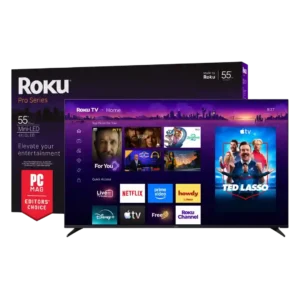
Best for bright Mini-LED picture, excellent built-in audio, easy Roku navigation, and responsive 4K/120 gaming. Skip it if you want ad-free menus, premium motion consistency, or stronger confidence in long-term...
Pros: overall satisfaction, picture quality
Cons: reliability, portability and versatility
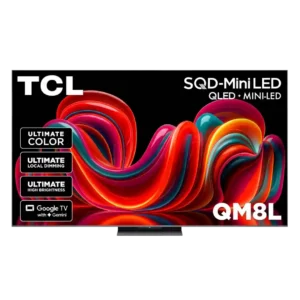
Choose the QM8L for a big, brilliantly bright TV with vivid HDR, deep mini-LED blacks, low input lag, and four HDMI 2.1 ports. Skip it if you need OLED-clean motion,...
Pros: picture quality, value for money
Cons: stand quality, judder handling

Choose the G6 for class-leading bright-room OLED picture, rich color, deep blacks and elite gaming. Skip it if you want strong built-in audio, polished launch firmware, no account sign-in, or...
Pros: picture quality, peak brightness
Cons: value for money, sound quality