
If you want better voice control accuracy
Choose Hisense UR8SG. It scores 5.0 vs 2.0 for voice control accuracy, with a 4.0 overall score.

Dazzling HDR brightness, rich RGB color and unusually flexible PC connectivity make the UR9SG stand out. Factory tuning, dark-motion blur and the price versus conventional MiniLED rivals temper the appeal.
Bright-room HDR movie and sports viewing, vivid large-screen entertainment, and PC or console gaming that benefits from high refresh rates and flexible inputs.
Competitive gamers sensitive to motion smearing, viewers expecting perfectly accurate factory color, wide off-axis seating, or buyers prioritizing the lowest price.
The Hisense UR9SG is an ambitious premium LCD TV that can make colorful HDR movies, games and daytime sports look spectacular. Its RGB MiniLED system delivers extraordinary brightness and color volume, while full-bandwidth HDMI 2.1, USB-C DisplayPort and high refresh rates offer unusual gaming flexibility. Effective local dimming also brings impressively deep blacks, and Google TV is generally fast and convenient. The experience is less consistent where refinement matters. Factory color and white balance vary across presets and test units; color crosstalk, blooming and dark-scene motion smearing can intrude. Some find the built-in speakers spacious, while others hear thin or muddy sound, and the busy remote is not universally loved. Discounted pricing makes the UR9SG more compelling, but shoppers focused on motion clarity, effortless accuracy or budget value should compare OLED and conventional MiniLED alternatives.
Compared with other TVs, this product is above average in peak brightness, high-refresh-rate gaming, HDR brightness, near average in color volume, value for money, below average in HDMI port count, white balance accuracy, tone mapping.
| Attribute | This product | Category average | Difference |
|---|---|---|---|
| HDMI port count | 2.8 | 4.4 | -1.6 |
| peak brightness | 4.9 | 3.7 | +1.2 |
| white balance accuracy | 1.8 | 3.3 | -1.6 |
| tone mapping | 2.0 | 3.5 | -1.5 |
| high-refresh-rate gaming | 5.0 | 3.6 | +1.4 |
| HDR brightness | 5.0 | 3.6 | +1.4 |
| voice control accuracy | 2.0 | 3.4 | -1.4 |
| Picture settings menu flexibility | 4.5 | 3.1 | +1.4 |
Choose Hisense UR8SG. It scores 5.0 vs 2.0 for voice control accuracy, with a 4.0 overall score.
Choose TCL RM9L. It scores 5.0 vs 2.8 for HDMI port count, with a 3.8 overall score.
Choose Hisense U6SF Pro. It scores 4.0 vs 1.8 for white balance accuracy, with a 4.1 overall score.
Choose LG B6E OLED. It scores 5.0 vs 1.8 for response time, with a 4.0 overall score.
Products reviewers directly compared with this model, grouped into quick takeaways.
Yes. Very high SDR and HDR brightness keep sports and colorful content visible in daylight, though windows and lamps reflected directly in the screen can still obscure dark scenes.
Local dimming gives the UR9SG deep blacks and strong contrast. Some halos appear around small highlights, especially from off-center seats or in demanding dark scenes.
The tested US model supports 4K at up to 180Hz with compatible inputs and devices. The advertised 330Hz boost uses a reduced resolution, not native 4K/330Hz.
It offers very low lag, VRR and PC-friendly USB-C DisplayPort, but its slower pixel response can smear moving objects, especially in darker games. Competitive players may prefer OLED.
Not always. Some factory presets and units show notable white-balance and color errors, while careful calibration or a different picture mode can improve the image significantly.
They can sound spacious and loud, and dialogue modes help. Opinions are mixed on tonal warmth and distortion, so a soundbar is worthwhile for more demanding home theater listening.
Choose the UR9SG for especially bright RGB colors and its unusual 4K/180Hz and USB-C options. A conventional MiniLED alternative may deliver similar overall picture quality for less.
These are a few of the reviews included in our analysis.
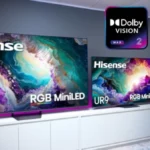

The Hisense UR9 is the company’s RGB LED effort, and it’s quite the TV. But you’ll pay for being an early adopter.
A buyer-focused Hisense UR9SG review covering 65-, 75-, 85- and 100-inch models, independent test results, size differences, gaming, audio...
A buyer-focused Hisense UR9SG review covering brightness, picture accuracy, gaming, sound, size-specific zone counts, regional differences...
The 2026 Hisense UR9 series proves you don't have to pay big bucks for a TV with RGB backlighting.
Tech Steve checks out the 2026 Hisense UR9SG RGB MiniLED TV, including early picture quality, 4K 180Hz gaming, Google TV, audio and size...
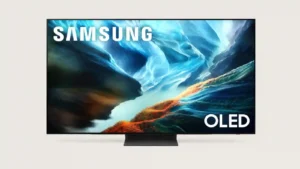
Choose the S90H for bright-room OLED viewing, deep blacks and top-tier gaming without flagship pricing. Skip it if you want Dolby Vision, a glossy screen or the simplest smart-TV software.
Pros: glare resistance, black levels
Cons: Dolby Vision support, color gamut
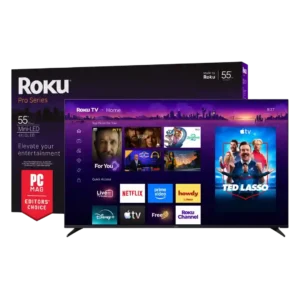
Best for bright Mini-LED picture, excellent built-in audio, easy Roku navigation, and responsive 4K/120 gaming. Skip it if you want ad-free menus, premium motion consistency, or stronger confidence in long-term...
Pros: overall satisfaction, picture quality
Cons: reliability, portability and versatility
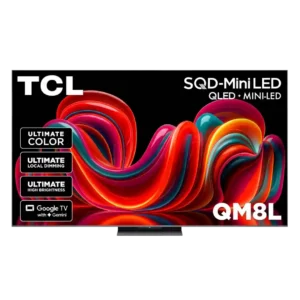
Choose the QM8L for a big, brilliantly bright TV with vivid HDR, deep mini-LED blacks, low input lag, and four HDMI 2.1 ports. Skip it if you need OLED-clean motion,...
Pros: picture quality, value for money
Cons: stand quality, judder handling
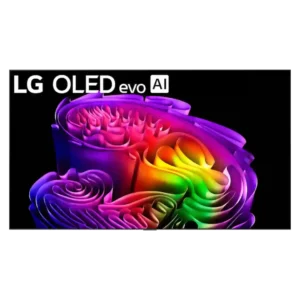
Choose the G6 for class-leading bright-room OLED picture, rich color, deep blacks and elite gaming. Skip it if you want strong built-in audio, polished launch firmware, no account sign-in, or...
Pros: picture quality, peak brightness
Cons: value for money, sound quality