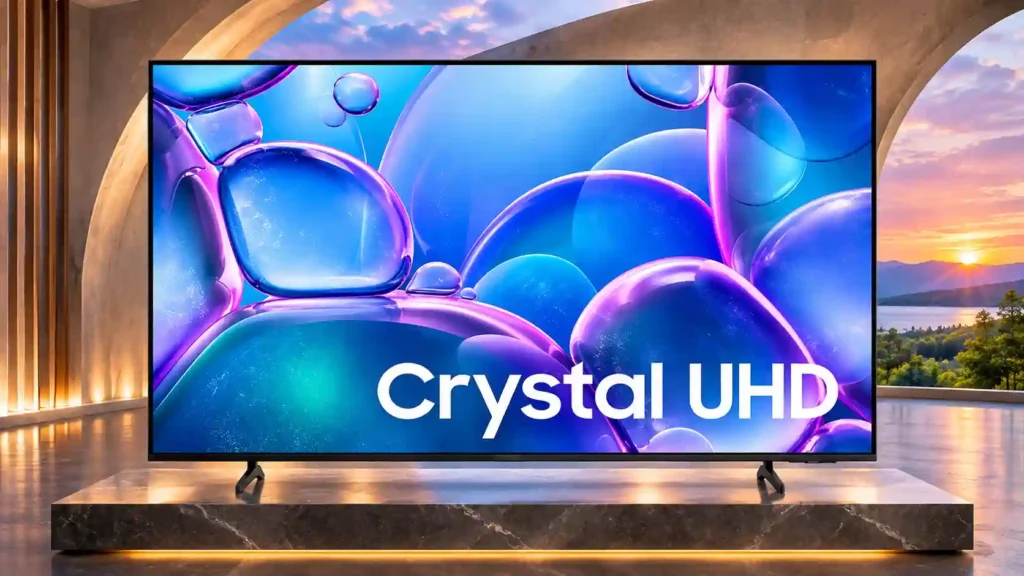
Samsung U7900F

Samsung U7900F TV Review

Brand: Samsung
Released: June 1, 2025
Updated: 21 hours ago
3.0
Overall review score
280
Review insights
102
Scored features
10
Expert reviews

Bottom Line

The U7900F offers workable everyday SDR streaming, low input lag and broad size choice for a discounted secondary TV. Poor HDR, gray blacks, visible glare and a 60Hz, two-HDMI design limit its appeal.

Budget-conscious shoppers seeking a sale-priced bedroom, garage or secondary-room TV for everyday 1080p/4K SDR streaming and casual 60Hz gaming.

People who need bright-room visibility, dark-room HDR cinema, clear fast sports, 120Hz console or PC gaming, wide-angle seating or connections for several HDMI devices.

Verdict

The Samsung U7900F is best understood as a basic 4K television rather than an inexpensive home-theater upgrade. Its strongest traits are generally accurate SDR colors, useful streaming apps, low input lag and an unusually wide choice of screen sizes. In ordinary lighting, 1080p and 4K shows can look pleasant, and the phone-based setup and remote features add convenience. The compromises are substantial: measured HDR brightness is poor, blacks look gray without local dimming, and reflections make bright rooms difficult. Motion can blur during sports or fast gaming, while the 60Hz ceiling prevents 120Hz console play. Just two HDMI connections and low soundbar clearance also complicate larger setups. Hands-on assessments vary from surprisingly favorable to strongly critical, so this model makes the most sense as a heavily discounted bedroom or secondary-room screen, not at prices close to better-performing alternatives.

Feature Scorecards

Summary

102 reviewed features
  • Very positive 4.5-5.0
    8 (8%)
  • Positive 3.5-4.4
    37 (36%)
  • Neutral 2.5-3.4
    16 (16%)
  • Negative 1.5-2.4
    26 (25%)
  • Very negative below 1.5
    15 (15%)

Pros highlights

  • 3.7
    8 reviews low consensus
    picture quality: 3.7, 8 reviews, low consensus
    Opinions split between pleasingly colorful everyday images and poor laboratory picture performance. Accurate SDR and crisp native 4K help, while muted HDR and gray blacks reveal the budget panel.
  • 3.9
    6 reviews strong consensus
    smart TV platform: 3.9, 6 reviews, strong consensus
    Tizen offers plenty of content, apps and connected-device options, but this entry-level version is pared down and can feel sluggish.
  • 3.8
    6 reviews strong consensus
    color accuracy: 3.8, 6 reviews, strong consensus
    Standard-definition-range colors and skin tones can look convincing straight out of the box. HDR colors are less accurate and sometimes noticeably cool.
  • 3.7
    6 reviews moderate consensus
    upscaling quality: 3.7, 6 reviews, moderate consensus
    Ordinary HD feeds are watchable and sometimes impressively clean, but small details may remain soft. The result varies from passable in testing to notably positive in hands-on demonstrations.
  • 4.6
    4 reviews strong consensus
    input lag: 4.6, 4 reviews, strong consensus
    Fast response to controller inputs is a consistent strength and helps games feel immediate despite the slow panel.
  • 4.1
    4 reviews strong consensus
    overall satisfaction: 4.1, 4 reviews, strong consensus
    Owners and hands-on presenters can be satisfied when the low price and basic purpose are clear. More demanding picture-quality comparisons give it a harsher verdict.

Cons highlights

  • 3.3
    9 reviews low consensus
    value for money: 3.3, 9 reviews, low consensus
    The U7900F can feel like a bargain on sale, particularly for uncomplicated streaming. At similar prices to better-equipped competitors, its weak brightness, motion and connectivity make it hard to justify.
  • 1.8
    8 reviews strong consensus
    refresh rate: 1.8, 8 reviews, strong consensus
    The 60Hz ceiling rules out 120Hz play at either 4K or lower resolutions. It handles ordinary sources, but smooth high-frame-rate action needs a faster TV.
  • 1.9
    8 reviews strong consensus
    black levels: 1.9, 8 reviews, strong consensus
    Blacks tend to look gray rather than truly dark, especially with brighter objects in the scene. This is one of the clearest barriers to a cinematic image.
  • 1.3
    7 reviews strong consensus
    HDMI port count: 1.3, 7 reviews, strong consensus
    Only two HDMI inputs leave little room for a console, soundbar and additional player at once. This is a practical compromise even for a low-cost television.
  • 2.1
    7 reviews strong consensus
    contrast ratio: 2.1, 7 reviews, strong consensus
    Local contrast is constrained by the absence of dimming zones, leaving letterbox bars and dark scenes washed out. Some basic depth remains, but this is not a strong dark-room display.
  • 1.3
    6 reviews strong consensus
    glare resistance: 1.3, 6 reviews, strong consensus
    The shiny surface reflects windows and bright lamps conspicuously. It is not designed to fight direct light.

Use Cases

Best for

  • 4.1
    6 reviews strong consensus
    Streaming movies and shows: 4.1, 6 reviews, strong consensus
    Everyday streaming is one of the better uses, particularly with 1080p or 4K SDR material. Film-like HDR presentation is less convincing.
  • 4.5
    2 reviews limited evidence
    1080p content watching: 4.5, 2 reviews, limited evidence
    Full-HD movies and shows upscale more convincingly than 720p sources, with clear visual improvement in normal viewing.
  • 4.3
    2 reviews limited evidence
    Bedroom viewing: 4.3, 2 reviews, limited evidence
    A bedroom is an especially sensible setting: manageable lighting, basic streaming and the inexpensive purchase price play to its strengths.

Not ideal for

  • Bright-room viewing
    1.1
    6 reviews strong consensus
    Bright-room viewing: 1.1, 6 reviews, strong consensus
    Sunlit rooms and strong window reflections can easily overpower the dim screen. Controlled lighting is a far better match.
  • Home theater with soundbar
    1.9
    4 reviews strong consensus
    Home theater with soundbar: 1.9, 4 reviews, strong consensus
    An external soundbar improves basic audio, but the low stand can obstruct it and there are only two HDMI inputs. Weak HDR and blacks remain the bigger home-theater compromise.

Compared With Category Average

Compared with other TVs, this product is above average in voice control accuracy, Stand assembly, reliability, near average in value for money, blooming control, below average in Soundbar clearance, HDMI port count, gaming dashboard.

Comparison summary

102 compared features
  • Above average 0.4+ pts higher
    14 (14%)
  • Same as average within 0.3 pts
    32 (31%)
  • Below average 0.4+ pts lower
    56 (55%)

Largest category differences

Attribute This product Category average Difference
Soundbar clearance 1.0 4.1 -3.1
HDMI port count 1.3 4.1 -2.9
gaming dashboard 1.5 4.3 -2.8
HDMI 2.1 support 1.5 4.3 -2.8
cable management 1.0 3.7 -2.7
color gamut 1.3 3.9 -2.6
VRR range 1.3 3.9 -2.6
high-refresh-rate gaming 1.1 3.6 -2.5

Consider This Instead

If you want better Soundbar clearance

Choose TCL QM5K. It scores 4.8 vs 1.0 for Soundbar clearance, with a 3.6 overall score.

Compare

If you want better high-refresh-rate gaming

Choose Hisense U7SG. It scores 4.8 vs 1.1 for high-refresh-rate gaming, with a 4.2 overall score.

Compare

If you want better HDMI port count

Choose Samsung 100QN80F. It scores 4.6 vs 1.3 for HDMI port count, with a 3.9 overall score.

Compare

If you want better HDR brightness

Choose TCL QM7L Pro. It scores 5.0 vs 1.2 for HDR brightness, with a 4.1 overall score.

Compare

Compared in Reviews

Products reviewers directly compared with this model, grouped into quick takeaways.

  • Better: brightness and 1080p 120Hz gaming The newer U8000H is marginally brighter and offers 1080p at 120Hz.

Samsung U8000F (2025)

  • Upgrade: Samsung model tier U7900F is positioned below the step-up U8000F.
  • Worse: picture quality versus port count Steve often favors U7900F picture versus U8000F, despite having fewer HDMI inputs.
  • Alternative: performance versus price The U8000F is the next Samsung tier, worth considering at a small price difference.

LG UA77 (2025)

  • Compared: webOS versus Tizen and room fit The LG alternative trades strengths depending on lighting and software preference.
  • Compared: room lighting and operating system The LG UA77 is presented as an alternative worth assessing for viewing conditions.
  • Compared: brightness versus dark-room contrast The LG favors brighter rooms while the U7900F holds a dark-room contrast edge.

FAQ

Is the Samsung U7900F good for everyday streaming?

Yes, particularly with 1080p and 4K SDR programs in controlled lighting. Tizen provides major apps, though menus may feel sluggish and online services require a Samsung account.

Does it support 4K at 120Hz for PS5 or Xbox?

No. It is limited to 60Hz at every tested resolution, so native 4K gaming tops out at 60fps; low input lag still makes casual play responsive.

How good is the U7900F for HDR movies?

HDR10 and HDR10+ are accepted, but dim highlights, narrow color capability and gray blacks prevent impactful HDR. Dolby Vision is not supported.

Can I watch it in a sunny living room?

It is a poor match for strong daylight. The limited brightness and glossy reflections are much easier to manage in a controlled-light room.

How many HDMI ports does it have?

There are only two. A console and soundbar can consume both, and there is no optical audio output for older audio systems.

Do the built-in speakers sound good?

They are generally serviceable for dialogue and ordinary television, but deep bass is weak. A compatible soundbar can add impact, although the fixed low stand may obstruct it.

Is it worth buying over a step-up model?

It is most defensible at a clear discount for simple SDR viewing. If another model is similarly priced with better brightness, contrast or gaming capability, the U7900F is harder to recommend.

Sample Expert Reviews We Analyzed

These are a few of the reviews included in our analysis.
Video Reviews

Article Reviews

Top TVs to Consider

#1 Samsung S90H
4.5

Choose the S90H for bright-room OLED viewing, deep blacks and top-tier gaming without flagship pricing. Skip it if you want Dolby Vision, a glossy screen or the simplest smart-TV software.

Pros: glare resistance, black levels

Cons: Dolby Vision support, color gamut
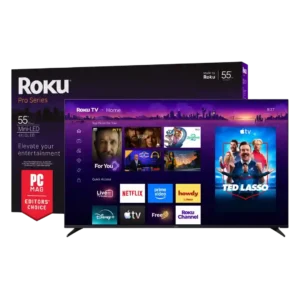
#2 Roku Pro Series (2025)
4.4

Best for bright Mini-LED picture, excellent built-in audio, easy Roku navigation, and responsive 4K/120 gaming. Skip it if you want ad-free menus, premium motion consistency, or stronger confidence in long-term...

Pros: overall satisfaction, picture quality

Cons: reliability, portability and versatility
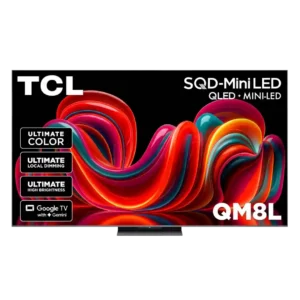
#3 TCL QM8L
4.4

Choose the QM8L for a big, brilliantly bright TV with vivid HDR, deep mini-LED blacks, low input lag, and four HDMI 2.1 ports. Skip it if you need OLED-clean motion,...

Pros: picture quality, value for money

Cons: stand quality, judder handling

#4 LG G6
4.4

Choose the G6 for class-leading bright-room OLED picture, rich color, deep blacks and elite gaming. Skip it if you want strong built-in audio, polished launch firmware, no account sign-in, or...

Pros: picture quality, peak brightness

Cons: value for money, sound quality