
If you want better gaming performance
Choose Samsung QN900F 8K. It scores 4.8 vs 4.2 for gaming performance, with a 4.2 overall score.

Exceptional matte-screen glare control and dazzling brightness make the QN90F a standout for bright rooms. Its premium price, missing Dolby Vision and inconsistent gaming motion keep it from being an automatic pick.
Bright living rooms, daytime television and sports, and viewers who prioritize low reflections and vivid HDR; households with multiple gaming devices also benefit from four HDMI 2.1 ports.
Value-first shoppers, Dolby Vision or DTS home-theater enthusiasts, and motion-sensitive competitive gamers who want the cleanest dark-scene transitions.
The Samsung QN90F makes its strongest case in sunlit living rooms. Its matte Glare-Free screen disperses direct reflections unusually well, while high SDR and HDR brightness, sharp upscaling and deep mini-LED blacks keep everyday programs and movies engaging. Four high-bandwidth HDMI 2.1 inputs, 165Hz support, variable refresh and low input lag also make it appealing on paper for gaming. However, the gaming verdict is not unanimous: some tests report conspicuous pixel smearing, blooming and delayed local-dimming transitions, especially in dark action. Sound is adequate for daily viewing but benefits from a soundbar, and Tizen can feel cluttered despite its extensive app selection. Dolby Vision and DTS are missing. Against often-cheaper TCL and Hisense models, or similarly priced OLEDs, the QN90F earns its premium primarily through its anti-reflective screen rather than undisputed all-around performance.
Compared with other TVs, this product is above average in glare resistance, Included accessories, HDR highlight detail, near average in picture quality, overall satisfaction, below average in gaming mode quality, HGiG game HDR calibration, motion clarity.
| Attribute | This product | Category average | Difference |
|---|---|---|---|
| glare resistance | 4.8 | 3.1 | +1.7 |
| Included accessories | 5.0 | 3.0 | +2.0 |
| gaming mode quality | 2.0 | 4.0 | -2.0 |
| HDR highlight detail | 5.0 | 3.1 | +1.9 |
| reflection handling | 4.8 | 3.1 | +1.6 |
| Size-specific gaming refresh limits | 4.0 | 2.2 | +1.8 |
| HGiG game HDR calibration | 1.0 | 2.8 | -1.8 |
| Near-black uniformity | 5.0 | 3.3 | +1.7 |
Choose Samsung QN900F 8K. It scores 4.8 vs 4.2 for gaming performance, with a 4.2 overall score.
Choose Samsung S95F OLED. It scores 4.8 vs 2.5 for viewing angles, with a 4.0 overall score.
Choose Samsung QN80H. It scores 5.0 vs 2.0 for PC text clarity, with a 3.8 overall score.
Choose LG C6H OLED. It scores 5.0 vs 1.5 for motion clarity, with a 4.1 overall score.
Products reviewers directly compared with this model, grouped into quick takeaways.
Yes. Its exceptionally effective matte coating diffuses direct reflections, and very high SDR and HDR brightness keeps the picture easy to see in daylight.
It has four HDMI 2.1 ports, 4K at up to 165Hz, VRR and very low input lag. However, some reviewers observed visible dark-motion blur and delayed local-dimming trails in Game Mode.
No. It supports HDR10 and HDR10+ but not Dolby Vision, and DTS audio format restrictions matter if you use certain Blu-rays and sound systems.
The QN90F generally handles strong room light and full-screen brightness better; OLED rivals can provide deeper pixel-level blacks and cleaner fast motion.
They are generally adequate for dialogue and everyday television, particularly with Amplify or voice-enhancement settings. A soundbar adds deeper bass, scale and immersion.
Its unusual glare resistance makes the premium easier to justify for bright rooms. Buyers who mostly watch in darkness or prioritize price should compare competing TCL, Hisense and OLED sets.
No. Smaller models have different speaker and picture hardware, and some exceptionally large sizes have different refresh limits, so verify specifications for the exact diagonal.
These are a few of the reviews included in our analysis.

The LG G4 and the Samsung S95F are flagship OLED TVs with plenty in common. Here's how they stack up when it comes to performance, features...
The QN90F gets impressively bright, above 1000 nits in real scenes, but its local dimming performance is a bit of a mess, let down by boxy...
The Samsung QN90F is one of the most expensive 2025 Mini-LED TVs on the market, offering excellent bright room performance, contrast control...
85% VERDICT RATING Pros Stunning picture quality Glare-Free technology Smooth viewing for sport and action movies Great features to support...
No onscreen reflection pain, plenty of bright room gain
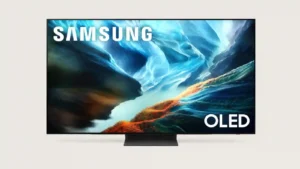
Choose the S90H for bright-room OLED viewing, deep blacks and top-tier gaming without flagship pricing. Skip it if you want Dolby Vision, a glossy screen or the simplest smart-TV software.
Pros: glare resistance, black levels
Cons: Dolby Vision support, color gamut
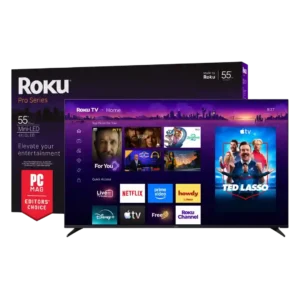
Best for bright Mini-LED picture, excellent built-in audio, easy Roku navigation, and responsive 4K/120 gaming. Skip it if you want ad-free menus, premium motion consistency, or stronger confidence in long-term...
Pros: overall satisfaction, picture quality
Cons: reliability, portability and versatility
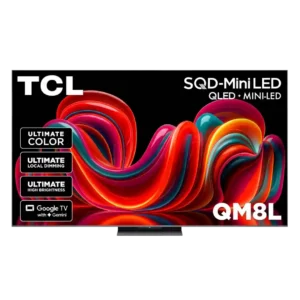
Choose the QM8L for a big, brilliantly bright TV with vivid HDR, deep mini-LED blacks, low input lag, and four HDMI 2.1 ports. Skip it if you need OLED-clean motion,...
Pros: picture quality, value for money
Cons: stand quality, judder handling

Choose the G6 for class-leading bright-room OLED picture, rich color, deep blacks and elite gaming. Skip it if you want strong built-in audio, polished launch firmware, no account sign-in, or...
Pros: picture quality, peak brightness
Cons: value for money, sound quality