If you want better 4K at 120 Hz support
Choose Sony BRAVIA 3 II. It scores 4.9 vs 1.0 for 4K at 120 Hz support, with a 3.8 overall score.

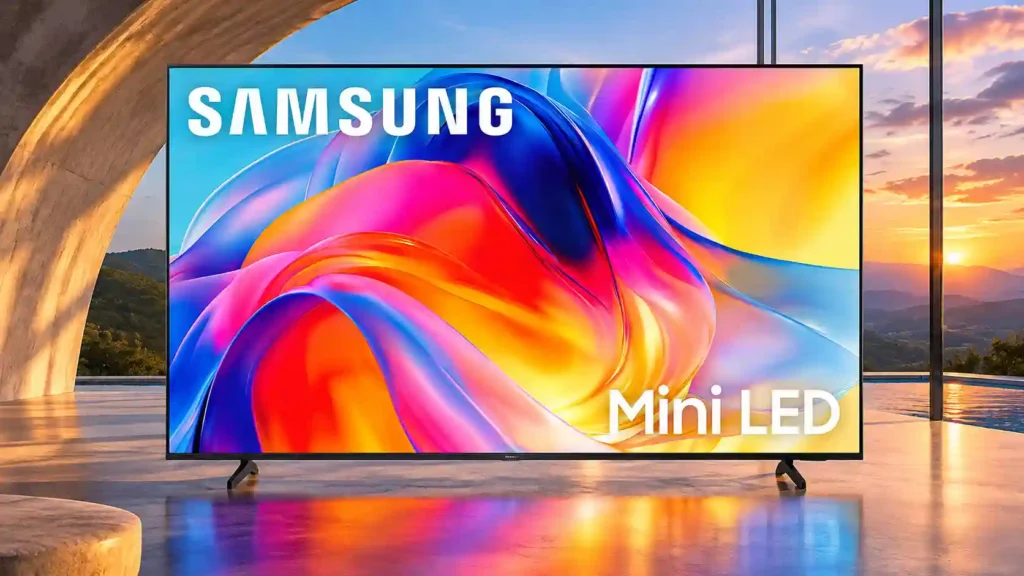
The M70H brings colorful everyday 4K streaming and useful Samsung apps at budget prices, but weak HDR, sluggish motion and no hardware local dimming make it a poor pick for demanding movies or gaming.
Budget shoppers who mainly stream everyday shows in a dim or moderately lit bedroom, office or secondary room and value the built-in Samsung apps and AirPlay.
Bright-window rooms, dark-room movie enthusiasts, fast-sports fans and players expecting true 4K/120 console gaming or convincing HDR impact.
The Samsung M70H makes the most sense as an inexpensive television for ordinary streaming in a room without harsh reflections. Several owners enjoy its sharp-looking 4K image, lively colors, wide app selection and surprisingly serviceable speakers. Built-in AirPlay, free TV channels and low gaming input lag add everyday convenience. However, performance-focused evaluations find that the Mini LED label promises much more than the hardware delivers: the set lacks local dimming, HDR highlights look flat, and moving objects can blur badly. Its native 60Hz panel also cannot deliver real 4K/120 gaming, regardless of the advertised DLG option on larger sizes. Reactions to dark-room contrast and daytime brightness vary considerably, making the room and individual expectations important. At a steep discount, it can serve well as a bedroom or secondary TV; near the cost of better-performing rivals, its value becomes difficult to defend.
Compared with other TVs, this product is above average in storage capacity, speaker quality, Wi-Fi performance, near average in smart TV platform, app selection, below average in HDMI 2.1 support, 4K at 120 Hz support, display technology.
| Attribute | This product | Category average | Difference |
|---|---|---|---|
| HDMI 2.1 support | 1.0 | 4.3 | -3.3 |
| 4K at 120 Hz support | 1.0 | 4.1 | -3.1 |
| display technology | 1.0 | 4.0 | -3.0 |
| AI Soccer Mode | 1.0 | 4.0 | -3.0 |
| image processing | 1.0 | 3.9 | -2.9 |
| VRR range | 1.0 | 3.8 | -2.8 |
| cable management | 1.0 | 3.8 | -2.8 |
| noise reduction | 1.0 | 3.6 | -2.6 |
Choose Sony BRAVIA 3 II. It scores 4.9 vs 1.0 for 4K at 120 Hz support, with a 3.8 overall score.
Choose Hisense CanvasTV 2026. It scores 5.0 vs 1.0 for HDMI port accessibility, with a 3.8 overall score.
Choose LG MRGB95B. It scores 5.0 vs 1.0 for HDMI 2.1 support, with a 4.0 overall score.
Choose Hisense UR8SG. It scores 4.8 vs 1.1 for local dimming performance, with a 4.0 overall score.
Products reviewers directly compared with this model, grouped into quick takeaways.
The reviewed M70H lacks independently controlled hardware dimming zones. Its software contrast processing cannot reproduce the effect of a well-implemented local-dimming backlight.
No. Its physical panel is 60Hz and its HDMI inputs do not support native 4K at 120Hz; DLG on supported larger sizes is a compromised workaround, not true 4K/120.
Opinions vary. Some viewers like its dark-room blacks and color, but controlled evaluations find raised blacks and weak HDR highlights, so movie enthusiasts may be disappointed.
Most evaluations highlight strong glare and insufficient brightness opposite windows or lamps. It works better in modest, controlled light.
Tizen offers many major streaming apps, free Samsung TV Plus channels and cloud-gaming options. Menus can lag, and service availability varies by country.
Not necessarily: several owners find the built-in speakers clear and good enough for casual TV. A soundbar is helpful for fuller bass, big spaces or movie soundtracks.
The M70H can be appealing if it is much cheaper and gaming performance matters little. The M80H offers stronger motion processing and native high-refresh features.
These are a few of the reviews included in our analysis.

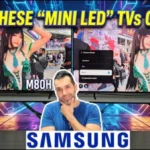
The latest news, in-depth articles, reviews, and exclusives in your inbox.
Our Samsung M70H review: no local dimming, a 60Hz panel, the edge lit lawsuit, M70H vs. M80H, and the budget Mini LED TVs that beat it.
Our Samsung M70H review explains its missing local dimming, 60Hz panel, DLG 120Hz claims, smart features, and when this budget TV makes sense.
A clear Samsung M70H review covering all six US sizes, the 60 Hz versus DLG 120 Hz distinction, RTINGS' local-dimming finding and 55-inch...
Samsung M70H reviewed in plain English using the exact 65-inch model version. See the practical benefits, drawbacks, price and who should buy it.
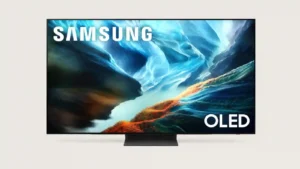
Choose the S90H for bright-room OLED viewing, deep blacks and top-tier gaming without flagship pricing. Skip it if you want Dolby Vision, a glossy screen or the simplest smart-TV software.
Pros: glare resistance, black levels
Cons: Dolby Vision support, color gamut
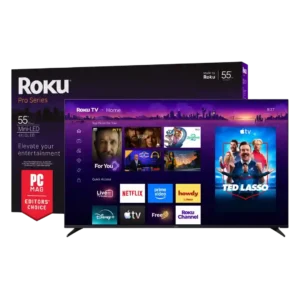
Best for bright Mini-LED picture, excellent built-in audio, easy Roku navigation, and responsive 4K/120 gaming. Skip it if you want ad-free menus, premium motion consistency, or stronger confidence in long-term...
Pros: overall satisfaction, picture quality
Cons: reliability, portability and versatility
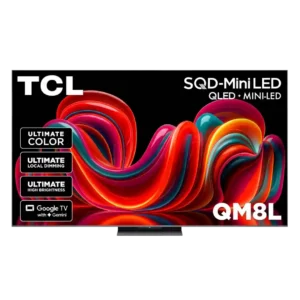
Choose the QM8L for a big, brilliantly bright TV with vivid HDR, deep mini-LED blacks, low input lag, and four HDMI 2.1 ports. Skip it if you need OLED-clean motion,...
Pros: picture quality, value for money
Cons: stand quality, judder handling
Choose the G6 for class-leading bright-room OLED picture, rich color, deep blacks and elite gaming. Skip it if you want strong built-in audio, polished launch firmware, no account sign-in, or...
Pros: picture quality, peak brightness
Cons: value for money, sound quality