If you want better peak brightness
Choose TCL QM9K. It scores 4.9 vs 2.5 for peak brightness, with a 3.9 overall score.

The QM6K delivers standout dark-scene contrast, natural color and 144Hz gaming for the money. Bright HDR highlights, direct reflections and uneven built-in audio are the main reasons to consider a step-up TV.
Budget-conscious movie watchers and console or PC gamers who want deep blacks, accurate colors and 4K high-refresh support in a light-controlled or moderately lit room.
Viewers who need dazzling HDR in strong daylight, wide off-center seating, or powerful sound without an external system.
The TCL QM6K makes a persuasive case for spending less on a Mini-LED television without giving up the features that matter most. Its deep black levels, effective local dimming and unusually natural out-of-box color give films and games convincing depth. Native 4K at 144Hz, variable refresh rate and a separate eARC connection also make it a remarkably flexible gaming option. Google TV is generally easy to use, and the range of sizes creates appealing big-screen value. The tradeoffs are real: HDR highlights do not sparkle like they do on brighter competitors, smaller glossy models can reflect windows and lamps, and side seats may see weaker contrast. Motion tests find some blur, while reactions to the built-in sound range from pleasantly surprised to distinctly unimpressed. It is an excellent buy at a meaningful discount, but the brighter QM7K deserves consideration when prices are close.
Compared with other TVs, this product is above average in flicker control, HGiG game HDR calibration, local dimming performance, near average in blooming control, picture quality, below average in stand stability, Stand assembly, image processing.
| Attribute | This product | Category average | Difference |
|---|---|---|---|
| flicker control | 5.0 | 2.7 | +2.3 |
| stand stability | 2.0 | 4.2 | -2.2 |
| HGiG game HDR calibration | 4.5 | 2.4 | +2.1 |
| local dimming performance | 4.9 | 3.2 | +1.7 |
| HDMI port accessibility | 4.5 | 2.8 | +1.7 |
| Stand assembly | 2.5 | 4.1 | -1.6 |
| reliability | 4.5 | 2.9 | +1.6 |
| image processing | 2.3 | 3.8 | -1.5 |
Choose TCL QM9K. It scores 4.9 vs 2.5 for peak brightness, with a 3.9 overall score.
Choose Hisense U7SG. It scores 5.0 vs 2.0 for stand stability, with a 4.2 overall score.
Choose Samsung S85F OLED. It scores 5.0 vs 2.5 for reflection handling, with a 3.9 overall score.
Choose Hisense U8QG. It scores 5.0 vs 2.6 for HDR brightness, with a 4.1 overall score.
Products reviewers directly compared with this model, grouped into quick takeaways.
Yes. Two HDMI 2.1 ports support 4K at up to 144Hz with VRR and low-latency options, although some tests still see motion blur or merely average lag versus faster premium sets.
Eligible larger sizes can accept 1080p at 288Hz, while smaller 50- and 55-inch versions have a lower accelerated limit. That is a reduced-resolution mode, not native 4K/288Hz.
Deep blacks and natural color are impressive for the money, but peak brightness is comparatively modest, so bright highlights often lack the punch of higher-tier Mini-LED TVs.
Direct lamps and windows can look mirror-like on the smaller glossy sizes. The 85- and 98-inch versions have a different, more diffuse screen coating.
Not necessarily for quiet everyday shows, but reviewers disagree about the onboard sound. A soundbar improves bass and dialogue for more demanding viewing.
The QM6K offers striking value and often very accurate color, but the QM7K generally delivers more brightness, richer HDR and better reflection handling. The choice depends heavily on the actual price gap.
It handles decent HD sources respectably, but 480p DVDs and low-quality compressed video can look soft and lose fine detail.
These are a few of the reviews included in our analysis.



TCL QM6K review covering display and room lighting, gaming and hdmi and sizes and hdr formats, with practical strengths, limitations and...
The TCL QM6K is a good-value Mini-LED TV with strong blacks and 144Hz gaming, but its HDR brightness trails the QM7K and Hisense U7N.
The TCL QM6K TV review verdict: the 2025 QD-Mini LED TV is excellent value for streaming, sports, and 4K/144Hz gaming, but it is not...
TCL QM6K review covering Mini LED picture quality, HDR, native 144Hz gaming, motion, Google TV, sound, screen sizes and key tradeoffs.
TCL QM6K review covering 4K/144Hz gaming, VRR, input lag, QD-Mini LED picture technology, Google TV, HDR support, ports and size options.
Choose the S90H for bright-room OLED viewing, deep blacks and top-tier gaming without flagship pricing. Skip it if you want Dolby Vision, a glossy screen or the simplest smart-TV software.
Pros: glare resistance, black levels
Cons: Dolby Vision support, color gamut
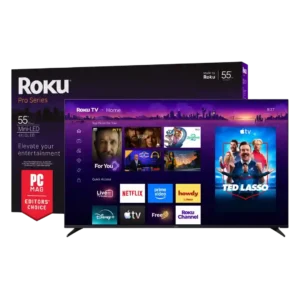
Best for bright Mini-LED picture, excellent built-in audio, easy Roku navigation, and responsive 4K/120 gaming. Skip it if you want ad-free menus, premium motion consistency, or stronger confidence in long-term...
Pros: overall satisfaction, picture quality
Cons: reliability, portability and versatility
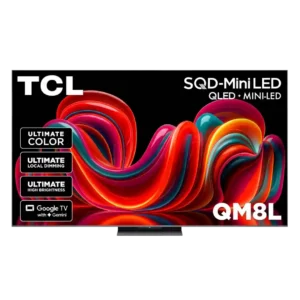
Choose the QM8L for a big, brilliantly bright TV with vivid HDR, deep mini-LED blacks, low input lag, and four HDMI 2.1 ports. Skip it if you need OLED-clean motion,...
Pros: picture quality, value for money
Cons: stand quality, judder handling

Choose the G6 for class-leading bright-room OLED picture, rich color, deep blacks and elite gaming. Skip it if you want strong built-in audio, polished launch firmware, no account sign-in, or...
Pros: picture quality, peak brightness
Cons: value for money, sound quality