If you want better banding control
Choose Hisense U65QF. It scores 5.0 vs 2.0 for banding control, with a 4.2 overall score.

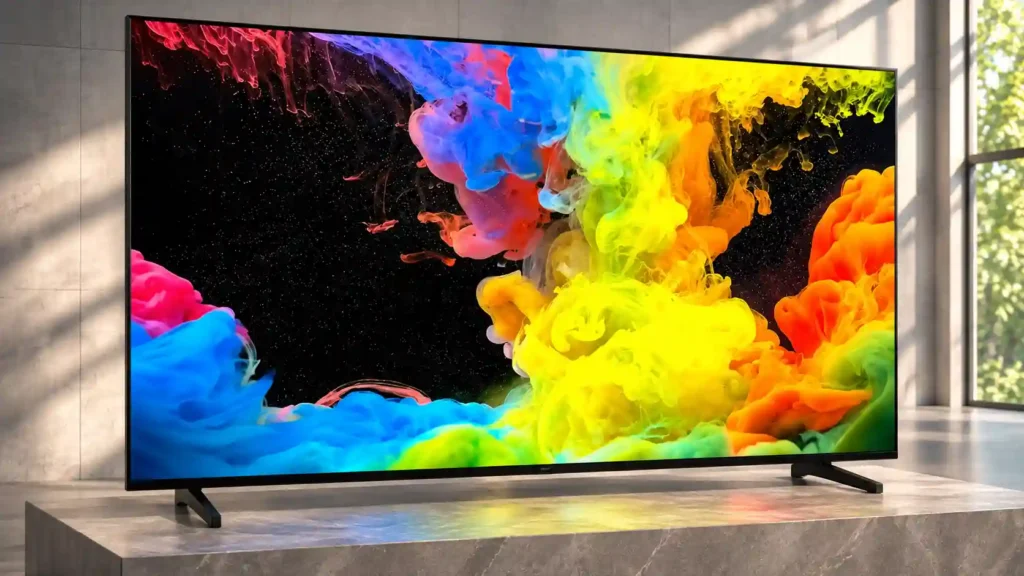
Its anti-reflective screen, vivid everyday picture, and 144Hz gaming features make the U6SF appealing for budget living rooms. Fast-motion blur, subdued HDR peaks, and inconsistent speaker performance are the main reasons to consider stepping up.
Budget-conscious buyers watching in brighter living rooms, streaming everyday shows, and playing casual console games will appreciate the glare control and feature set.
Off-axis groups, competitive players sensitive to motion blur, demanding dark-room movie watchers, and anyone expecting deep bass from the built-in speakers should look elsewhere.
The Hisense U6SF is most convincing in a bright, everyday living room. Its matte-style coating cuts reflections exceptionally well, while Mini-LED contrast, natural-looking color, and good handling of ordinary streaming video make it enjoyable to watch. A native 144Hz panel, low input lag, VRR, and modern console compatibility are unusually generous at this price. The tradeoffs become clearer with more demanding material. Detailed testing finds long blur trails in fast games and sports, even though several hands-on evaluations report smooth motion. HDR highlights lack the punch of stronger sets, and blooming around subtitles can be visible in dark rooms. Audio opinions also vary, particularly around bass; external speakers are sensible for serious movie nights. Fire TV is simple and well supplied with apps, but its advertising and Amazon-heavy recommendations may irritate some owners. For bright-room value it works well, not as a no-compromise home-theater display.
Compared with other TVs, this product is above average in warranty, audio passthrough, reliability, near average in picture quality, black levels, below average in cable management, dirty screen effect, banding control.
| Attribute | This product | Category average | Difference |
|---|---|---|---|
| cable management | 1.5 | 3.9 | -2.4 |
| warranty | 5.0 | 2.7 | +2.3 |
| audio passthrough | 5.0 | 2.8 | +2.3 |
| dirty screen effect | 2.0 | 4.2 | -2.2 |
| reliability | 4.5 | 2.6 | +1.9 |
| glare resistance | 4.9 | 3.2 | +1.7 |
| banding control | 2.0 | 3.8 | -1.8 |
| screen uniformity | 2.3 | 3.9 | -1.7 |
Choose Hisense U65QF. It scores 5.0 vs 2.0 for banding control, with a 4.2 overall score.
Choose LG G6. It scores 5.0 vs 2.0 for dirty screen effect, with a 4.4 overall score.
Choose Hisense U75QG. It scores 4.0 vs 1.5 for cable management, with a 4.0 overall score.
Choose Roku Pro Series (2026). It scores 4.7 vs 2.5 for viewing angles, with a 4.1 overall score.
Products reviewers directly compared with this model, grouped into quick takeaways.
Yes. Reflection and glare control are standout strengths, and SDR brightness keeps content visible in typical daytime living rooms.
Yes. It supports 4K at 120Hz on compatible PS5 and Xbox consoles, plus a 144Hz 4K mode and variable refresh rate on supported sources. Fast motion can still look blurry because the pixel response is slower than the refresh-rate specification suggests.
Daytime visibility is excellent, but motion performance is debated. Some watching sessions report crisp action while more stringent tests find blur and uneven screen patches on playing fields.
HDR films gain useful contrast and color, but peak highlights are comparatively modest and small bright elements can lose punch. It is less suited to shoppers prioritizing premium HDR spectacle.
They are serviceable for normal shows and some viewers like them, but measured bass and dialogue results are inconsistent. For powerful film sound, a soundbar or separate speakers are a worthwhile addition.
It can be used offline if you skip network setup, although most connected features then stop working. Amazon sign-in is part of the normal Fire TV smart setup.
For a brighter room, the U6SF has stronger glare suppression. For dark-room watching, the TCL QM6K is favored for its contrast and reduced haloing.
These are a few of the reviews included in our analysis.


The Hisense U6SF is a budget Mini LED TV released in 2026. It sits below the Hisense U7SG and its higher-end variant, the Hisense U6SF Pro...
The mini-LED U6SF focuses on image quality and ease-of-use without much of the higher-end extras that basic home theater users wouldn't mind...
We spent weeks with the Hisense U6SF (65U6SF), the everyday MiniLED Fire TV with native 144Hz, an Anti-Reflection and Glare-Free screen, and...
We've tested and reviewed products since 1936. Read CR's review of the Hisense 65U6SF tv to find out if it's worth it.
There’s a saying when it comes to cars that the best-selling vehicle usually isn’t the fastest or most expensive one. It’s the one that gets...
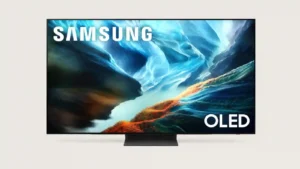
Choose the S90H for bright-room OLED viewing, deep blacks and top-tier gaming without flagship pricing. Skip it if you want Dolby Vision, a glossy screen or the simplest smart-TV software.
Pros: glare resistance, black levels
Cons: Dolby Vision support, color gamut
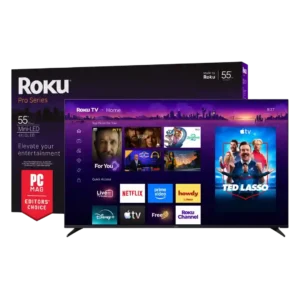
Best for bright Mini-LED picture, excellent built-in audio, easy Roku navigation, and responsive 4K/120 gaming. Skip it if you want ad-free menus, premium motion consistency, or stronger confidence in long-term...
Pros: overall satisfaction, picture quality
Cons: reliability, portability and versatility
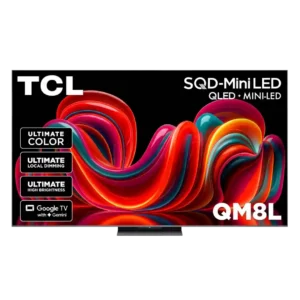
Choose the QM8L for a big, brilliantly bright TV with vivid HDR, deep mini-LED blacks, low input lag, and four HDMI 2.1 ports. Skip it if you need OLED-clean motion,...
Pros: picture quality, value for money
Cons: stand quality, judder handling
Choose the G6 for class-leading bright-room OLED picture, rich color, deep blacks and elite gaming. Skip it if you want strong built-in audio, polished launch firmware, no account sign-in, or...
Pros: picture quality, peak brightness
Cons: value for money, sound quality