
If you want better HDMI 2.1 port count
Choose Sony BRAVIA 3 II. It scores 5.0 vs 2.3 for HDMI 2.1 port count, with a 3.8 overall score.

The BRAVIA 5 makes everyday TV and films look unusually good, with smooth console gaming and a responsive smart platform. Its price, limited full-speed HDMI connections, weaker bass and off-axis picture make it less universal than its polished processing suggests.
Best for front-facing living rooms, viewers of older or compressed video, streaming-film fans and PlayStation 5 owners who value natural motion and responsive 4K120 play. The 98-inch version adds unusual big-screen immersion for buyers with space.
Less suitable for tight budgets, broad seating arrangements, bright windows directly opposite the screen, or dark-room purists seeking OLED-like blacks. PC gamers seeking 144Hz-plus refresh or multiple HDMI 2.1 devices alongside a soundbar should look elsewhere.
The Sony BRAVIA 5 is at its best in a living room that mixes broadcast TV, older HD material, streaming movies and current-console gaming. Its standout XR processing cleans up soft sources, preserves natural textures and handles film cadence with remarkable confidence. Mini LED dimming supplies enjoyable contrast and Dolby Vision impact, while Google TV is quick and the speakers produce clear dialogue. There are meaningful tradeoffs: only two HDMI ports offer full 4K120/VRR capability, one of them shares eARC duties, deep bass is limited, and wide seating angles or direct reflections expose the panel. Some 55–85-inch tests also flag restrained HDR highlights, blooming and inconsistent out-of-box white balance; other testers find the image impressively accurate. The separately tested 98-inch version brings brighter highlights, deeper blacks and quicker pixel response, but requires much more space, energy and money. The BRAVIA 5 is strongest at a competitive sale price, not an automatic value winner.
Compared with other TVs, this product is above average in reliability, HDMI port accessibility, DTS support, near average in value for money, gaming performance, below average in 1440p input compatibility, FreeSync support, HDMI 2.1 port count.
| Attribute | This product | Category average | Difference |
|---|---|---|---|
| 1440p input compatibility | 1.5 | 4.4 | -2.9 |
| FreeSync support | 2.0 | 4.4 | -2.4 |
| reliability | 5.0 | 2.8 | +2.2 |
| HDMI 2.1 port count | 2.3 | 4.1 | -1.9 |
| 4K at 144 Hz support | 2.1 | 4.1 | -2.0 |
| HDMI port accessibility | 4.8 | 2.8 | +2.0 |
| DTS support | 4.2 | 2.2 | +2.0 |
| distortion control | 4.8 | 2.8 | +2.0 |
Choose Sony BRAVIA 3 II. It scores 5.0 vs 2.3 for HDMI 2.1 port count, with a 3.8 overall score.
Choose Hisense U8QG. It scores 5.0 vs 1.5 for 1440p input compatibility, with a 4.1 overall score.
Choose Hisense U7SG. It scores 4.8 vs 2.5 for glare resistance, with a 4.2 overall score.
Choose Hisense UR8SG. It scores 5.0 vs 2.1 for 4K at 144 Hz support, with a 4.0 overall score.
Products reviewers directly compared with this model, grouped into quick takeaways.
Yes. Its XR processing is repeatedly praised for cleaning up broadcasts, older HD shows and compressed streams without making them unnaturally sharp.
Yes, with VRR and auto low-latency mode on compatible HDMI inputs. PlayStation 5 owners also benefit from Sony-specific automatic HDR tuning, but 1440p and gaming beyond 120Hz are limitations.
Only two ports deliver the full high-bandwidth gaming feature set, and one also serves eARC. Connecting a soundbar and multiple 4K120 consoles may require changing connections or using compatible audio equipment with passthrough.
No. Size-specific testing finds the 98-inch version brighter in HDR and SDR, with deeper blacks and faster pixel response, but it draws much more power and needs more installation space.
It handles indirect daylight well, especially at 98 inches, but lamps and windows opposite the screen produce visible reflections. Contrast and color decline off-axis, so centered seating is preferable.
It offers natural colors, excellent movie processing and useful Dolby Vision support. Particularly demanding dark scenes can reveal elevated blacks or blooming, so dedicated dark-room enthusiasts may prefer an OLED or a higher-end Mini LED.
Not necessarily for dialogue-heavy everyday viewing: voices are clear and the TV can get reasonably loud. A soundbar adds the missing deep bass and stronger cinematic immersion; compatible Sony models can also use the TV as a center channel.
These are a few of the reviews included in our analysis.



A pristine demo reel tells you little about a TV's treatment of a cable broadcast.
With its vibrant, bright, sharp and contrast-rich pictures, the Sony Bravia 5 offers some seriously punchy performance given its relatively...
Our Sony BRAVIA 5 review covers the K-55XR50 through K-98XR50, picture quality, Mini LED blooming, gaming, Google TV, audio, sizes, firmware...
Sony BRAVIA 5 review covering the K-55XR50 through K-98XR50. Learn about picture quality, Mini LED blooming, gaming, Google TV, audio...
Sony BRAVIA 5 review covering Mini LED picture quality, 4K120 gaming, PS5 features, Google TV, sound, HDMI limits and all five screen sizes.
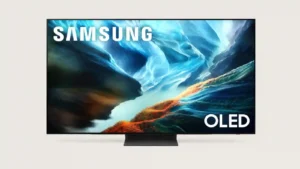
Choose the S90H for bright-room OLED viewing, deep blacks and top-tier gaming without flagship pricing. Skip it if you want Dolby Vision, a glossy screen or the simplest smart-TV software.
Pros: glare resistance, black levels
Cons: Dolby Vision support, color gamut
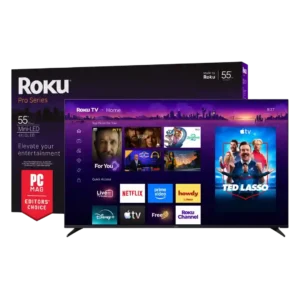
Best for bright Mini-LED picture, excellent built-in audio, easy Roku navigation, and responsive 4K/120 gaming. Skip it if you want ad-free menus, premium motion consistency, or stronger confidence in long-term...
Pros: overall satisfaction, picture quality
Cons: reliability, portability and versatility
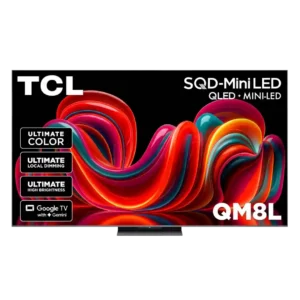
Choose the QM8L for a big, brilliantly bright TV with vivid HDR, deep mini-LED blacks, low input lag, and four HDMI 2.1 ports. Skip it if you need OLED-clean motion,...
Pros: picture quality, value for money
Cons: stand quality, judder handling

Choose the G6 for class-leading bright-room OLED picture, rich color, deep blacks and elite gaming. Skip it if you want strong built-in audio, polished launch firmware, no account sign-in, or...
Pros: picture quality, peak brightness
Cons: value for money, sound quality