
If you want better Dolby Vision support
Choose TCL QM9K. It scores 5.0 vs 1.4 for Dolby Vision support, with a 3.9 overall score.

Striking 8K detail, first-rate upscaling and an almost reflection-free screen make this a superb bright-room gaming and theater TV. The high 8K premium is harder to defend against excellent 4K rivals, especially with so little native 8K content.
Best for bright-room movie watchers and big-screen console or PC gamers who want outstanding 8K detail and glare suppression. Art-focused living rooms can also benefit from the matte, picture-frame presentation.
Not a strong fit for budget-conscious buyers, viewers chasing OLED-perfect dark-room blacks or anyone requiring Dolby Vision. PC gamers seeking 8K at 120Hz are also better served elsewhere.
The Samsung QN900F makes a persuasive technical case for 8K. Its enormous pixel count delivers striking detail with native footage, while unusually accomplished upscaling makes everyday 4K and HD sources look cleaner and denser. The matte coating all but eliminates distracting direct reflections, and the very bright panel is particularly rewarding in sunny living rooms. With low input lag, up to 4K/165Hz and useful gaming tools, it is equally convincing for large-screen play. Built-in audio and Tizen also offer considerable breadth. There are meaningful compromises: HDR impact and dimming precision do not convince everyone, blooming and motion-processing artifacts can appear, and the matte layer may lift blacks or slightly soften fine detail. Dolby Vision and DTS are missing. Most importantly, native 8K material remains scarce and premium 4K OLED or Mini LED televisions often offer stronger value.
Compared with other TVs, this product is above average in SDR brightness, Backlight strobing, glare resistance, near average in picture quality, dialogue clarity, below average in Dolby Vision support, stand stability, Screen coating clarity.
| Attribute | This product | Category average | Difference |
|---|---|---|---|
| SDR brightness | 4.9 | 2.9 | +2.0 |
| Backlight strobing | 4.3 | 2.3 | +2.0 |
| glare resistance | 4.7 | 3.0 | +1.8 |
| Dolby Vision support | 1.4 | 3.3 | -1.9 |
| reflection handling | 4.7 | 3.1 | +1.6 |
| high-refresh-rate gaming | 4.9 | 3.4 | +1.5 |
| stand stability | 2.5 | 4.2 | -1.7 |
| Screen coating clarity | 2.0 | 3.6 | -1.6 |
Choose TCL QM9K. It scores 5.0 vs 1.4 for Dolby Vision support, with a 3.9 overall score.
Choose Hisense U7SG. It scores 5.0 vs 2.0 for audio passthrough, with a 4.2 overall score.
Choose Hisense U8QG. It scores 4.7 vs 2.7 for value for money, with a 4.1 overall score.
Choose Hisense UR8SG. It scores 4.2 vs 3.2 for bass performance, with a 4.0 overall score.
Products reviewers directly compared with this model, grouped into quick takeaways.
No. Genuine 8K videos are limited, with only scattered online examples and some games. Most viewing will involve 4K or HD content scaled up to the screen.
Upscaling is one of its most praised abilities: detailed 4K sources often look sharper and more textured. Standard-definition footage is watchable but still comparatively soft.
Yes. Low input lag, variable refresh rate and 4K at up to 165Hz suit consoles and capable PCs. Native 8K input is limited to 60Hz, and 60Hz motion is less clean.
It dramatically reduces direct mirror-like reflections and pairs with very high brightness. Some lighting can diffuse into a haze and lighten black levels, so glare suppression comes with a tradeoff.
No. HDR10+ is available as a dynamic HDR alternative, but Dolby Vision is absent; DTS sound tracks are also unsupported by the TV.
For general viewing, often yes: dialogue and spatial effects can sound full and clear. A quality soundbar or surround system adds deeper bass and more impact.
These are a few of the reviews included in our analysis.


Samsung’s second-tier 8K TV is a better bet than its flagship
Samsung’s finest LCD TV proves that despite 8K content remaining stubbornly elusive, you can’t – and shouldn’t – ignore 8K TVs
Samsung continues to prove that an 8K TV doesn’t need loads of native 8K content to make a difference
The Samsung QN900F 8K TV is a high-end TV with a Mini LED backlight. Sitting below the Samsung QN990F 8K, it loses the Wireless One Connect...
Our Samsung QN900F review covers its matte 8K screen, HDR brightness, deep contrast, and premium gaming features. Is it worth the price?
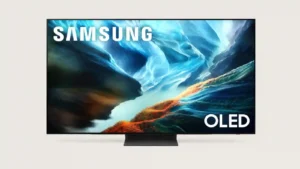
Choose the S90H for bright-room OLED viewing, deep blacks and top-tier gaming without flagship pricing. Skip it if you want Dolby Vision, a glossy screen or the simplest smart-TV software.
Pros: glare resistance, black levels
Cons: Dolby Vision support, color gamut
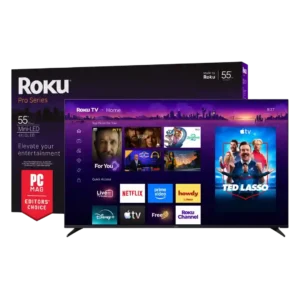
Best for bright Mini-LED picture, excellent built-in audio, easy Roku navigation, and responsive 4K/120 gaming. Skip it if you want ad-free menus, premium motion consistency, or stronger confidence in long-term...
Pros: overall satisfaction, picture quality
Cons: reliability, portability and versatility
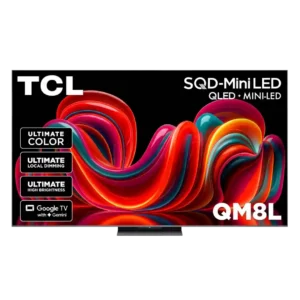
Choose the QM8L for a big, brilliantly bright TV with vivid HDR, deep mini-LED blacks, low input lag, and four HDMI 2.1 ports. Skip it if you need OLED-clean motion,...
Pros: picture quality, value for money
Cons: stand quality, judder handling
Choose the G6 for class-leading bright-room OLED picture, rich color, deep blacks and elite gaming. Skip it if you want strong built-in audio, polished launch firmware, no account sign-in, or...
Pros: picture quality, peak brightness
Cons: value for money, sound quality