Sony BRAVIA 3 II TV Review

Brand: Sony
Released: March 25, 2026
Updated: 2 hours ago
3.8
Overall review score
452
Review insights
134
Scored features
14
Expert reviews

Bottom Line

Sony’s standout processing and four 4K/120Hz HDMI ports make the BRAVIA 3 II appealing for daytime TV and console gaming. Without local dimming, black levels and HDR impact trail stronger-value Mini LED competitors.

Daytime living rooms, sports and mixed-quality streaming—especially with the matte 65- or 75-inch screen—and households connecting multiple 4K/120Hz consoles.

Dark-room movie enthusiasts, buyers seeking powerful HDR highlights, or high-refresh PC gamers needing more than 120Hz; buyers should also compare Mini LED pricing.

Verdict

The BRAVIA 3 II makes a convincing case for Sony’s processing in an otherwise basic LCD TV. Broadcasts, older streams, sports and colorful daytime viewing look polished, while native 120Hz gaming, low input lag and four full-bandwidth HDMI 2.1 ports are genuine strengths. Google TV and useful PlayStation features add everyday convenience. But the direct-lit backlight has no local dimming, and the tested 65-inch IPS panel produces raised blacks, weak dark-room contrast and subdued HDR highlights. Other sizes use different panels and finishes, so the excellent anti-glare performance of the matte 65- and 75-inch versions does not apply to every model. Audio is clear enough for dialogue but short on bass, and downward-facing ports complicate wall mounting. At a good sale price it is a flexible living-room TV; when a locally dimmed Mini LED or BRAVIA 5 costs close to the same, the picture-quality compromise becomes hard to justify.

Feature Scorecards

Summary

134 reviewed features
  • Very positive 4.5-5.0
    41 (31%)
  • Positive 3.5-4.4
    53 (40%)
  • Neutral 2.5-3.4
    23 (17%)
  • Negative 1.5-2.4
    16 (12%)
  • Very negative below 1.5
    1 (1%)

Pros highlights

  • 5.0
    13 reviews strong consensus
    HDMI 2.1 port count: 5.0, 13 reviews, strong consensus
    Four full-bandwidth HDMI 2.1 inputs stand out even against pricier Sony models. They make multiple modern consoles and a gaming PC much easier to keep connected.
  • 4.0
    12 reviews low consensus
    overall satisfaction: 4.0, 12 reviews, low consensus
    The BRAVIA 3 II wins praise for polished everyday viewing and full-featured gaming, but opinions diverge sharply on whether its plain backlight justifies Sony’s price. Dark-room performance is the recurring sticking point.
  • 4.9
    11 reviews strong consensus
    4K at 120 Hz support: 4.9, 11 reviews, strong consensus
    Native 4K/120Hz support gives modern consoles smooth, responsive play on any of the four HDMI inputs. There is no higher-than-120Hz option for demanding PC players.
  • 4.5
    11 reviews strong consensus
    color accuracy: 4.5, 11 reviews, strong consensus
    Natural skin tones and restrained saturation are recurring strengths, with strong SDR accuracy even before calibration. Some settings deliberately trade precision for brighter, punchier colors.
  • 3.5
    11 reviews moderate consensus
    sound quality: 3.5, 11 reviews, moderate consensus
    The built-in speakers emphasize crisp voices and can sound fuller than expected. They still lack the deep bass and cinematic scale of an external sound system.
  • 4.8
    10 reviews strong consensus
    image processing: 4.8, 10 reviews, strong consensus
    Sony’s XR processing is a consistent highlight, making mixed-quality content look more refined without obvious artificial sharpening. Its improvements cannot fully overcome the native backlight limitations.

Cons highlights

  • 3.4
    12 reviews low consensus
    HDR performance: 3.4, 12 reviews, low consensus
    Some users enjoy the natural color and refined details in Dolby Vision films. Others find HDR underwhelming because poor native contrast and limited peak output flatten highlights.
  • 2.4
    10 reviews strong consensus
    bass performance: 2.4, 10 reviews, strong consensus
    Deep bass is consistently the weak link, with limited rumble in explosions, film scores and bass-heavy music. Speech and lighter material fare better.
  • 2.4
    9 reviews low consensus
    black levels: 2.4, 9 reviews, low consensus
    The 65-inch IPS set struggles to deliver convincing blacks in dark rooms, where shadowy scenes can appear gray. Some other sizes or reviewers report better results, but panel differences make generalizations risky.
  • 1.8
    8 reviews strong consensus
    local dimming performance: 1.8, 8 reviews, strong consensus
    Without independently controlled dimming zones, bright details and dark backgrounds cannot be optimized separately. This puts cinematic HDR and night viewing at a disadvantage against locally dimmed sets.
  • 2.5
    8 reviews low consensus
    contrast ratio: 2.5, 8 reviews, low consensus
    The lack of local dimming leaves dark scenes flatter than on many Mini LED rivals. Some users find the contrast acceptable with room lights on, especially on regional VA-panel versions.
  • 3.3
    8 reviews low consensus
    value for money: 3.3, 8 reviews, low consensus
    Plenty of reviewers like the Sony processing and four gaming-ready ports for the money, especially on sale. Others argue that cheaper Mini LED TVs or a closely priced BRAVIA 5 deliver better contrast.

Use Cases

Best for

  • 4.5
    13 reviews strong consensus
    Console gaming: 4.5, 13 reviews, strong consensus
    Four 4K/120Hz HDMI inputs, VRR, ALLM and PlayStation features create an unusually convenient console setup. Motion blur in 60Hz games and missing 1440p input support are the caveats.
  • 4.8
    7 reviews strong consensus
    Multiple high-bandwidth gaming devices: 4.8, 7 reviews, strong consensus
    All four HDMI ports support 4K/120Hz, so several consoles or a gaming PC can remain connected without repeated cable swaps. This is a distinctive feature in Sony’s range.
  • 4.8
    6 reviews strong consensus
    Streaming movies and shows: 4.8, 6 reviews, strong consensus
    Google TV, clean SDR reproduction and Sony’s processing make mainstream streaming a strong everyday use. Darker HDR films are less convincing than on models with local dimming.

Not ideal for

  • Acoustic and orchestral music
    2.5
    1 review
    Acoustic and orchestral music: 2.5, 1 review
    Voices remain articulate, but acoustic guitar detail can sound muted and the speakers lack the richness needed for layered music.
  • FPS gaming
    2.5
    1 review
    FPS gaming: 2.5, 1 review
    Input response is quick in Game Mode, but noticeable blur at 60Hz and some transition overshoot can soften fast-moving targets.

Compared With Category Average

Compared with other TVs, this product is above average in flicker control, account requirements, Remote control usability, near average in value for money, color volume, below average in dark-room performance, Chromecast support, local dimming performance.

Comparison summary

115 compared features
  • Above average 0.4+ pts higher
    49 (43%)
  • Same as average within 0.3 pts
    39 (34%)
  • Below average 0.4+ pts lower
    27 (23%)

Largest category differences

Attribute This product Category average Difference
dark-room performance 1.3 3.8 -2.4
Chromecast support 2.5 4.8 -2.3
local dimming performance 1.8 3.8 -2.0
flicker control 5.0 2.9 +2.1
black levels 2.4 4.2 -1.7
contrast ratio 2.5 4.2 -1.7
HDR10+ support 1.8 3.5 -1.8
account requirements 4.0 2.3 +1.7

Consider This Instead

If you want better dark-room performance

Choose Sony Bravia 8 II. It scores 3.9 vs 1.3 for dark-room performance, with a 3.9 overall score.

Compare

If you want better local dimming performance

Choose LG G6. It scores 5.0 vs 1.8 for local dimming performance, with a 4.4 overall score.

Compare

If you want better contrast ratio

Choose LG C6. It scores 5.0 vs 2.5 for contrast ratio, with a 4.1 overall score.

Compare

If you want better stand width

Choose LG MRGB95B. It scores 5.0 vs 2.4 for stand width, with a 4.0 overall score.

Compare

Compared in Reviews

Products reviewers directly compared with this model, grouped into quick takeaways.

  • Better: image depth and color complexity The flagship provides richer image detail and color range, although some bystanders liked the simpler BRAVIA 3 II image.
  • Worse: full-bandwidth HDMI port count The 3 II unexpectedly offers four full-bandwidth HDMI ports when Sony’s more expensive models do not.
  • Compared: HDMI 2.1 connectivity The less expensive 3 II has four HDMI 2.1 ports, unlike the higher-range models mentioned.
  • Worse: full-bandwidth HDMI port count The 3 II’s four gaming-ready inputs are highlighted as an advantage over some flagship Sony models.
  • Better: HDR brightness and picture performance The flagship is presented as delivering higher-grade HDR brightness and accuracy than the BRAVIA 3 II.
  • Compared: chipset and connections The 3 II’s newer chipset and four full-bandwidth HDMI inputs are contrasted with Sony’s flagship models.

Sony BRAVIA 3 (2024)

  • Older model: processor and 120Hz motion The newer model improves the processor and boosts refresh to 120Hz from the older set’s 60Hz.
  • Older model: processor and refresh rate The newer Sony brings the XR processor, 120Hz refresh and four HDMI 2.1 ports as major upgrades.
  • Older model: HDMI 2.1 socket count The BRAVIA 3 II succeeds the original with four 4K/120Hz-capable HDMI ports rather than Sony’s usual two.

FAQ

Is the Sony BRAVIA 3 II good for PS5 and Xbox gaming?

Yes. All four HDMI 2.1 ports handle 4K at 120Hz, with VRR, ALLM and low Game Mode input lag. However, 1440p input support was not confirmed in the cited console checks, and motion at 60Hz can blur.

Does the BRAVIA 3 II have local dimming?

No. Its direct-lit backlight cannot brighten small highlights independently of the rest of the screen, so dark scenes lack the depth of a good Mini LED TV.

Is it suitable for watching TV in a bright room?

The 65- and 75-inch versions have matte anti-glare screens that reduce direct reflections. Other sizes use glossy finishes and can show more pronounced window or lamp reflections.

Does picture quality vary between screen sizes?

Yes. The tested 65-inch TV has a matte IPS panel, while the 50-inch is a glossy VA model. These differences affect black levels, viewing angles and reflections, and several other sizes have less certain panel details.

Are the built-in speakers good enough?

Dialogue is usually clear for shows and news, but deep bass and cinematic impact are limited. A soundbar is worthwhile for action films and music.

Is the BRAVIA 3 II worth buying over a Mini LED TV?

It is most compelling when Sony’s processing, wide seating angles and four 4K/120Hz HDMI inputs matter most, especially at a discount. If deep blacks and strong HDR are priorities, many similarly priced Mini LED sets are better choices.

Can you easily connect a soundbar and wall-mount it?

eARC supports high-quality audio passthrough to a compatible soundbar or receiver. Some HDMI ports face downward, so connecting cables before wall mounting is advisable.

Sample Expert Reviews We Analyzed

These are a few of the reviews included in our analysis.

Video Reviews

Article Reviews

thefasit.com

A big screen makes an old TV episode bigger, including the blocks around moving faces and the soft edges of the original picture.

Review score
3.6

Top TVs to Consider

#1 Samsung S90H
4.5

Choose the S90H for bright-room OLED viewing, deep blacks and top-tier gaming without flagship pricing. Skip it if you want Dolby Vision, a glossy screen or the simplest smart-TV software.

Pros: glare resistance, black levels

Cons: Dolby Vision support, color gamut
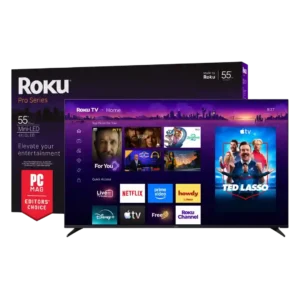
#2 Roku Pro Series (2025)
4.4

Best for bright Mini-LED picture, excellent built-in audio, easy Roku navigation, and responsive 4K/120 gaming. Skip it if you want ad-free menus, premium motion consistency, or stronger confidence in long-term...

Pros: overall satisfaction, picture quality

Cons: reliability, portability and versatility
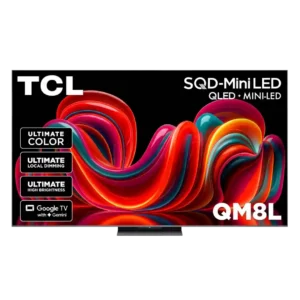
#3 TCL QM8L
4.4

Choose the QM8L for a big, brilliantly bright TV with vivid HDR, deep mini-LED blacks, low input lag, and four HDMI 2.1 ports. Skip it if you need OLED-clean motion,...

Pros: picture quality, value for money

Cons: stand quality, judder handling

#4 LG G6
4.4

Choose the G6 for class-leading bright-room OLED picture, rich color, deep blacks and elite gaming. Skip it if you want strong built-in audio, polished launch firmware, no account sign-in, or...

Pros: picture quality, peak brightness

Cons: value for money, sound quality