
If you want better glare resistance
Choose Hisense U7SG. It scores 4.8 vs 3.1 for glare resistance, with a 4.2 overall score.

The QM7K brings strong mini-LED contrast, vivid HDR and capable gaming to a relatively affordable large screen. Its reflective panel, uneven side viewing and divisive sound make room placement and a possible soundbar important.
Centered-seat movie and gaming setups, bright living rooms with controlled direct reflections, and buyers seeking high-refresh-rate 4K performance at a discounted price.
Wide seating arrangements, rooms with windows directly facing the screen, OLED motion purists, and buyers unwilling to use a soundbar if they dislike the built-in audio.
The TCL QM7K is an appealing step up from entry-level LCD televisions, especially for people who want lively HDR, deep blacks and smooth 4K gaming without flagship prices. Its high SDR brightness works well for daytime sports and general living-room use, while HDMI 2.1, VRR and low input lag add real versatility for consoles and gaming PCs. The picture can be remarkably close to premium displays in some scenes, though direct window reflections, blooming around small bright objects and weaker off-angle color prevent a clean sweep. Motion performance is generally good for mini-LED, but sensitive viewers may spot ghosting or stutter. Sound opinion is unusually divided: some find the Bang & Olufsen tuning improved, while others hear weak bass and limited loudness. A sale price matters, particularly with the cheaper QM6K and newer QM7L available as alternatives. For centered viewing and gaming, the QM7K still makes a convincing case.
Compared with other TVs, this product is above average in Power-on readiness, local dimming performance, Near-black uniformity, near average in daytime viewing performance, picture mode tuning, below average in 1080p at 288 Hz gaming support, maximum volume, 1080p at 240 Hz gaming support.
| Attribute | This product | Category average | Difference |
|---|---|---|---|
| 1080p at 288 Hz gaming support | 2.2 | 4.5 | -2.3 |
| Power-on readiness | 4.2 | 2.4 | +1.8 |
| local dimming performance | 4.5 | 3.2 | +1.4 |
| Near-black uniformity | 5.0 | 3.3 | +1.7 |
| Screen coating clarity | 5.0 | 3.4 | +1.6 |
| SDR brightness | 4.9 | 3.4 | +1.5 |
| flicker control | 4.1 | 2.6 | +1.5 |
| maximum volume | 1.9 | 3.3 | -1.4 |
Choose Hisense U7SG. It scores 4.8 vs 3.1 for glare resistance, with a 4.2 overall score.
Choose Hisense U8QG. It scores 4.8 vs 3.9 for daytime viewing performance, with a 4.1 overall score.
Choose Hisense UR8SG. It scores 4.8 vs 4.1 for peak brightness, with a 4.0 overall score.
Choose TCL QM9K. It scores 4.8 vs 4.1 for HDR brightness, with a 3.9 overall score.
Products reviewers directly compared with this model, grouped into quick takeaways.
Yes. It combines low input lag, VRR and 4K/144Hz support on two HDMI 2.1 ports, although dark transitions can show ghosting.
High brightness keeps daytime content visible, but reflections from lamps or windows directly opposite the screen remain distracting.
Its local dimming delivers unusually deep blacks for an LCD. Small bright objects and subtitles can still produce halos.
Not necessarily for ordinary dialogue, but opinions on the built-in speakers differ widely. A soundbar improves bass and room-filling volume.
Not always. Color and contrast often fade when sitting off center, so straight-on viewing is best.
The QM7K generally offers stronger brightness and contrast, but the QM6K can be a better value when its lower price outweighs those upgrades.
Some comparisons favor the QM7L for brightness and color, while the QM7K can offer cleaner gaming motion. Compare discounts at the same size before choosing.
These are a few of the reviews included in our analysis.

Is the TCL QM7K still the midrange TV to beat? The TCL QM7K is a 2025 QD-Mini LED TV, not a new 2026 release, and it is worth buying mainly...
Our TCL QM7K review covers the 55QM7K, 65QM7K, 75QM7K, 85QM7K and 98QM7K, including HDR, blooming, gaming, ports, Google TV and value.
Are you looking for a TV that delivers premium picture quality without burning a hole in your wallet? The TCL QM7K might be exactly what you...
TCL is hyper-focused on making its LED televisions significantly better than the competition, and the QM7K absolutely succeeds in that goal...
The TCL QM7K and the Sony Bravia 7 are two mid-range Mini-LED smart TVs that offer great performance and above-average selection of features...
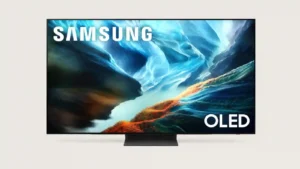
Choose the S90H for bright-room OLED viewing, deep blacks and top-tier gaming without flagship pricing. Skip it if you want Dolby Vision, a glossy screen or the simplest smart-TV software.
Pros: glare resistance, black levels
Cons: Dolby Vision support, color gamut
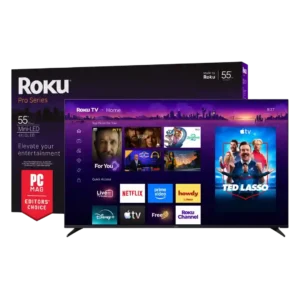
Best for bright Mini-LED picture, excellent built-in audio, easy Roku navigation, and responsive 4K/120 gaming. Skip it if you want ad-free menus, premium motion consistency, or stronger confidence in long-term...
Pros: overall satisfaction, picture quality
Cons: reliability, portability and versatility
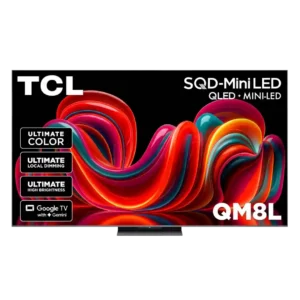
Choose the QM8L for a big, brilliantly bright TV with vivid HDR, deep mini-LED blacks, low input lag, and four HDMI 2.1 ports. Skip it if you need OLED-clean motion,...
Pros: picture quality, value for money
Cons: stand quality, judder handling
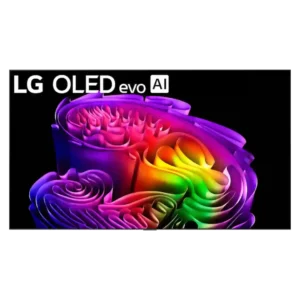
Choose the G6 for class-leading bright-room OLED picture, rich color, deep blacks and elite gaming. Skip it if you want strong built-in audio, polished launch firmware, no account sign-in, or...
Pros: picture quality, peak brightness
Cons: value for money, sound quality