
If you want better cable management
Choose Samsung QN80H. It scores 4.3 vs 1.0 for cable management, with a 3.8 overall score.

Four full-bandwidth HDMI 2.1 ports, low-lag gaming, and versatile webOS are the QNED92A’s best assets. Its weaker speakers, inconsistent dark-scene HDR, and stiff competition make the asking price harder to justify.
Console and PC gamers who need several high-bandwidth inputs, prefer front-on seating, and appreciate a comprehensive smart-TV platform. It also suits movie watching with a separate soundbar.
Wide-seating households, dedicated viewers sensitive to dark-scene halos or lost shadow detail, and shoppers relying entirely on built-in speakers. Value-focused buyers should compare rival Mini LED and OLED sets.
The LG QNED92A is easiest to recommend to gamers who want a large Mini LED screen without sacrificing connectivity. All four HDMI 2.1 ports support high-bandwidth 4K gaming, lag is low, and the 144Hz PC mode, VRR, and flexible Game Optimizer make it particularly accommodating. webOS adds plentiful apps and convenient smart-home features. Picture quality can be genuinely impressive, with vibrant color, deep blacks, and smooth movie motion. But the screen is not equally convincing in every scene: local dimming may create halos or hide shadow detail, bright HDR impact lags some rivals, and off-axis viewing is weak. The built-in audio is another clear compromise, so budget for external speakers. At the prices quoted in these reviews, competing Mini LED models and LG OLED alternatives often present stronger value, although sale pricing could change that calculation.
Compared with other TVs, this product is above average in Backlight strobing, motion interpolation, reliability, near average in overall satisfaction, input lag, below average in cable management, distortion control, sound quality.
| Attribute | This product | Category average | Difference |
|---|---|---|---|
| cable management | 1.0 | 3.6 | -2.6 |
| Backlight strobing | 4.5 | 2.3 | +2.2 |
| distortion control | 1.0 | 2.8 | -1.8 |
| sound quality | 1.8 | 3.5 | -1.7 |
| motion interpolation | 5.0 | 3.2 | +1.8 |
| AI audio processing | 2.3 | 4.0 | -1.7 |
| reliability | 4.5 | 2.8 | +1.7 |
| menu responsiveness | 2.5 | 4.1 | -1.6 |
Choose Samsung QN80H. It scores 4.3 vs 1.0 for cable management, with a 3.8 overall score.
Choose Hisense U8QG. It scores 5.0 vs 2.3 for soundstage, with a 4.1 overall score.
Choose Sony BRAVIA 3 II. It scores 4.3 vs 1.0 for distortion control, with a 3.8 overall score.
Choose Hisense U7SG. It scores 4.3 vs 1.8 for sound quality, with a 4.2 overall score.
Products reviewers directly compared with this model, grouped into quick takeaways.
Yes. Its four HDMI 2.1 inputs support 4K at 120Hz, VRR and automatic low-latency mode, with responsive Game Optimizer settings. Dark-image motion blur is a possible drawback.
Yes. Supported PCs can use up to 4K at 144Hz and adaptive refresh, while the HDMI inputs have full 48Gbps bandwidth.
The panel is bright enough for daytime TV, but assessments disagree on glare resistance. Strong direct window or lamp reflections can be distracting.
Local dimming gives it impressively deep blacks for an LCD, but halos and shadow crushing can appear. It does not consistently match similarly priced OLEDs.
A soundbar is strongly recommended for movies or powerful sound. The built-in speakers are frequently described as thin, weak in bass, or distorted when pushed.
The UK QNED93 is presented as a regional counterpart, but the stand differs and panel technology may vary by size or market. Check the exact model before applying one size’s picture results to another.
Dolby Vision is supported, although its effect and connection reliability receive mixed remarks. DTS audio formats are not supported, which matters for some Blu-ray soundtracks.
These are a few of the reviews included in our analysis.
The LG QNED92A is an upper mid-range TV released in 2025 as part of LG's QNED evo lineup, which features Mini LED backlighting. The TV is...
We review the LG QNED93A – a Mini-LED TV aiming to rival top LCDs. Packed with 144Hz gaming, full HDMI 2.1, Dolby Vision and WebOS with the...
The QNED92 is an exciting new addition to LG’s lineup, but it doesn’t quite match up to major rivals from Hisense and TCL.
LG finally proves that it’s not only good at OLED
The LG QNED93 addresses some of the issues with its predecessor pretty effectively but still falls a little short of being a Mini LED smash hit
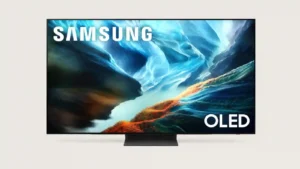
Choose the S90H for bright-room OLED viewing, deep blacks and top-tier gaming without flagship pricing. Skip it if you want Dolby Vision, a glossy screen or the simplest smart-TV software.
Pros: glare resistance, black levels
Cons: Dolby Vision support, color gamut
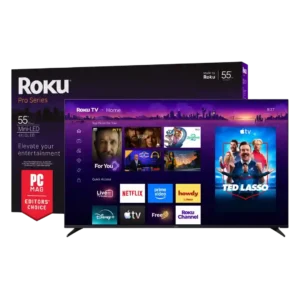
Best for bright Mini-LED picture, excellent built-in audio, easy Roku navigation, and responsive 4K/120 gaming. Skip it if you want ad-free menus, premium motion consistency, or stronger confidence in long-term...
Pros: overall satisfaction, picture quality
Cons: reliability, portability and versatility
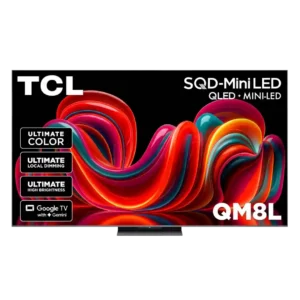
Choose the QM8L for a big, brilliantly bright TV with vivid HDR, deep mini-LED blacks, low input lag, and four HDMI 2.1 ports. Skip it if you need OLED-clean motion,...
Pros: picture quality, value for money
Cons: stand quality, judder handling
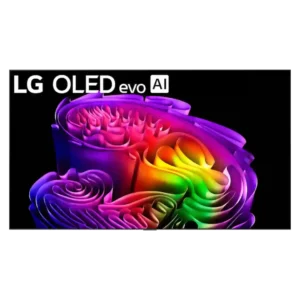
Choose the G6 for class-leading bright-room OLED picture, rich color, deep blacks and elite gaming. Skip it if you want strong built-in audio, polished launch firmware, no account sign-in, or...
Pros: picture quality, peak brightness
Cons: value for money, sound quality