If you want better reflection handling
Choose Sony Bravia 8 II. It scores 4.0 vs 2.9 for reflection handling, with a 3.9 overall score.

Choose it for vivid, accurate color, deep blacks, Sony processing and responsive PS5 gaming. Skip it if you need four HDMI 2.1 ports, strong glare control, or OLED-level contrast for less.
Movie-focused viewers who prioritize rich, accurate color, strong HDR and Sony processing, plus PS5 owners who want responsive 4K/120Hz gaming. The broad size range also suits both smaller and very large rooms.
Multi-console or high-refresh PC gamers, rooms with strong direct reflections, and shoppers who can get a preferred OLED or competing RGB TV for less.
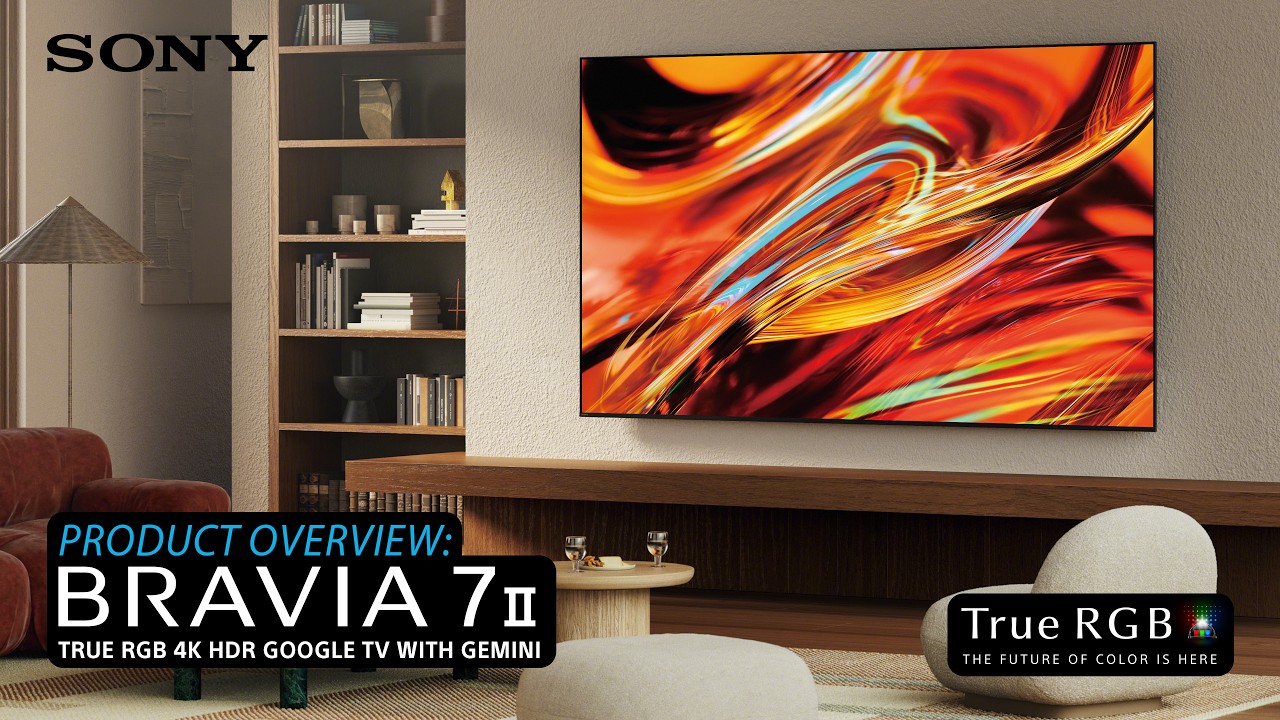
The Bravia 7 II makes a persuasive case for True RGB by combining unusually rich, accurate color with deep blacks, excellent blooming control and Sony’s strongest image-processing traits. HDR has plenty of punch, motion is generally polished, and console gaming feels fast, especially with a PS5. Its Mirage Stand and broad size range add practical appeal. The tradeoffs are unusually clear, though: only two HDMI 2.1 ports, a 120Hz ceiling, inconsistent reflection handling and mixed built-in audio make it less universal than the picture quality suggests. Value also depends heavily on street price. Against the much pricier Bravia 9 II it can look excellent, while similarly priced OLEDs and cheaper RGB competitors can make the decision much closer.
Compared with other TVs, this product is above average in warranty, stutter handling, stand width, near average in value for money, black levels, below average in FreeSync support, HDMI 2.1 port count, HDR format support.
| Attribute | This product | Category average | Difference |
|---|---|---|---|
| warranty | 5.0 | 2.3 | +2.7 |
| FreeSync support | 2.0 | 4.6 | -2.6 |
| HDMI 2.1 port count | 1.9 | 4.0 | -2.1 |
| HDR format support | 2.0 | 4.2 | -2.2 |
| wall-mount compatibility | 2.2 | 4.0 | -1.8 |
| stutter handling | 5.0 | 3.1 | +1.9 |
| response time | 2.0 | 3.8 | -1.8 |
| stand width | 5.0 | 3.4 | +1.6 |
Choose Sony Bravia 8 II. It scores 4.0 vs 2.9 for reflection handling, with a 3.9 overall score.
Choose LG C6. It scores 5.0 vs 1.9 for HDMI 2.1 port count, with a 4.1 overall score.
Choose Hisense U75QG. It scores 4.7 vs 2.0 for HDR10+ support, with a 4.0 overall score.
Choose Roku Pro Series (2026). It scores 4.9 vs 3.6 for value for money, with a 4.1 overall score.
Products reviewers directly compared with this model, grouped into quick takeaways.
Its strongest traits are vivid but natural color, deep blacks, excellent blooming control and refined processing. A few critical tests still prefer OLED or rival RGB models in the toughest dark scenes.
It has enough brightness for daytime sports and general viewing, but its semi-gloss screen can show strong window and lamp reflections. Placement and light control matter more here than on the Bravia 9 II.
Console gaming is responsive with 4K/120Hz, VRR and ALLM, and PS5 integration is especially strong. The main drawbacks are only two HDMI 2.1 ports and no 4K/144Hz option for PC-focused users.
The Bravia 7 II can deliver much higher brightness and unusually strong color volume while approaching OLED-like blacks head-on. OLED still has an advantage in absolute black, off-axis consistency and zero blooming.
Built-in sound is better than average in several tests, with clear dialogue and decent bass, but opinions are mixed on dynamics and spaciousness. A soundbar is still the safer choice for serious movie watching.
It looks compelling when discounted and especially next to the much pricier Bravia 9 II. At full price, similarly priced OLEDs and cheaper RGB competitors make the value case less clear.
These are a few of the reviews included in our analysis.


The Sony Bravia 9 II True RGB TV is one of the top LED TVs of 2026, but the step-down Bravia 7 II is more affordable. Here's how they compare...
The brand’s new ‘True RGB’ TV is a premium television that pushes brightness and colours
Impressive brightness, vibrant colour and image processing tech make the Bravia 7 II an excellent Mini LED TV, but does it live up to the hype?
Sony's 2026 TV lineup is here. We break down the new TRUE RGB Bravia 7 II and Bravia 9 II, plus the budget-friendly Bravia 3 II.
Sony's entry-level RGB TV, the Bravia 7 II is a strong overall performer that might not beat OLED, but it gives it a good fight.

Choose the S90H for bright-room OLED viewing, deep blacks and top-tier gaming without flagship pricing. Skip it if you want Dolby Vision, a glossy screen or the simplest smart-TV software.
Pros: glare resistance, black levels
Cons: Dolby Vision support, color gamut

Best for bright Mini-LED picture, excellent built-in audio, easy Roku navigation, and responsive 4K/120 gaming. Skip it if you want ad-free menus, premium motion consistency, or stronger confidence in long-term...
Pros: overall satisfaction, picture quality
Cons: reliability, portability and versatility

Choose the QM8L for a big, brilliantly bright TV with vivid HDR, deep mini-LED blacks, low input lag, and four HDMI 2.1 ports. Skip it if you need OLED-clean motion,...
Pros: picture quality, value for money
Cons: stand quality, judder handling

Choose the G6 for class-leading bright-room OLED picture, rich color, deep blacks and elite gaming. Skip it if you want strong built-in audio, polished launch firmware, no account sign-in, or...
Pros: picture quality, peak brightness
Cons: value for money, sound quality