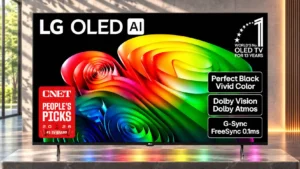
Overall: 3.8/5
One owner found the B6 notably louder than a previous, more basic television.
Pros: value for money, peak brightness
Cons: color accuracy, stand quality

Overall: 3.8/5
One owner found the B6 notably louder than a previous, more basic television.
Pros: value for money, peak brightness
Cons: color accuracy, stand quality
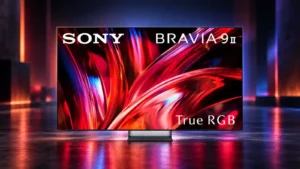
Overall: 4.3/5
The built-in speakers can play at cinematically high levels without immediately losing composure.
Pros: overall satisfaction, overall image accuracy
Cons: value for money, bass performance
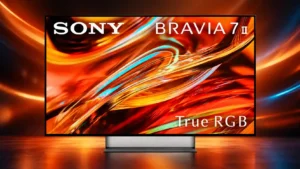
Overall: 4.2/5
The speakers can play surprisingly loud for a TV without immediately falling apart, making them usable in more than just a small room.
Pros: overall satisfaction, picture quality
Cons: HDMI 2.1 port count, reflection handling

Overall: 3.1/5
Output is surprisingly strong for integrated TV speakers, with enough volume for an ordinary room or even a fairly long one.
Pros: design and appearance, maximum volume
Cons: picture quality, value for money

Overall: 3.4/5
The speakers can get fairly loud, but turning them up does not guarantee a pleasant or balanced sound.
Pros: art display mode, picture quality
Cons: contrast ratio, high-refresh-rate gaming
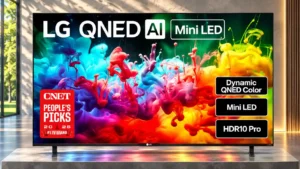
Overall: 3.4/5
Volume impressions vary: some owners find it surprisingly loud, while testing shows the speakers have limited headroom in noisier rooms.
Pros: picture quality, color accuracy
Cons: remote control quality, black levels
Overall: 4.2/5
Maximum loudness is ample for ordinary living rooms, though top volume can introduce compression.
Pros: picture quality, overall satisfaction
Cons: design and appearance, Dolby Vision support

Overall: 4.1/5
Standard-size models have modest output, while the 77-inch version can play surprisingly loud without immediately losing clarity.
Pros: picture quality, gaming performance
Cons: value for money, sound quality

Overall: 4.0/5
The speakers can play loudly enough for a somewhat noisy room, but tonal balance becomes uneven near the top of the range.
Pros: peak brightness, picture quality
Cons: value for money, viewing angles

Overall: 3.8/5
The speakers get reasonably loud without much compression, but sheer loudness does not compensate for their limited low-end output.
Pros: picture quality, contrast ratio
Cons: blooming control, glare resistance
Overall: 3.8/5
The speakers can play fairly loudly, although compression grows noticeable near maximum output.
Pros: picture quality, color accuracy
Cons: HDR performance, sound quality

Overall: 4.4/5
AI Sound Pro can produce sufficient or improved loudness, yet other tests found the speakers too quiet until pushed near their upper range.
Pros: picture quality, peak brightness
Cons: value for money, sound quality
Overall: 3.8/5
Some speakers are clear and ample for regular room listening, while lab testing found the maximum output unimpressive. Loudness depends on the volume and expectations involved.
Pros: HDMI 2.1 port count, overall satisfaction
Cons: HDR performance, bass performance
Overall: 4.1/5
Opinions differ on how loud the internal speakers can get: one test found limited output, another found it adequate for noisy rooms.
Pros: black levels, contrast ratio
Cons: Dolby Vision support, stutter handling
Overall: 3.3/5
The TV can play fairly loud, but high volume may reduce definition or make busy scenes muddy. One comparison still found it less strained than a rival at maximum output.
Pros: picture quality, overall satisfaction
Cons: value for money, reliability

Overall: 4.0/5
The speaker system can reach substantial volume for TV viewing, but one test finds loudness insufficient.
Pros: peak brightness, blooming control
Cons: value for money, motion clarity

Overall: 4.1/5
The speakers can get loud enough for noisy rooms, though higher volumes can make tonal flaws more obvious.
Pros: peak brightness, picture quality
Cons: value for money, color accuracy
Overall: 4.3/5
Speaker loudness gets mixed marks: one test finds limited headroom, while others consider it adequate for a reasonably quiet room.
Pros: picture quality, black levels
Cons: bass performance, HDR brightness
Overall: 4.1/5
Reports conflict: one lab found the speakers unable to get loud enough, while a gaming tester thought they had ample volume.
Pros: overall satisfaction, value for money
Cons: Smart TV platform, advertising intrusiveness
Overall: 2.6/5
One evaluation finds the speakers too quiet and compressed at full volume, while another considers loudness sufficient for an ordinary room.
Pros: sound quality, picture quality
Cons: value for money, local dimming performance
Overall: 3.1/5
One test finds speakers relatively quiet, while another says they reach adequate room volume, making loudness situational.
Pros: picture quality, overall satisfaction
Cons: sound quality, black levels
Overall: 4.1/5
Assessments disagree about how loud its speakers can play: one finds them adequate for a quiet room, another hears limited output and worsening dialogue at higher levels.
Pros: picture quality, black levels
Cons: viewing angles, motion clarity
Overall: 3.7/5
Loudness is inconsistent: some sessions produce ample volume, while others require high settings and still feel restrained.
Pros: color volume, overall satisfaction
Cons: value for money, color accuracy

Overall: 4.0/5
High volume creates compression that hurts intelligibility.
Pros: black levels, picture quality
Cons: glare resistance, reflection handling
Overall: 4.0/5
The B6E’s modest speaker output struggles to fill loud or large spaces.
Pros: contrast ratio, black levels
Cons: reflection handling, color accuracy
Overall: 4.1/5
The internal speakers do not play as loudly as a large cinematic display might warrant.
Pros: gaming performance, HDR brightness
Cons: reflection handling, glare resistance
Overall: 4.1/5
The speakers lack the output and impact needed to fill a living room convincingly on their own.
Pros: contrast ratio, value for money
Cons: peak brightness, HDR brightness

Overall: 3.1/5
The internal speakers do not get especially loud and compress noticeably at maximum volume.
Pros: gaming performance, color accuracy
Cons: value for money, overall satisfaction

Overall: 4.5/5
The speakers can lose composure when pushed hard, so demanding scenes at high volume expose the limits of the slim chassis.
Pros: glare resistance, black levels
Cons: Dolby Vision support, color gamut

Overall: 3.5/5
Built-in speakers do not reach the output needed for particularly noisy or large rooms.
Pros: art display mode, design and appearance
Cons: overall satisfaction, HDMI port accessibility

Overall: 3.8/5
Sound becomes compressed at high output levels, reducing the usefulness of the built-in speakers at maximum volume.
Pros: cable management, design and appearance
Cons: value for money, Dolby Vision support

Overall: 3.8/5
The internal speakers cannot get especially loud, limiting how well their sound fills a large entertainment room.
Pros: picture quality, overall satisfaction
Cons: color crosstalk, value for money
Overall: 2.7/5
The speakers lack power for louder rooms and lose dialogue clarity when driven hard.
Pros: white balance accuracy, design and appearance
Cons: overall satisfaction, value for money