If you want better Dolby Vision support
Choose LG B6E OLED. It scores 4.7 vs 1.8 for Dolby Vision support, with a 4.0 overall score.

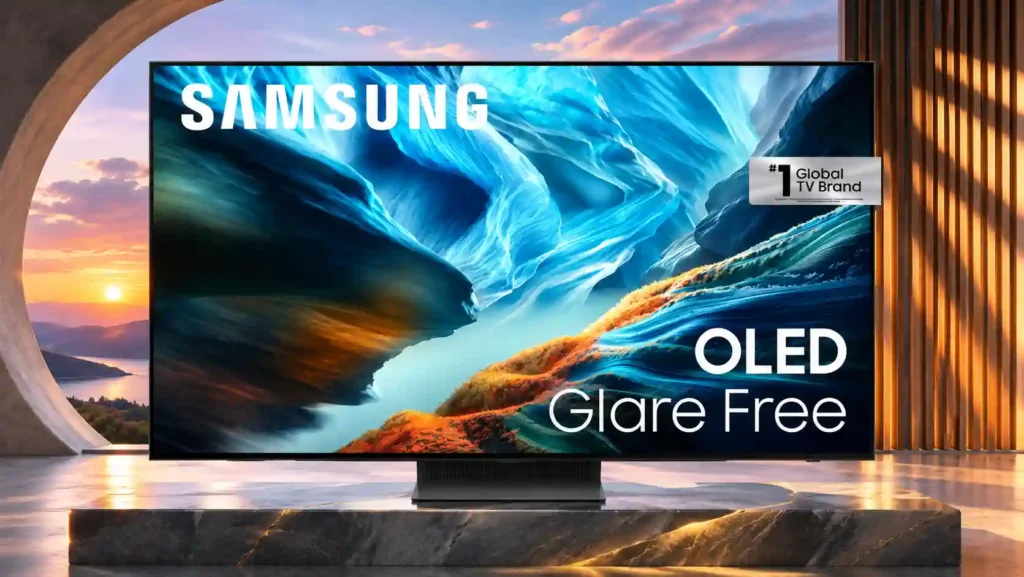
The 77-inch RGB Tandem panel delivers vibrant OLED images and exceptionally effective anti-glare viewing, especially near windows. Dark-scene vertical banding, some panning stutter and missing Dolby Vision keep it from being a universal pick.
Bright living rooms with direct sunlight or lamps, wide seating areas, modern console and PC gaming, and soundbar-based home theaters benefit from its glare control, OLED contrast and four fast HDMI ports.
Sports viewers who prioritize maximum full-screen brightness, dark-room cinephiles sensitive to near-black banding or slow-panning stutter, and those planning prolonged static-content use may prefer an alternative.
The 77-inch S90H makes a persuasive case for OLED in a bright living room. Its RGB Tandem panel gives this size richer, brighter color than many other S90H sizes, while the matte finish deals with direct window and lamp reflections remarkably well. Deep black levels, accurate color and exceptionally responsive 4K gaming are major strengths; four full-bandwidth HDMI 2.1 ports make a multi-console setup easy. But it is not the brightest premium OLED, and rivals such as the LG C6H handle some streaming sources more cleanly. Near-black vertical banding can distract during dark scenes, and slow camera pans may stutter. Dolby Vision and DTS are absent, and long-term static imagery carries OLED burn-in risk. Built-in audio assessments also conflict, ranging from decent to excellent. For buyers battling glare, the tradeoff is compelling; for those prioritizing flawless dark-scene uniformity or maximum brightness, alternatives deserve a look.
Compared with other TVs, this product is above average in Game Mode interpolation, glare resistance, reflection handling, near average in dark-room performance, overall image accuracy, below average in burn-in resistance, Dolby Vision support, HDR format support.
| Attribute | This product | Category average | Difference |
|---|---|---|---|
| burn-in resistance | 1.5 | 4.2 | -2.7 |
| Game Mode interpolation | 4.0 | 1.8 | +2.2 |
| glare resistance | 5.0 | 3.0 | +2.0 |
| Dolby Vision support | 1.8 | 3.8 | -1.9 |
| HDR format support | 2.0 | 4.0 | -2.0 |
| reflection handling | 5.0 | 3.1 | +1.9 |
| response time | 5.0 | 3.1 | +1.9 |
| banding control | 2.0 | 3.5 | -1.5 |
Choose LG B6E OLED. It scores 4.7 vs 1.8 for Dolby Vision support, with a 4.0 overall score.
Choose TCL QM7L Pro. It scores 5.0 vs 1.5 for burn-in resistance, with a 4.1 overall score.
Choose TCL RM9L. It scores 5.0 vs 2.0 for HDR format support, with a 3.8 overall score.
Choose Sony BRAVIA 6 OLED. It scores 4.8 vs 1.5 for DTS support, with a 3.8 overall score.
Products reviewers directly compared with this model, grouped into quick takeaways.
Yes. Its matte coating substantially cuts reflections from windows and lamps, while preserving strong contrast in ambient light.
No. The reviewed 77-inch North American set uses RGB Tandem OLED, which gives it more vibrant colors than several standard-WOLED sizes. Panel variations matter when comparing reviews.
It delivers exceptionally low Game Mode input lag, 4K at 120Hz on current consoles, up to 165Hz for compatible sources and VRR. All four HDMI ports support full 48Gbps bandwidth.
Near-black vertical bands can be distracting during very dark scenes, and slow camera pans may stutter. Large bright scenes cannot sustain the same brightness as tiny highlights.
No. Dolby Vision gaming and video are unavailable, and the missing DTS formats may matter for Blu-ray audio setups.
They deliver clear dialogue, but evaluations differ considerably: one found only decent loudness and balance, while another rated the sound excellent. The stand leaves room for a soundbar if needed.
The overall risk of common panel faults is considered relatively low, but static logos can cause permanent burn-in, and edge-pixel deterioration remains a potential later-life issue.
These are a few of the reviews included in our analysis.
Review of the 2026 Samsung 77-inch S90H OLED (QN77S90HAEXZA): panel differences, bright-room reflections, picture quality, gaming, formats...
A size-specific review of the 2026 77-inch Samsung S90H: its matte anti-reflective finish, RGB Tandem panel, picture caveats, gaming features...
The Samsung 77S90H OLED is a midrange OLED TV released in Samsung's 2026 TV lineup, sitting below the flagship Samsung S95H OLED and above...
We've tested and reviewed products since 1936. Read CR's review of the Samsung QN77S90H tv to find out if it's worth it.
Choose the S90H for bright-room OLED viewing, deep blacks and top-tier gaming without flagship pricing. Skip it if you want Dolby Vision, a glossy screen or the simplest smart-TV software.
Pros: glare resistance, black levels
Cons: Dolby Vision support, color gamut
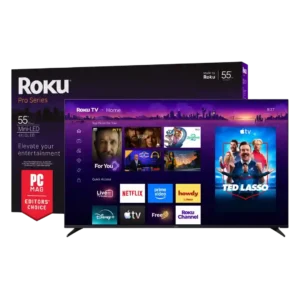
Best for bright Mini-LED picture, excellent built-in audio, easy Roku navigation, and responsive 4K/120 gaming. Skip it if you want ad-free menus, premium motion consistency, or stronger confidence in long-term...
Pros: overall satisfaction, picture quality
Cons: reliability, portability and versatility
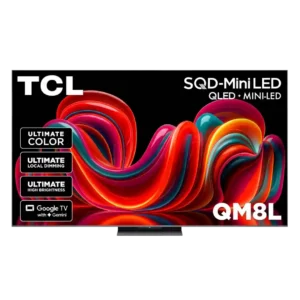
Choose the QM8L for a big, brilliantly bright TV with vivid HDR, deep mini-LED blacks, low input lag, and four HDMI 2.1 ports. Skip it if you need OLED-clean motion,...
Pros: picture quality, value for money
Cons: stand quality, judder handling

Choose the G6 for class-leading bright-room OLED picture, rich color, deep blacks and elite gaming. Skip it if you want strong built-in audio, polished launch firmware, no account sign-in, or...
Pros: picture quality, peak brightness
Cons: value for money, sound quality