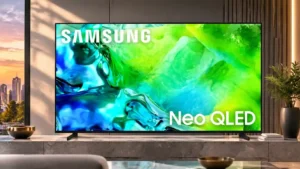
A room with some ambient light plays to the panel's strengths, offering strong brightness without the worst direct-glare problems.
Pros: picture quality, contrast ratio
Cons: blooming control, glare resistance

A room with some ambient light plays to the panel's strengths, offering strong brightness without the worst direct-glare problems.
Pros: picture quality, contrast ratio
Cons: blooming control, glare resistance

Normal ambient lighting does little to dilute black levels, helping the image remain rich without watching in darkness.
Pros: picture quality, black levels
Cons: viewing angles, motion clarity

Rooms with ordinary window light suit The Frame particularly well: reflections are subdued without the screen needing enormous brightness.
Pros: art display mode, design and appearance
Cons: overall satisfaction, HDMI port accessibility

A centrally positioned viewer in a room with ambient or mixed light sees a vibrant, convincing picture without needing OLED-level black depth.
Pros: overall satisfaction, color gamut
Cons: value for money, local dimming performance

Normal indoor lighting is a sweet spot: sitcoms, streaming shows and everyday content look good without demanding perfect contrast.
Pros: picture quality, color accuracy
Cons: HDR performance, sound quality

Good ambient contrast makes the less-expensive S90H compelling when top-tier brightness is not essential.
Pros: black levels, contrast ratio
Cons: Dolby Vision support, stutter handling

A typical living room with controlled lights is an excellent fit for the brighter panel.
Pros: gaming performance, HDR brightness
Cons: reflection handling, glare resistance
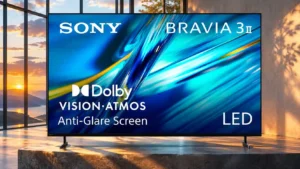
With some lights on, the TV delivers colorful scenes without exposing black-level flaws as harshly as a dark theater does. It is a comfortable fit for a typical family space.
Pros: HDMI 2.1 port count, overall satisfaction
Cons: HDR performance, bass performance

The screen offers enough brightness and glare control for rooms with moderate ambient light, where the art effect also looks natural.
Pros: art display mode, picture quality
Cons: contrast ratio, high-refresh-rate gaming

Moderate room lighting is this screen's sweet spot: the panel is bright enough to remain usable and its matte finish keeps lamps and windows from dominating the image.
Pros: design and appearance, maximum volume
Cons: picture quality, value for money

SDR brightness can handle a moderately lit space, particularly when sitting directly in front of the screen.
Pros: picture quality, overall satisfaction
Cons: sound quality, black levels

Good standard-range brightness makes ordinary viewing comfortable in rooms with moderate ambient light.
Pros: value for money, picture quality
Cons: account requirements, gaming performance
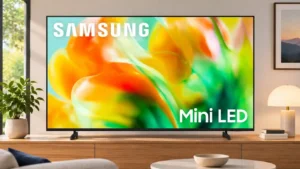
Moderate ambient light can hide raised blacks without overwhelming the relatively dim screen, making this a better setting than either extreme.
Pros: gaming performance, color accuracy
Cons: value for money, overall satisfaction
Normal room lighting is workable if windows and strong lamps are not directly facing the screen.
Pros: contrast ratio, black levels
Cons: reflection handling, color accuracy
The picture can handle modest light from lamps and windows if direct glare is kept off the screen.
Pros: sound quality, picture quality
Cons: value for money, local dimming performance

The display remains vibrant under typical living-room light, but dark scenes may lose their inky-black appearance.
Pros: picture quality, overall satisfaction
Cons: design and appearance, Dolby Vision support

A room with gentle, controlled lighting balances the TV’s poor dark contrast against its limited brightness.
Pros: picture quality, color accuracy
Cons: remote control quality, black levels

For a centered viewer in ordinary lighting, basic TV and streaming are reasonably satisfying without demanding premium brightness.
Pros: white balance accuracy, design and appearance
Cons: overall satisfaction, value for money