
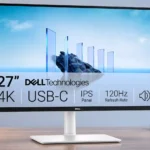
Dell S2725QC Feature Scores
Explore all 72 feature scores for Dell S2725QC, organized into pros and cons.
Scores by Feature
Summary
72 reviewed features-
Very positive 4.5-5.032 (44%)
-
Positive 3.5-4.415 (21%)
-
Neutral 2.5-3.412 (17%)
-
Negative 1.5-2.413 (18%)
Pros
Sort
-
4K is one of the most consistently praised features, providing finely detailed images and legible text at a sensible desktop size.
-
The mixture of 4K clarity, 120Hz and single-cable USB-C charging earns consistent value praise, particularly near the sale prices mentioned in reviews.
-
Height, tilt, swivel and pivot support accommodate different work styles, including portrait coding; a few users note that adjustments or the stand itself can wobble.
-
65W power delivery is enough for many lightweight laptops and eliminates a separate charger in routine use, though some power-hungry machines may need additional power.
-
The 120Hz refresh rate makes everyday scrolling and window movement noticeably smoother than 60Hz and adds useful casual-gaming headroom.
-
A slim-bezel white-and-silver look feels modern, quiet and neat on desks, though some wish the plastic parts had a more premium finish.
-
The practical hub and its retractable ports are major reasons to choose this model over the port-light S2725QS. It does not provide KVM switching.
-
Button and mouse response are consistently praised, with lag low enough to feel instantaneous even in games requiring fast reactions.
-
Owners expressing an overall verdict are enthusiastic about how much practical screen and connectivity the S2725QC delivers for the money.
-
The hidden pop-out USB-A and USB-C connectors make temporary accessories easy to plug in without reaching awkwardly behind the monitor.
-
A rear cover and stand routing help hide cords, and single-cable laptop input further tidies up a workstation.
-
The sRGB mode offers solid accuracy for routine tasks, sometimes impressively so, though white balance, gamma and the warm default tone can benefit from calibration.
-
HDMI 2.1 supports 4K at up to 120Hz with modern consoles, with some Xbox signal-format quirks noted in testing.
-
Two HDMI 2.1 inputs bring welcome 4K 120Hz connectivity for consoles and compatible graphics cards, extending this office monitor's usefulness into gaming.
-
The stand assembles quickly without tools, and the included USB-C connection makes first-time laptop hookup straightforward.
-
The IPS panel stays fairly consistent when viewed from the side, convenient for sharing a screen, though some colors change at extreme angles.
-
VRR, low input lag and a 120Hz ceiling provide a responsive gaming base. The IPS panel's comparatively slow transitions produce distracting blur in fast titles.
-
Clear dialogue, useful loudness and even a little bass are better than many monitor speakers, although fine low-volume control and hi-fi depth are limited.
-
Text, browser content and fine details look impressively crisp, making a clear upgrade from lower-density office monitors.
-
FreeSync and other VRR support help keep PC and console gaming free of obvious tearing, although variable refresh does not correct motion blur.
-
A clean contemporary finish looks more expensive than its price, but plastic construction keeps the actual tactile experience short of higher-end models.
-
The 27-inch 4K format balances crisp detail with manageable desk space, although some video editors would prefer a larger working canvas.
-
A clean, detailed, colorful SDR image satisfies most office and casual entertainment needs, but the picture loses impact in HDR and dark scenes.
-
The two integrated speakers are unusually usable for a budget monitor, particularly for meetings and YouTube, although they cannot replace dedicated audio gear.
-
Story-focused games can look colorful and detailed at 4K 120Hz, but limited HDR and gray blacks restrict cinematic depth.
-
Around 163 pixels per inch helps deliver exceptionally crisp text and detailed images on the 27-inch panel; it is not the 5K density of pricier Mac displays.
-
The sharp canvas and respectable sRGB color make it comfortable for occasional photography and general creative tasks, though professional colorists may want wider coverage and tighter calibration.
-
The flat, modest stand base can hold small accessories, while useful built-in speakers help keep crowded desks free of extra hardware.
-
Unboxing gets favorable comments for neatly organized packaging and a straightforward presentation.
-
Support for common variable-refresh formats helps prevent tearing on supported PCs and consoles.
-
The matte coating generally softens ambient reflections enough for indoor work, though windows behind the user and strong sunlight remain distracting.
-
The matte surface, height adjustment and warmer viewing presets support comfortable extended sessions, especially when avoiding harsh reflections.
-
The rear joystick is intuitive for some, though another tester found its physical location annoying and preferred Mac software controls.
-
One test sample showed pleasingly even illumination without conspicuous edge bleed, a benefit for work and letterboxed films.
-
USB-C worked successfully with a Dell XPS laptop lacking HDMI, demonstrating a convenient connection path for modern USB-C computers.
-
Several gaming presets and extensive color adjustments give casual players convenient starting points for different game styles.
-
A built-in power supply means no bulky external adapter, helping simplify cable routing behind a clean desk.
-
Measured power consumption is favorably low for a 27-inch 4K 120Hz monitor, making it a fairly economical everyday display.
-
Brightness is ample for normal offices and indoor rooms but can feel low in direct sun or very bright spaces; HDR peaks are modest.
-
Multiple color presets and manual adjustments are useful for fine-tuning a slightly warm image. More exacting SDR color work may still require hardware calibration.
-
Attractive but mostly plastic materials divide opinion: some find the unit solid, while others report a cheap feel and a somewhat loose stand.
-
One evaluation finds the multi-source display modes useful for managing several inputs, although this feature is not independently confirmed across the other tests.
-
Standard mounting allows a monitor arm to replace the stock stand, useful for anyone troubled by desk wobble.
-
The accessible USB outputs add handy phone and accessory charging, but 15W downstream output is a convenience rather than a replacement for a powerful charger.
-
Pixel transitions are adequate for everyday work and some games, but faster action exposes the panel's slower response and occasional trailing.
-
One tested sample showed excellent consistency with few visible backlight artifacts, while a separate owner reported greenish patches across two units.
-
The HDR tracking follows its intended curve reasonably well, but modest peak brightness prevents dynamic highlights.
Cons
Sort
-
HDR10 input is supported, but low contrast, limited luminance and weak wide-gamut color leave HDR video and games noticeably flat compared with stronger HDR panels.
-
Bright points fail to stand out convincingly against darker scenes, making highlights muted rather than dramatic.
-
This is the main gaming weakness. At speed, moving objects can smear or leave visible trails despite the welcome 120Hz refresh rate.
-
Low input lag helps, but the 120Hz cap and pronounced moving-object trails make fast esports shooters a weaker fit than dedicated gaming screens.
-
There is no integrated KVM switch, so sharing one keyboard and other USB devices across computers requires manually changing connections or extra equipment.
-
No effective local dimming is available to deepen blacks or give HDR highlights enough separation, limiting picture punch.
-
There is no 3.5mm audio output, which is inconvenient for users who want to connect headphones or external speakers directly to the screen.
-
Blacks tend toward gray and lack OLED depth, especially in dark scenes and HDR, though some viewers find SDR movie blacks acceptable for the price.
-
Feedback is divided: one hands-on tester noticed no ghosting, but instrumented coverage and another gaming assessment describe persistent trails behind fast motion.
-
One owner reports an initially delivered unit with a dead pixel, raising a quality-control concern rather than a general shipping pattern.
-
A unit owner noticed temporary image retention after prolonged static content, though the ghost image reportedly cleared after several minutes.
-
A supplied USB-C cable helps get started, but one account criticizes its very short length and the absence of bundled HDMI leads.
-
An appended Mac user report describes lost brightness controls and HDR access at some 120Hz scaled settings, with 60Hz or a utility used to work around the issue.
-
One Mac setup found the lowest keyboard-adjusted level surprisingly loud, requiring the software menu or monitor controls for finer quiet-volume adjustment.
-
This model lacks the Thunderbolt hub and high-power docking capabilities found in Dell's more expensive UltraSharp alternatives.
-
Speaker volume adjustment is awkward for very quiet Mac listening: keyboard controls can jump from silence to an unexpectedly loud level.
-
USB-C DisplayPort Alt Mode replaces a conventional full-size DisplayPort socket, which may complicate connecting devices that rely on a standard DP cable.
-
Although non-integer refresh rates are accepted, one Apple Silicon workflow needed BetterDisplay to expose them, complicating exact video frame-rate matching.
-
The fully adjustable stand is convenient, but multiple units reportedly wobble or drift when touched, while another sample felt sturdy on the desk.
-
The image's gamma can look a little too bright before calibration, especially in lighter grays; fine adjustments may be needed for truly consistent tones.
-
A Mac user found third-party BetterDisplay software useful for unlocking fractional refresh rates that were not offered automatically.
-
Non-integer refresh selection on Apple Silicon may require a third-party display utility, adding a small setup complication.
-
The IPS contrast is respectable for an office LCD yet far from OLED or strong VA blacks, which weakens dark-room immersion and HDR.
-
sRGB coverage is adequate for work and many creative activities, but wider P3 and Rec.2020 color reproduction trails premium displays.
-
USB-C, two HDMI inputs and convenient downstream USB ports cover mainstream needs. Missing a normal DisplayPort jack, 3.5mm output, KVM and Thunderbolt limits more complex desks.
Use Cases
Best for
Sort
-
USB-C combines 4K video, data and charging on one lead, simplifying laptop desks. The 65W supply may be insufficient for sustained heavy loads on larger laptops.
-
Dense 4K pixels make spreadsheets, long documents and side-by-side windows especially comfortable, while 120Hz adds welcome smoothness to scrolling and everyday navigation.
-
This is its sweet spot: sharp, smooth office use through the day and enjoyable casual games afterward. HDR weakness and fast-motion trails keep it from replacing a dedicated gaming monitor.
-
A strong value when discounted: 4K, 120Hz and a USB-C hub deliver more versatility than the price suggests. The cheaper S2725QS remains an option if extra ports are unnecessary.
-
A fully rotating stand makes portrait browsing, programming and secondary-screen setups easy to arrange.
-
4K detail and generally attractive SDR color make shows and films pleasant, with built-in audio for a tidy setup. Dark scenes and genuine HDR impact are comparatively underwhelming.
-
An appealing, affordable 4K companion for Macs and iPads, especially with USB-C charging and smooth scrolling. Certain Mac display-control and fractional-refresh workflows may require third-party utilities, while some iPads cannot output 120Hz.
-
MacBook and Windows laptop users benefit from USB-C video and charging, particularly for simple office setups that do not need Thunderbolt extras.
-
Understated styling, good backlight uniformity on some units and useful integrated speakers support a clean, low-clutter workstation.
-
120Hz, VRR, responsive input and HDMI 2.1 make after-work PC and console gaming enjoyable. Fast-moving objects can blur, so it suits occasional play much more than demanding esports.
-
The included speakers are adequate or better for calls, and the crisp screen works well for office communications without a cluttered desk.
-
Thin borders and pivot support work nicely for paired displays, and one owner was happy enough to buy two. Another reported noticeable green-tinted white uniformity differences between two units.
-
Sharp text, ample screen space and a portrait pivot make reading code and working through long files comfortable.
-
Thin bezels and easy portrait rotation suit multi-screen workstations, although one user found greenish tint differences between paired units.
-
Detailed 4K imagery and acceptable everyday color suit amateur and general-purpose editing; serious grading and exact fractional-rate workflows have caveats.
-
Detailed 4K scenes and smoother 120Hz motion make racing titles engaging, although demanding players may still notice transition blur.
-
The IPS viewing angles make it easier for someone beside you to see the image, with mild color shifts at more extreme angles.
Conditional or not ideal for
Sort
-
Multi-computer workflowsTwo HDMI inputs and USB-C accommodate several sources, but without a KVM switch, moving shared USB accessories between them is cumbersome; one review nonetheless liked the multi-input options.
-
Color-critical workThe sRGB mode can be pleasingly accurate for everyday graphics, but limited wide-gamut coverage and uncalibrated white balance make it a compromise for professional grading and color-critical projects.
-
Bright-room viewingThe matte IPS panel stays readable under ordinary office lighting and diffuses reflections, but strong sun or windows directly behind the user can overpower its modest brightness.