If you want better 4K at 120 Hz support
Choose Hisense U7SG. It scores 5.0 vs 1.5 for 4K at 120 Hz support, with a 4.2 overall score.

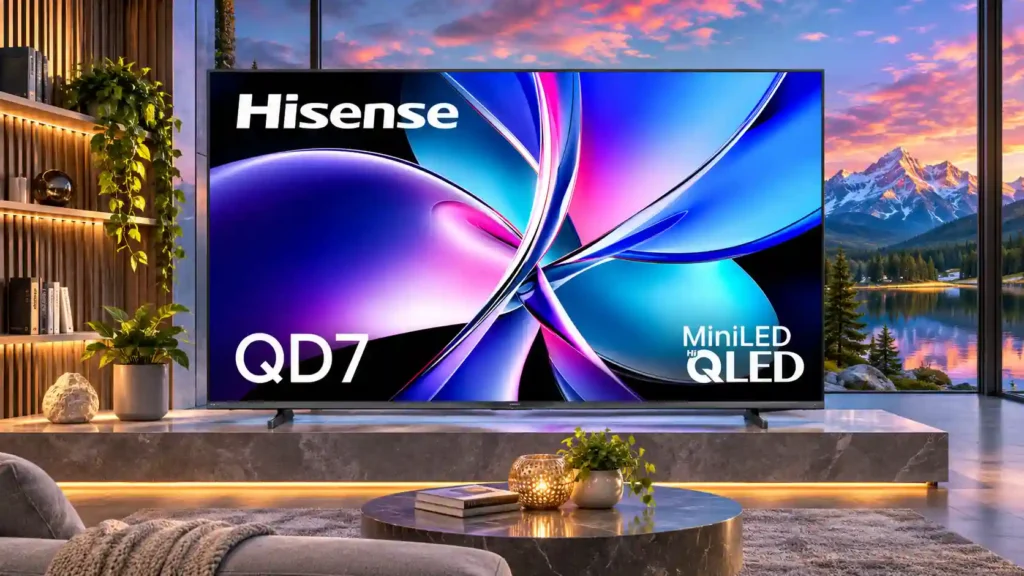
The QD7QF delivers impressive dark-scene contrast and big-screen value, but limited HDR brightness, inconsistent motion and major gaming differences between sizes call for careful selection.
Budget-conscious viewers who want strong dark-scene contrast or a very large screen, particularly in controlled lighting; the 75-inch and larger variants also appeal to value-focused console and PC gamers.
Bright-room and wide-seating households, demanding sports fans, or buyers needing reliably excellent HDR and motion; the 50–65-inch variants are especially poor picks for 4K/120Hz gaming.
The Hisense QD7QF is compelling when deep blacks, engaging color and a generous screen matter more than polished all-round performance. Local dimming gives it an obvious advantage over the cheaper QD6QF, and several comparisons find unusually good image depth for a budget television. Still, the smaller models struggle with bright HDR highlights, direct reflections, motion artifacts and sometimes frustratingly slow Fire TV operation. The built-in sound also earns conflicting assessments across sizes. Most importantly, this is not one uniform gaming range: 50-, 55- and 65-inch versions use 60Hz panels and HDMI 2.0, whereas 75-, 85- and 100-inch versions move up to 144Hz and HDMI 2.1. It is a worthwhile bargain at the right price, but a brighter TCL QM6K or Hisense U65QF makes more sense when the price difference is modest.
Compared with other TVs, this product is above average in voice control accuracy, peak brightness, Dolby Vision support, near average in refresh rate, sound quality, below average in 4K at 120 Hz support, 1440p input compatibility, noise reduction.
| Attribute | This product | Category average | Difference |
|---|---|---|---|
| 4K at 120 Hz support | 1.5 | 3.9 | -2.4 |
| 1440p input compatibility | 2.0 | 4.2 | -2.2 |
| noise reduction | 1.3 | 3.5 | -2.1 |
| image processing | 2.0 | 3.8 | -1.8 |
| VRR range | 2.0 | 3.7 | -1.7 |
| Power-on readiness | 1.0 | 2.7 | -1.7 |
| voice control accuracy | 5.0 | 3.4 | +1.6 |
| daytime viewing performance | 2.0 | 3.5 | -1.5 |
Choose Hisense U7SG. It scores 5.0 vs 1.5 for 4K at 120 Hz support, with a 4.2 overall score.
Choose TCL QM9K. It scores 5.0 vs 1.0 for Power-on readiness, with a 3.9 overall score.
Choose TCL QM5K. It scores 4.7 vs 2.0 for 1440p input compatibility, with a 3.6 overall score.
Choose Hisense U8QG. It scores 5.0 vs 2.0 for VRR range, with a 4.1 overall score.
Products reviewers directly compared with this model, grouped into quick takeaways.
No. The 50-, 55- and 65-inch versions have 60Hz panels and HDMI 2.0; the 75-, 85- and 100-inch models add 144Hz panels and HDMI 2.1.
Deep black levels and convincing color help movies look rich, especially from a centered seat in controlled light. Blooming, limited HDR highlights and inconsistent motion remain drawbacks.
The smaller models can struggle with glare and strong daylight. A store demonstration of the 100-inch screen was much more positive about reflections, so the exact size matters.
Basic 60fps console play is responsive, but shoppers wanting dependable 4K/120Hz should favor the 75-inch and larger QD7QF models or a stronger gaming TV.
Its local dimming delivers much better black levels and contrast than the cheaper QD6QF, creating more convincing dark scenes.
Not necessarily for casual shows, but sound quality and volume vary by size. A soundbar can improve dialogue, bass, and movie effects.
Feedback is mixed. One 65-inch test found very slow startups and app launches, while another larger-screen presentation described smooth navigation; an external streaming stick can bypass sluggish software.
These are a few of the reviews included in our analysis.

I’ve reviewed the best TVs 0f 2026, for every budget, including top brands such as LG, Samsung and TCL.
Hisense QD7QF review covering all six sizes. Learn which models have 60Hz or 144Hz, HDMI 2.1, gaming limits, picture quality, and alternatives.
The Hisense QD7QF Review finds strong budget Mini-LED contrast but weak brightness and motion. Compare 50-, 55-, 65-, 75-, 85-, and 100-inch...
The Hisense 75QD7QF provides great performance and gaming features on a budget, proving that a good mini-LED TV doesn’t have to cost an arm...
Every budget TV involves compromises. The 65-inch QD7 makes the right tradeoffs to provide a pleasing viewing experience for the money.
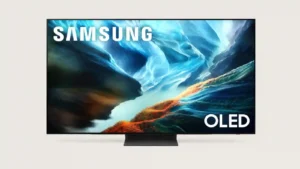
Choose the S90H for bright-room OLED viewing, deep blacks and top-tier gaming without flagship pricing. Skip it if you want Dolby Vision, a glossy screen or the simplest smart-TV software.
Pros: glare resistance, black levels
Cons: Dolby Vision support, color gamut
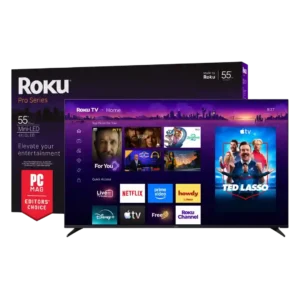
Best for bright Mini-LED picture, excellent built-in audio, easy Roku navigation, and responsive 4K/120 gaming. Skip it if you want ad-free menus, premium motion consistency, or stronger confidence in long-term...
Pros: overall satisfaction, picture quality
Cons: reliability, portability and versatility
Choose the QM8L for a big, brilliantly bright TV with vivid HDR, deep mini-LED blacks, low input lag, and four HDMI 2.1 ports. Skip it if you need OLED-clean motion,...
Pros: picture quality, value for money
Cons: stand quality, judder handling
Choose the G6 for class-leading bright-room OLED picture, rich color, deep blacks and elite gaming. Skip it if you want strong built-in audio, polished launch firmware, no account sign-in, or...
Pros: picture quality, peak brightness
Cons: value for money, sound quality