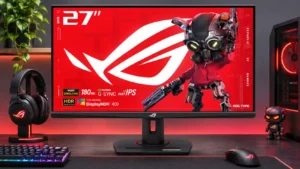
Overall: 3.8/5
A 1440p, 180Hz IPS panel with adaptive sync fits mainstream PC graphics hardware well, delivering smooth games without the burden of 4K.
Pros: value for money, Resolution
Cons: HDR performance, port selection

Overall: 3.8/5
A 1440p, 180Hz IPS panel with adaptive sync fits mainstream PC graphics hardware well, delivering smooth games without the burden of 4K.
Pros: value for money, Resolution
Cons: HDR performance, port selection
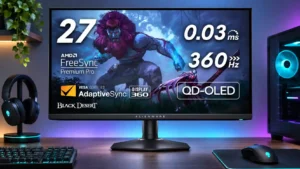
Overall: 4.2/5
Connected over DisplayPort, this is an outstanding PC gaming display with remarkably clean motion and low lag. Gamers need a capable PC and the right connection to make the most...
Pros: competitive gaming suitability, color gamut
Cons: brightness, HDMI 2.1 support
Overall: 4.2/5
This is designed first and foremost for high-frame-rate PC play, where its OLED speed and screen-size tools shine. PC hardware and game caps determine how fully it can be exploited.
Pros: refresh rate, overall satisfaction
Cons: value for money, port selection
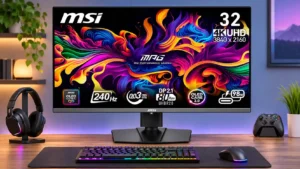
Overall: 4.0/5
Modern gaming PCs can exploit superb 4K clarity and 240Hz speed; advanced graphics hardware helps unlock more of that performance.
Pros: overall satisfaction, DisplayPort connectivity
Cons: value for money, reliability over time
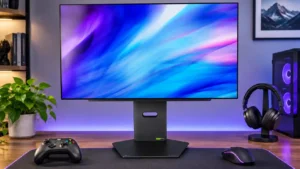
Overall: 4.0/5
With suitable hardware, the monitor combines native 1440p with extraordinary speed and broad sync support. Its biggest advantages live in fast PC titles.
Pros: refresh rate, competitive gaming suitability
Cons: value for money, brightness
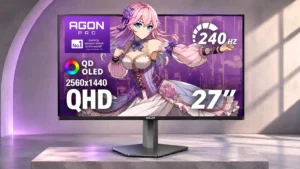
Overall: 4.0/5
Connected over DisplayPort, the high-refresh QD-OLED experience is remarkably fluid with excellent response and strong SDR contrast. HDMI and HDR caveats make configuration important.
Pros: value for money, overall satisfaction
Cons: HDR performance, HDMI 2.1 support
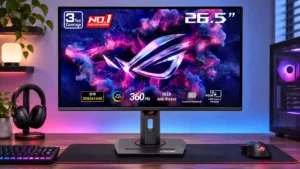
Overall: 4.4/5
High refresh, flexible video inputs and adaptive-sync support suit powerful PCs particularly well, with access to the monitor's full 360Hz speed.
Pros: color gamut, overall satisfaction
Cons: reflection handling, VRR flicker
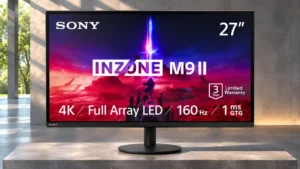
Overall: 3.9/5
Fast 4K play feels responsive and looks colorful on capable PC hardware, with 160Hz especially welcome in action games. Its refresh and dimming performance are less compelling than the strongest...
Pros: color gamut, stand adjustability
Cons: value for money, Bass reproduction
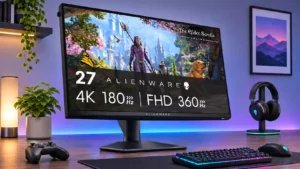
Overall: 3.9/5
A fast 4K gaming experience and optional 360Hz FHD mode suit varied PC games, with adaptive sync helping smooth variable frame rates.
Pros: Resolution, refresh rate
Cons: HDR performance, contrast
Overall: 4.4/5
Connected gaming PCs can benefit from the high resolution and refresh rate, but truly fast play is not its primary strength.
Pros: overall picture quality, color accuracy
Cons: value for money, built-in speakers
Overall: 3.3/5
1080p PC gaming is the sweet spot: a high refresh rate, variable sync, and responsive controls provide a solid experience at modest cost.
Pros: adaptive sync performance, response time
Cons: HDR performance, console gaming compatibility
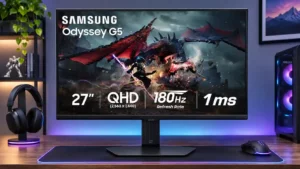
Overall: 3.6/5
The 180Hz QHD combination is effective with a capable PC, though motion performance is not the best in its class.
Pros: stand adjustability, competitive gaming suitability
Cons: value for money, port selection
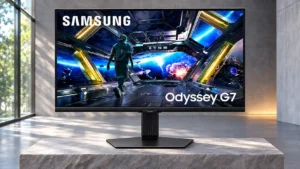
Overall: 3.1/5
The 4K/144Hz combination works well for owners who get a stable PC connection, but others report failed input detection and frustrating signal dropouts.
Pros: PC gaming compatibility, overall picture quality
Cons: overall satisfaction, Smart TV platform
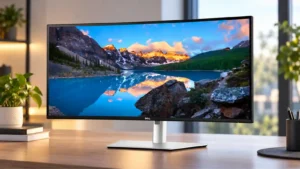
Overall: 4.0/5
The monitor works well for casual PC gaming and mixed work-and-play setups, especially with 120Hz. It is better viewed as a productivity monitor that can game on the side than...
Pros: overall satisfaction, productivity versatility
Cons: value for money, reliability over time
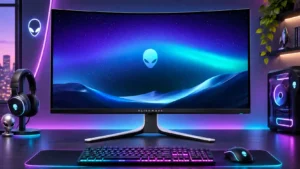
Overall: 3.6/5
The monitor excels with well-equipped gaming PCs, combining 4K, 240Hz, VRR and exceptionally fast pixels. Achieving the maximum frame rate can take substantial GPU power.
Pros: overall satisfaction, brightness
Cons: Dolby Vision support, VRR flicker
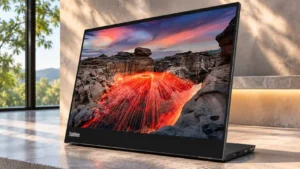
Overall: 3.9/5
USB-C-only input and a 60Hz screen make this a weak main PC gaming monitor. Motion clarity and response limitations are especially noticeable in faster games.
Pros: overall picture quality, Stylus usability
Cons: port selection, refresh rate