
Virtual screen divisions and picture-by-picture modes recreate many dual-display advantages without a bezel interrupting the workspace.
Pros: overall picture quality, color accuracy
Cons: value for money, built-in speakers

Virtual screen divisions and picture-by-picture modes recreate many dual-display advantages without a bezel interrupting the workspace.
Pros: overall picture quality, color accuracy
Cons: value for money, built-in speakers
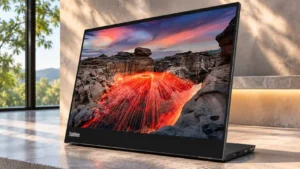
As a small second screen at a permanent desk, it offers useful flexibility without a large footprint. VESA mounting and a built-in stand strengthen this arrangement.
Pros: overall picture quality, Stylus usability
Cons: port selection, refresh rate
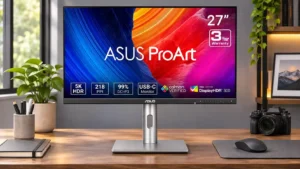
Mixed-resolution dual-screen desks can use the PA27JCV effectively, although zoom or scaling adjustments may be needed.
Pros: color accuracy, overall picture quality
Cons: HDR performance, refresh rate
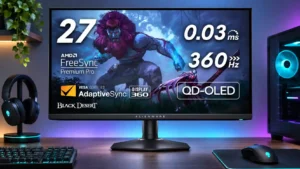
Its size and relatively compact base can work well within a multi-monitor workstation, although the OLED and text tradeoffs still apply.
Pros: competitive gaming suitability, color gamut
Cons: brightness, HDMI 2.1 support
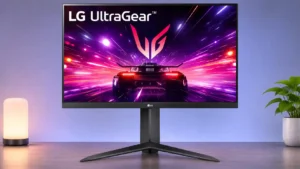
The adjustable, rotatable stand and consistent off-axis image are practical assets for a dual-monitor workstation.
Pros: adaptive sync performance, response time
Cons: HDR performance, console gaming compatibility
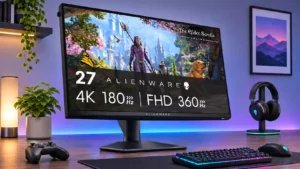
The restrained design and narrow bezels fit paired-monitor desks, but uneven white corners can be more noticeable next to a second IPS screen.
Pros: Resolution, refresh rate
Cons: HDR performance, contrast