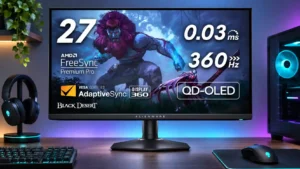
A very wide gamut produces rich, saturated colors and notably strong HDR color volume. This is consistently one of the monitor's most admired visual qualities.
Pros: competitive gaming suitability, color gamut
Cons: brightness, HDMI 2.1 support

A very wide gamut produces rich, saturated colors and notably strong HDR color volume. This is consistently one of the monitor's most admired visual qualities.
Pros: competitive gaming suitability, color gamut
Cons: brightness, HDMI 2.1 support
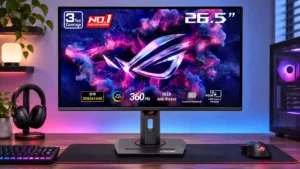
The broad QD-OLED gamut produces exceptionally vivid reds and rich colors, with sRGB clamping available when restraint matters more than saturation.
Pros: color gamut, overall satisfaction
Cons: reflection handling, VRR flicker
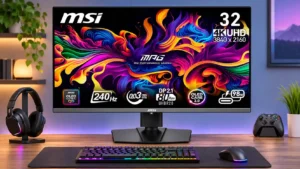
A broad, saturated palette gives games and films striking depth, with excellent measured DCI-P3 coverage. Professional Adobe RGB work is less compelling.
Pros: overall satisfaction, DisplayPort connectivity
Cons: value for money, reliability over time
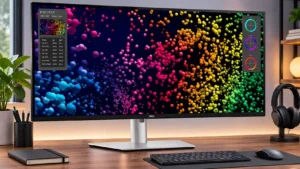
Coverage of sRGB and wide P3-style color spaces is consistently strong, bringing rich colors to creative apps and everyday content.
Pros: overall picture quality, color accuracy
Cons: value for money, built-in speakers
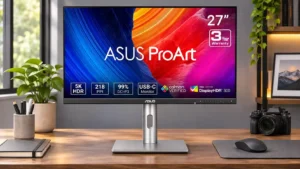
P3 and sRGB coverage are typically excellent and there are useful gamut presets. Adobe RGB coverage is less complete and can matter for print-oriented work.
Pros: color accuracy, overall picture quality
Cons: HDR performance, refresh rate
The panel displays richly saturated colors and substantial DCI-P3 coverage, even if QD-OLED alternatives reach a little farther into wide-gamut spaces.
Pros: refresh rate, competitive gaming suitability
Cons: value for money, brightness
Color gamut is consistently strong, with broad sRGB coverage and roughly mid-90% DCI-P3 results in several tests. Coverage is good for productivity and light creative work, though it can fall...
Pros: overall satisfaction, productivity versatility
Cons: value for money, reliability over time
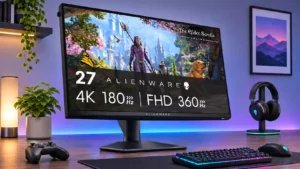
Wide, vibrant color helps games and general work look appealing. Coverage is sufficient for many creators, but some competing OLEDs and professional displays reach further into demanding color spaces.
Pros: Resolution, refresh rate
Cons: HDR performance, contrast
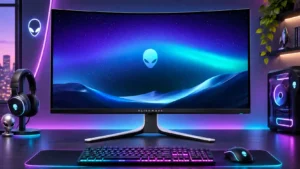
Wide QD-OLED coverage makes rich reds and greens stand out and supports demanding color spaces. Unclamped SDR content can look exaggerated.
Pros: overall satisfaction, brightness
Cons: Dolby Vision support, VRR flicker
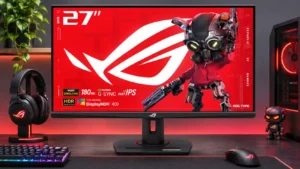
The wide color range makes games and images lively, though coverage is more conventional than high-end quantum-dot or OLED alternatives.
Pros: value for money, Resolution
Cons: HDR performance, port selection
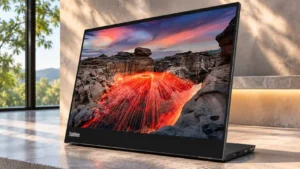
Near-complete sRGB coverage is unusually good among budget-oriented portable monitors. DCI-P3 and Adobe RGB reach much less, so high-end OLED rivals deliver richer wide-gamut color.
Pros: overall picture quality, Stylus usability
Cons: port selection, refresh rate
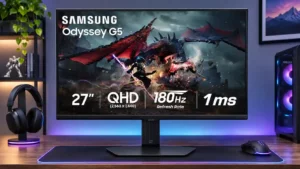
Near-complete sRGB coverage suits everyday gaming and media, while wider-gamut creative work is less compelling.
Pros: stand adjustability, competitive gaming suitability
Cons: value for money, port selection
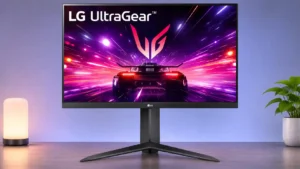
Color coverage is satisfactory for games and routine SDR work but limited for demanding Adobe RGB and DCI-P3 editing. Unrestricted color output can also appear oversaturated.
Pros: adaptive sync performance, response time
Cons: HDR performance, console gaming compatibility
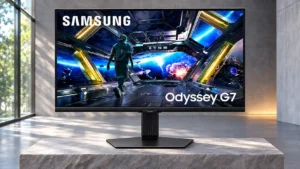
Color impressions range from lively SDR colors to limited wider-gamut coverage and dull-looking images; experts see a meaningful disadvantage beside select rivals.
Pros: PC gaming compatibility, overall picture quality
Cons: overall satisfaction, Smart TV platform