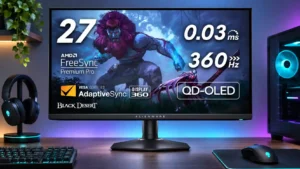
Pixel-level OLED control creates striking contrast and clean bright-on-black detail in dark environments, although direct light lessens the perceived advantage.
Pros: competitive gaming suitability, color gamut
Cons: brightness, HDMI 2.1 support

Pixel-level OLED control creates striking contrast and clean bright-on-black detail in dark environments, although direct light lessens the perceived advantage.
Pros: competitive gaming suitability, color gamut
Cons: brightness, HDMI 2.1 support
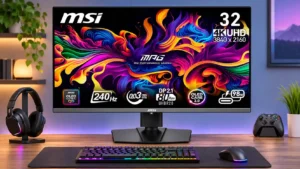
Per-pixel lighting gives exceptionally deep contrast and makes bright colors stand out against dark surroundings.
Pros: overall satisfaction, DisplayPort connectivity
Cons: value for money, reliability over time
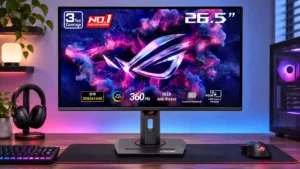
Pixel-level light control delivers exceptionally strong dark-scene contrast and convincing image depth without LCD-style backlight halos.
Pros: color gamut, overall satisfaction
Cons: reflection handling, VRR flicker
Per-pixel OLED lighting gives almost bottomless contrast, especially effective when small bright objects appear in dark scenes.
Pros: refresh rate, competitive gaming suitability
Cons: value for money, brightness
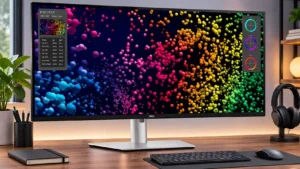
IPS Black gives the image more depth than typical IPS displays and helps still images and SDR content, without matching OLED's near-black performance.
Pros: overall picture quality, color accuracy
Cons: value for money, built-in speakers
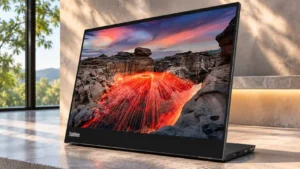
Its IPS contrast gives good tonal depth for day-to-day work and improves on earlier Lenovo portables. Reviewers differ on how engaging it looks beside OLED competitors.
Pros: overall picture quality, Stylus usability
Cons: port selection, refresh rate
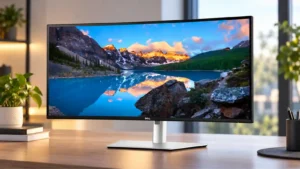
IPS Black delivers noticeably stronger contrast than ordinary IPS, with several testers praising its depth and pop. It remains a step below OLED and can fall short of Dell’s idealized...
Pros: overall satisfaction, productivity versatility
Cons: value for money, reliability over time
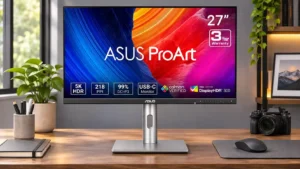
Contrast is better than on conventional IPS displays, adding welcome depth to SDR images. It remains well behind OLED in dark scenes.
Pros: color accuracy, overall picture quality
Cons: HDR performance, refresh rate
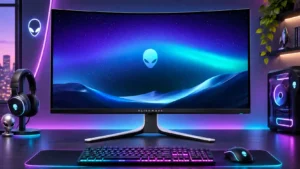
Per-pixel OLED lighting delivers exceptional light-to-dark separation without conventional backlight halos, especially impressive in dim rooms.
Pros: overall satisfaction, brightness
Cons: Dolby Vision support, VRR flicker
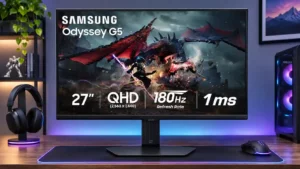
Contrast is passable or even good by ordinary IPS standards, yet blacks lack the depth of VA, Mini LED or OLED alternatives.
Pros: stand adjustability, competitive gaming suitability
Cons: value for money, port selection
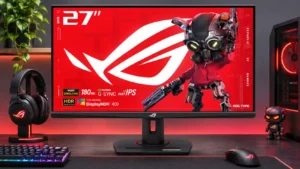
IPS contrast leaves shadowy scenes looking gray and washed out. Brighter colorful games flatter this panel much more than dark cinematic material.
Pros: value for money, Resolution
Cons: HDR performance, port selection
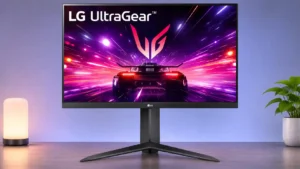
Native IPS contrast is weak, leaving dark scenes washed out. Black Stabilizer can reveal targets but further reduces image depth.
Pros: adaptive sync performance, response time
Cons: HDR performance, console gaming compatibility
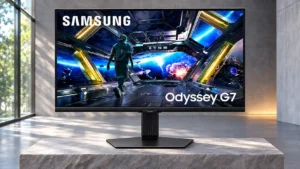
The modest IPS contrast washes out black areas in darker scenes; competing displays with better panels or dimming provide more depth.
Pros: PC gaming compatibility, overall picture quality
Cons: overall satisfaction, Smart TV platform
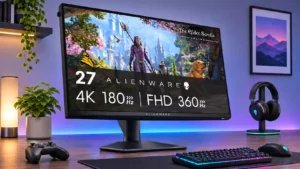
Contrast remains a prominent weakness of the conventional IPS panel, particularly next to OLED or strong mini-LED alternatives. Some brighter-room use is less affected.
Pros: Resolution, refresh rate
Cons: HDR performance, contrast