
TP-Link Archer BE550 Feature Scores
Overall Scorata score: 4.3/5
Based on 22 analyzed reviews · View source samples
Explore all 120 feature scores for TP-Link Archer BE550, organized into pros and cons.
Scores by Feature
Summary
120 reviewed features-
Very positive 4.5-5.053 (44%)
-
Positive 3.5-4.441 (34%)
-
Neutral 2.5-3.417 (14%)
-
Negative 1.5-2.49 (8%)
Pros
Sort
-
Five 2.5 GbE ports on the standard model are unusually generous and useful for future wired upgrades.
-
Full multi-gigabit connectivity is a standout feature for this price range.
-
Excellent performance and generous wired connectivity make it a strong value when priced below higher-end tri-band models. Older stock should be meaningfully discounted.
-
Wi-Fi 7 clients can reach very high real-world speeds near the router, often approaching the 2.5 Gbps wired limit.
-
Close-range performance is a major strength, with several tests approaching multi-gigabit throughput.
-
Tether's guided setup receives consistent praise for simplicity and quick completion.
-
Tether is widely liked for its clear layout, accessible controls and network overview.
-
Setup is usually quick and easy with Tether, although some users encounter initial connection problems or separate SSID requirements.
-
Wired tests show strong throughput, often reaching the practical limits of the 2.5 Gbps ports.
-
Compatible Wi-Fi 7 clients see excellent throughput, but implementation and client support determine the actual benefits.
-
Three bands provide more capacity and access to 6 GHz than cheaper dual-band alternatives.
-
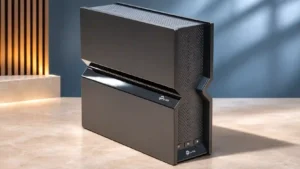
The modern antenna-free enclosure appeals to many, though some prefer a less prominent design.
-
Download speeds are consistently strong, with gigabit-plus results on compatible clients and usable speeds even at considerable distances.
-
The 6 GHz band is particularly fast nearby, but its advantage shrinks through walls or at longer distances.
-
Guided prompts and straightforward configuration make it easy to get a new network running.
-
Physical and software controls make it easy to disable or dim the prominent LEDs.
-
The local web interface is responsive and offers more extensive controls than the app.
-
EasyMesh compatibility lets owners extend coverage with compatible routers or extenders, though model and firmware support vary.
-
Many wired and wireless clients can operate concurrently, although occasional device-per-band limits have been reported.
-
Multiple Ethernet ports allow several wired clients to connect without immediately needing a switch.
-
The dashboard provides useful live device, bandwidth and network-status information.
-
Connections are often reliable across multiple devices, although some households have experienced disruptive dropouts.
-
The app and web interface offer substantial flexibility, although specialist networking platforms provide more granular control.
-
Most existing devices connect without issue, and newer clients can use the faster bands. Some older devices have had compatibility or stability problems.
-
Basic parental controls cover common needs; more granular restrictions and app controls may require payment.
-
The app makes it easy to inspect, limit and manage individual clients.
-
The Tether interface makes routine monitoring and network changes straightforward.
-
The 2.5 Gbps LAN ports deliver strong real-world wired throughput and support fast local transfers.
-
USB storage works well for basic file and media sharing; a dedicated NAS is preferable for more advanced requirements.
-
Ventilation is generally praised and tested units are reported to remain cool under load.
-
Wi-Fi 7 and multi-gigabit Ethernet provide a useful upgrade path, but a good existing Wi-Fi 6 network may see little improvement.
-
Device prioritization is useful for work, streaming and gaming when bandwidth is shared.
-
Clearly labeled menus and accessible settings help keep routine management uncomplicated.
-
Speeds tend to hold up well at moderate distances when obstructions are limited.
-
The USB connection is useful for attaching storage and achieved respectable file-sharing throughput in tests.
-
Latency is generally low enough for gaming and calls, though it is not guaranteed to improve every setup.
-
Basic protection and security scanning are useful, while more sophisticated HomeShield protection requires an upgrade.
-
Device isolation is appreciated for keeping smart devices and guests away from private network resources.
-
It generally handles simultaneous streaming, browsing and downloads well, with little slowdown in tested busy networks.
-
The VPN client is useful for routing individual devices through a selected VPN, and one test found respectable throughput.
-
Wide 320 MHz channels can deliver impressive nearby throughput with compatible clients and clear spectrum.
-
The housing feels robust and its upright design sits securely on a surface.
-
Content and website filtering provide useful basic controls for families.
-
Range is highly dependent on layout and band. Good single-floor and open-space results coexist with disappointing coverage in obstructed homes.
-
The printed guide complements the app's step-by-step instructions.
-
Pairing compatible EasyMesh nodes is straightforward through the app or WPS.
-
Open-space outdoor tests maintained impressive download speeds even far from the router.
-
The additional 6 GHz spectrum and optimization tools help distribute traffic and avoid congested channels.
-
Separate IoT networks offer a convenient way to isolate smart devices from the main network.
-
Installation is generally completed within minutes; initial modem connectivity occasionally requires troubleshooting.
-
Many tests found stable operation under normal or heavy use, but some owners experienced serious wireless instability and reboots.
-
The upright format is convenient for shelves, but opinions on the relatively tall, thick enclosure are divided.
-
Performance at a distance varies considerably: open-space tests are impressive, while walls and awkward layouts can cause significant losses.
-
Traffic and usage reports are useful for tracking devices and family activity, although detailed parental histories may be paid features.
-
Some firmware versions offer well-regarded WireGuard support, while early reports noted its absence. Verify support for the exact revision.
-
Bedtime restrictions and scheduling are helpful for managing children's online time.
-
QoS is useful in everyday settings, but an owner reported that enabling it with a VLAN configuration broke internet access.
-
Uploads can be very fast nearby, but tend to fall off faster than downloads as distance increases.
-
Built-in VPN server functionality is convenient for remote access; WireGuard availability differs across reports and firmware versions.
-
Strong benchmark throughput and wired performance contrast with some reports of wireless instability and slower legacy-client speeds.
-
EasyMesh expansion can help address weak spots instead of replacing the router outright.
-
Adding compatible units can extend coverage effectively; a two-router test was especially positive.
-
5 GHz can reach gigabit speeds, but some older high-end routers perform better at longer distances.
-
Built-in diagnostics can resolve initial connection problems, though support-led reboot suggestions did not solve every bug.
-
Automatic router detection helps streamline setup.
-
The front light strip communicates status and looks attractive to some, but others find it distracting.
-
The app's network optimization scan is useful for finding a less congested channel.
-
Individual bandwidth controls help prevent particular devices from consuming too much capacity.
-
Internal beamforming antennas are praised for helping devices maintain strong connections.
-
Connected devices are easy to identify by their active wireless band.
-
The web interface responds quickly during management and configuration.
-
Smart lights, cameras, plugs and other IoT equipment operated without issues in a large-device installation.
-
Existing TP-Link network names and passwords can carry over, simplifying upgrades.
-
One owner found the internal cooling fan very quiet.
-
The unboxing experience and packaging were positively received.
-
Per-device speed limits are easy to access and useful when sharing a slower connection.
-
The included default network credentials make it convenient for beginners to connect without configuring everything first.
-
The app enables convenient management away from the home network through a TP-Link account.
-
The router can serve busy smart homes with many devices and offers separate IoT networking.
-
The basic scan helps highlight potentially insecure router settings.
-
Guest isolation is useful for protecting private devices; leaving guest access enabled unnecessarily can introduce risk.
-
Multi-floor results vary widely, from strong third-floor speeds to weak upstairs coverage. Additional nodes may be needed.
-
EasyMesh can work well for basic expansion, but more sophisticated dedicated mesh platforms offer better management and roaming.
-
Internal antennas make the enclosure easier to wipe down.
-
HomeShield's ability to block harmful websites is appreciated.
-
Physical controls make pairing and switching wireless or LED functions convenient.
-
The enclosure is surprisingly light despite its bulky appearance.
-
2.4 GHz results are mixed: some tests show improvement, while others report weaker range and slower speeds than older models.
-
The included Ethernet cable is appreciated, although the dedicated reset pin adds little convenience.
-
Device isolation helps protect local privacy, though the optional cloud-linked app introduces a separate privacy tradeoff.
-
Dozens of devices can be handled in some installations, but an owner reported a recurring limit on connections per band.
-
Some tests find polished, stable firmware; other experiences reveal QoS bugs and recurring instability.
-
Priority settings can reserve bandwidth for important devices, although one reported QoS bug disrupted connectivity.
-
Wired backhaul experiences and reports vary with model and firmware, so compatibility should be checked before purchase.
Cons
Sort
-
There is no 10 GbE port, making this a less suitable platform for very fast broadband or high-end wired networks.
-
An early owner criticized the absence of DNS-over-HTTPS support.
-
A few owners report frequent unexpected reboots or repeated resets to restore normal functionality.
-
The advertised aggregate bandwidth should not be mistaken for single-client or internet throughput.
-
BE9300 branding and regional variants can obscure actual port speeds and supported Wi-Fi standards.
-
The AC adapter is notably bulky, which is inconvenient for compact setups and travel.
-
Support was unable to resolve recurring connection limits promptly in one reported case.
-
One early access-point installation experienced recurrent reboots, although the cause was not established.
-
The enclosure lacks a convenient wall-mounting provision.
-
A single unit can cover some homes well, but difficult floor plans can leave weak areas that need additional nodes.
-
Separate 6 GHz network names can make automatic selection less convenient than a single unified SSID.
-
V1 has reached end of sale according to the supplied 2026 coverage; verify revision and remaining support before purchasing old stock.
-
Remaining V1 stock warrants clearance-price and condition checks rather than assuming normal current-model availability.
-
Third-party firmware is unsupported, limiting options for more demanding software customization.
-
Cloud-linked app access carries potential privacy tradeoffs compared with local-only administration.
-
Advanced security and parental controls require subscriptions, which frustrates some buyers; others find the free essentials sufficient.
-
Lack of 5 GbE is not a major concern for owners whose internet and wired equipment are slower.
-
Dedicated mesh systems provide more advanced backhaul management than this router's EasyMesh implementation.
-
Roaming is functional but less polished than dedicated Deco mesh systems.
-
Handoffs are less sophisticated than those on a purpose-built mesh platform.
-
The 2.5 Gbps WAN port is well suited to gigabit and 2-gigabit service, but limits faster internet plans.
-
MLO can improve connection stability and performance in some setups, but alternating implementation, client support and early speed tests reveal limitations.
-
The 6 GHz signal weakens more through walls than 5 GHz; some users nonetheless achieved impressive speeds through a wall.
-
Initial modem connection can require a reset or diagnostic assistance, but setup can ultimately succeed.
-
Older Wi-Fi 6 clients can work smoothly, though some tests found slower speeds and shorter range than older routers.
-
Some owners experience steady latency or improvement over older routers; others report sudden spikes.
Use Cases
Best for
Sort
-
The hardware offers unusually good speed and port flexibility for the price, especially when discounted. Inexpensive dual-band models may suffice for simpler needs.
-
EasyMesh provides a convenient expansion path, but dedicated mesh systems can offer better roaming and backhaul features.
-
A natural fit for 1–2.5 Gbps broadband, with multiple fast ports for connected equipment.
-
Multiple 2.5 GbE ports are ideal for fast home storage; USB sharing is suitable for lighter needs rather than replacing a dedicated NAS.
-
Modern Wi-Fi 7 devices can make the most of the fast 6 GHz band and multi-gigabit throughput.
-
Multiple simultaneous streams, downloads and connected devices generally run smoothly, particularly when clients have good signal strength.
-
Strong downloads and device prioritization support high-quality video streams even with other devices online.
-
Four 2.5 GbE LAN ports let multiple high-speed wired devices connect directly without a separate switch.
-
Fast close-range performance makes a centrally placed router well suited to small and medium homes or apartments.
-
The guided app and practical setup instructions make installation approachable even for non-technical users.
-
Free parental tools cover filtering and bedtime restrictions, while more detailed controls require paid plans.
-
Strong nearby wireless speeds, low latency and fast wired connections make it attractive for online gaming, especially with a good signal.
-
Fast Ethernet and wireless throughput suit gaming PCs, including setups with local storage and wireless VR.
-
Everyday gaming is generally well served by the speeds and adequate latency when signal strength is good.
-
Ordinary video calls are generally feasible, but weak signals and occasional instability have caused stuttering or failed calls in some homes.
-
Separate IoT networks and strong multi-device handling are useful for homes with connected lights, cameras and other gadgets.
-
Wireless VR streaming can run smoothly with MLO or a strong nearby connection, although headset orientation and distance can affect link speed.
-
The built-in VPN server provides a convenient way to connect to a home network while away without a separate VPN subscription.
-
Device prioritization is useful when multiple people need reliable bandwidth for working from home.
Conditional or not ideal for
Sort
-
Large or multi-story homesCoverage across large or multi-floor homes is unpredictable; some installations work well, while others require additional mesh nodes.
-
Internet plans above 2.5 GbpsThe 2.5 Gbps WAN port wastes some capacity on 3, 5 or 10 Gbps internet plans.
-
Legacy-device householdsExisting devices can connect, but older clients may not gain much speed and occasionally experience compatibility issues.
-
Advanced network administrationThe web interface offers useful controls, but OpenWrt-style configurability and more advanced networking requirements may be better served elsewhere.
-
TravelA bulky chassis and power brick make this a poor travel companion; it is intended for stationary home use.
-
Access point modeOne access-point-mode installation suffered random reboots even after a firmware update.
-
Basic home networkingIt provides ample speed for ordinary home needs, but less expensive routers may be sufficient.
-
General everyday useBrowsing and routine online tasks are generally within its capabilities, though isolated owners report latency spikes.
-
Low-distraction useBright front LEDs can distract during TV viewing, although they can be dimmed or switched off.